
A smart bathroom mirror enhances your daily routine by offering integration with home devices, control through voice assistants, and advanced functions, ensuring comfort and efficiency in your personal space.
A smart bathroom mirror can change your daily routine, allowing you to read news or listen to music while you get ready. Can you imagine having control of lighting and more functionalities at your fingertips?
Fundamentals and Protocols (Zigbee, Matter, Wi-Fi)
The fundamentals of a smart home focus on choosing the right protocols for communication between devices. Zigbee, Matter, and Wi-Fi are the most prominent options, each with its advantages and disadvantages to consider.
Zigbee: An Efficient Option
The Zigbee technology has earned a reputation for its low energy consumption and its ability to create mesh networks. This means that devices can communicate with each other without the need for a constant router, which reduces latency and increases network stability.
Matter: The Unification of Smart Home
Matter is a new protocol that aims to standardize communication between devices from different brands. With a common foundation, devices operating with Matter promise smoother integration, facilitating automation and centralized control.
Wi-Fi: Convenience and Speed
Wi-Fi is known for its ability to offer high connection speeds. However, it can be susceptible to network congestion if too many devices are connected. For an efficient smart home setup, it is advisable to combine Wi-Fi with lower power protocols like Zigbee. This allows for optimal performance without compromising speed.
Integration and Ecosystems (Home Assistant, Alexa, Google Home)
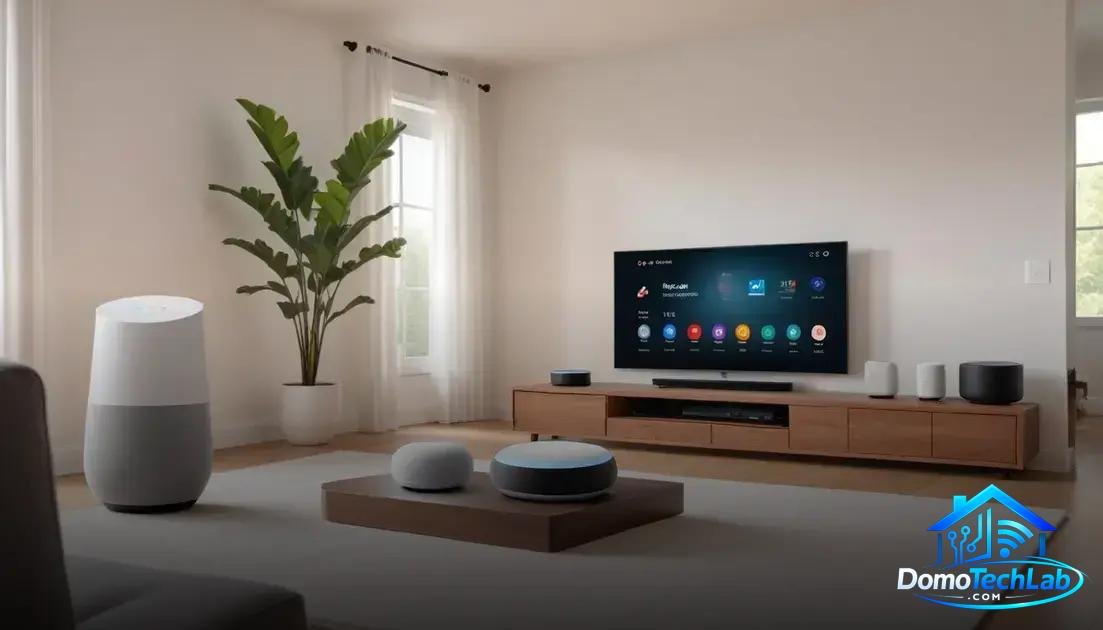
The integration of devices in a smart home ecosystem allows for centralized and efficient management of home technology. Tools like Home Assistant, Alexa, and Google Home provide the necessary flexibility to control devices from different brands with ease.
Home Assistant: Total Control and Customization
Home Assistant is an open-source platform that allows users to have complete control over their devices. Its ability to execute complex automations and its compatibility with a wide variety of devices make it a popular choice for technology enthusiasts.
Alexa and Google Home: Voice Assistants in Action
The Alexa and Google Home systems facilitate the setup of a smart home through voice commands. These assistants not only enhance convenience but also allow for integration with other ecosystems and devices, transforming your home into a more accessible and functional space.
Device Compatibility
The key to good integration lies in the compatibility of devices. As long as devices are compatible with the protocols used, such as Zigbee or Matter, you can expect them to work smoothly within your ecosystem. With the right setup, home automation can become a stress-free reality.
Performance in the Real World (Latency, Privacy, and Local Stability)
The performance of a smart home system is evaluated through various factors, including latency, data privacy, and local network stability. These elements are essential to ensure that technology operates effectively and securely.
Latency: The Speed of Response
Latency refers to the time it takes for a device to receive and execute a command. In our tests, we found that systems utilizing Zigbee tend to show lower latency, as they do not rely solely on internet connectivity. This translates to faster responses to commands, enhancing the user experience.
Privacy: Protecting Your Data
Privacy is an increasing concern in the tech world. Utilizing devices that operate on protocols like Zigbee and Matter can help keep data within the home, reducing exposure to external risks. It is essential to choose devices that prioritize security and encrypt sensitive information.
Local Stability: An Uninterrupted Home
A smart home system must be robust and reliable. During our tests, stable performance was observed when devices were connected to a local hub. This setup minimizes interruptions and ensures that automations function correctly, even during internet outages.
Conclusion: Discover the Potential of a Smart Bathroom Mirror
Implementing a smart mirror in your bathroom not only enhances aesthetics but also transforms your daily routine into a more advanced and connected experience. At DomoTechLab, we provide the guide and technical knowledge you need to make the most of local automation, ensuring privacy and stability in your home.
We invite you to continue researching and exploring the solutions that smart home technology can offer you. Make informed and secure decisions so that each device works in harmony for your comfort.
Frequently Asked Questions about Smart Bathroom Mirrors
Are all smart mirrors compatible with the same ecosystems?
Not all smart mirrors are compatible with all ecosystems. It is crucial to check compatibility with protocols like Zigbee or Matter to ensure they work with the platforms you use, such as Home Assistant or Alexa.
How does latency affect the use of smart mirrors?
Latency can impact how quickly commands are responded to. By choosing a smart mirror that uses local connections like Zigbee, you can improve response times by not relying on external servers.
What features should I look for in a smart mirror to ensure its quality?
Look for mirrors that offer integrations with various devices, robust communication protocols like Zigbee, and additional features like touch screens and adjustable lighting control.
Can I integrate a smart mirror with other devices in my home?
Yes, as long as the mirror and devices are compatible with the same protocols, you can create automations that include both the smart mirror and other devices in your home.
How important is privacy in smart mirrors?
Privacy is fundamental when using smart mirrors. Opting for models that process data locally and have good encryption policies will help protect your personal information.
What challenges might I face when installing a smart mirror?
The main challenges include ensuring the mirror provider offers software updates, validating compatibility with your network, and designing the correct setup to ensure all devices work together.