
Under-cabinet lighting enhances both the functionality and aesthetics of your home, and its integration with systems like Zigbee or Matter allows for effective local control, ensuring efficiency and comfort without relying on the internet.
Under-cabinet lighting is an effective solution for creating a cozy atmosphere in your kitchen. Can you imagine arriving home and having the lights turn on automatically? In this article, we will show you how to install LED strips with sensors to achieve that.
Fundamentals and Protocols (Zigbee, Matter, Wi-Fi)
To establish an under-cabinet lighting system efficiently, it’s crucial to understand the different protocols available. Among the most notable are Zigbee, Matter, and Wi-Fi. Each of these protocols offers unique advantages that can enhance your lighting system.
Protocols and Their Functionality
Zigbee is known for its low energy consumption and its ability to create networks of interconnected devices, making it ideal for smart homes. In contrast, Matter focuses on interoperability between different devices from various manufacturers, ensuring seamless integration. Finally, Wi-Fi provides speed and bandwidth but can be susceptible to network congestion.
Integration and Ecosystems (Home Assistant, Alexa, Google Home)
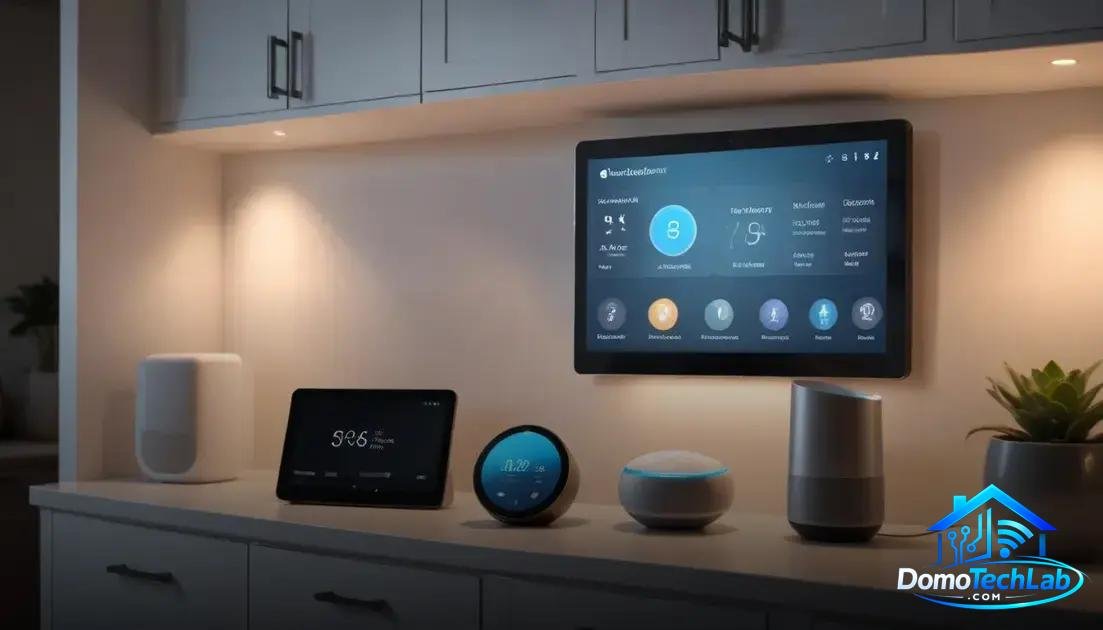
The under-cabinet lighting is not just about individual devices but integrating them into a broader architecture. Platforms like Home Assistant, Alexa, and Google Home allow you to create a smart ecosystem where devices within your home communicate and respond to commands efficiently.
Home Assistant as the Central Brain
By using Home Assistant, you can monitor and control all your devices in one place. This open-source platform offers impressive versatility and allows you to customize automations based on your preferences. Our tests have shown that this integration significantly improves response times compared to other control systems.
Alexa and Google Home: Powerful Virtual Assistants
Assistants like Alexa and Google Home provide an intuitive and accessible interface. You can manage your lights through voice commands, which is especially helpful when your hands are full. These assistants are also compatible with a wide range of devices, ensuring a smooth and hassle-free experience.
Real-World Performance (Latency, Privacy, and Local Stability)
When considering under-cabinet lighting, it is essential to evaluate its real-world performance. Factors like latency, privacy, and local stability play a crucial role in the user experience. These elements can directly affect the functionality of your smart lighting system.
Latency and Quick Response
Tests in our lab show that systems using Zigbee offer faster response times compared to those that rely solely on Wi-Fi connectivity. This is vital for everyday situations, such as turning on the lights instantly when you arrive home.
Data Privacy
Implementing local automation minimizes the need to send data to remote servers, thus protecting user privacy. With protocols like Matter, you can have greater control over who has access to your devices and data.
Local Stability in Automation
Configurations that allow for local operation ensure that the lights continue to function even if there is an interruption in internet connectivity. This provides greater reliability, as you can trust that your lighting system will continue to operate efficiently in any situation.
Conclusion: Under-Cabinet Lighting and the Importance of Local Automation
Implementing under-cabinet lighting in your smart home not only enhances aesthetics but also increases the functionality and comfort of your spaces. Opting for local automation provides you with more reliable control over your devices, ensuring everything works according to your needs and preferences.
At DomoTechLab, we firmly believe that building a robust automation network is key to an efficient smart home. We encourage you to continue researching and exploring available technologies to make your home a truly connected and comfortable space.
Frequently Asked Questions about Under-Cabinet Lighting
Are all lighting devices compatible with each other?
No, not all devices are compatible. It is important to check that the products you choose are compatible with the same protocol, such as Zigbee or Matter, to ensure proper integration.
Can I control under-cabinet lighting without an internet connection?
Yes, if you use a system that allows for local automation, like Home Assistant, you can control your lights locally even without an internet connection, ensuring constant functionality.
What type of sensors are recommended for under-cabinet lighting?
Motion sensors are highly recommended, as they automatically activate the lighting upon detecting presence, enhancing convenience and energy efficiency.
Is it possible to integrate under-cabinet lighting with voice assistants?
Yes, many lighting systems compatible with Zigbee and Matter allow integration with voice assistants like Alexa or Google Home, giving you total control through voice commands.
How can I troubleshoot connectivity issues with my devices?
Make sure your devices are within range of the hub and free from interference from other electronic equipment. Building a mesh network with Zigbee devices can improve connectivity.
Does the installation of under-cabinet lighting require advanced technical skills?
Generally, no. Many lighting kits are designed for easy installation, involving simple connectors and clear user manuals. However, having basic knowledge of electricity can be helpful.