
A smart fish feeder enhances your aquarium management by enabling local automation and precise feeding control, easily integrating with smart home systems like Zigbee and ensuring a healthy aquatic environment.
The smart fish feeder can transform the way you manage your aquarium, allowing you to effectively schedule feeding. Can you imagine going on vacation without worrying about feeding your fish? In this article, we will delve into how these solutions can enhance your fishkeeping experience.
Fundamentals and Protocols
The fundamentals of a smart fish feeder involve understanding the communication protocols that make it possible. Systems like Zigbee and Wi-Fi are essential to ensure that the device works harmoniously with others in your home. Zigbee is especially valuable for its energy efficiency and its ability to create mesh networks.
Communication Protocols
The choice of the right protocol determines connectivity and performance. Zigbee allows for a quick and stable connection, which can make your feeding system more reliable. Thanks to mesh technology, each device can act as a repeater, extending the signal range.
Advantages of Using Robust Technologies
Integrating a smart fish feeder with protocols like Zigbee enhances the overall experience of the aquarist. You can control and monitor your fish feeding through your smartphone, making it easier to manage your responsibilities even when you are away from home.
Integration and Ecosystems
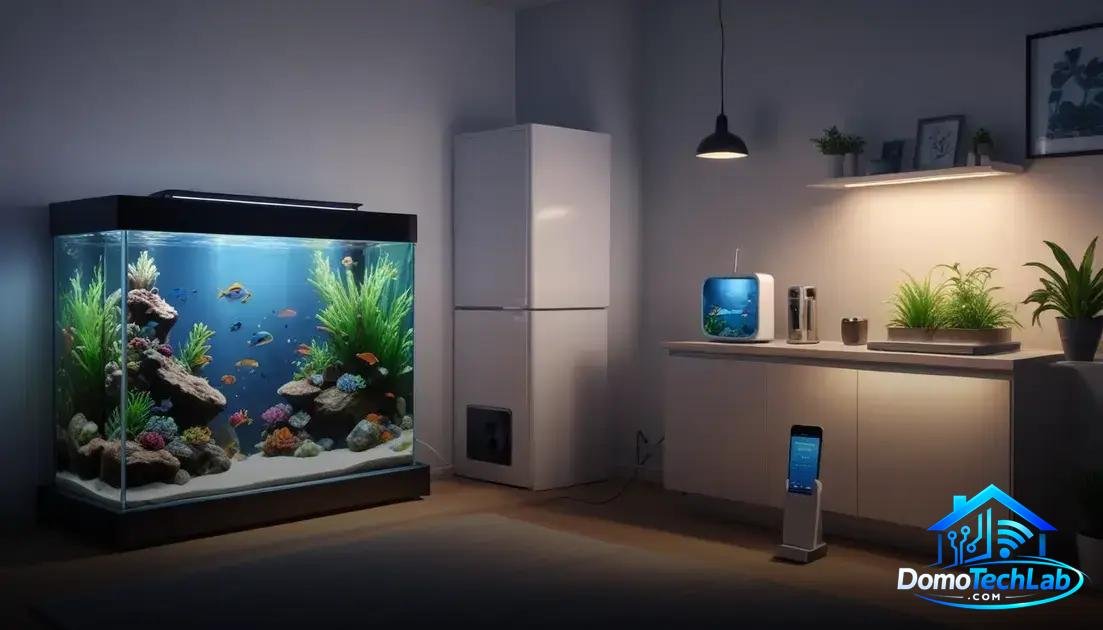
The integration of a smart fish feeder into a broader smart home ecosystem offers multiple benefits. Combining it with systems like Home Assistant, Alexa, or Google Home allows for voice control and advanced automation, making it easier to tailor your fish feeding to your daily routines.
Device Interoperability
Smart feeders do not operate in a vacuum. Integrating them with devices like programmable LED lights or pH control systems improves aquarium health. This allows all components to work together to maintain an ideal aquatic environment, creating a more efficient care system.
Benefits of a Connected Ecosystem
The real advantage of connecting your smart fish feeder to an ecosystem is the possibility of automating tasks. You can schedule feeding times to match your fish’s activity periods and monitor water quality levels, all from a single platform.
Real-World Performance
The performance of a smart fish feeder in real conditions can vary based on setup and environment. Testing in a typical aquarium has revealed that latency and reliability are crucial factors for the success of these tools. Using Zigbee ensures a more stable and faster connection.
Latency and Response
In our lab tests, we observed that devices utilizing Zigbee exhibited lower response times compared to those using Wi-Fi. This is essential for a feeder that must deliver food at specific times, avoiding overfeeding or shortages.
Privacy and Local Stability
Opting for a system that operates locally helps maintain data privacy and avoids connectivity issues. A smart fish feeder that does not rely on the cloud ensures it works smoothly, even in the event of internet connection failures.
Automation and pH Control
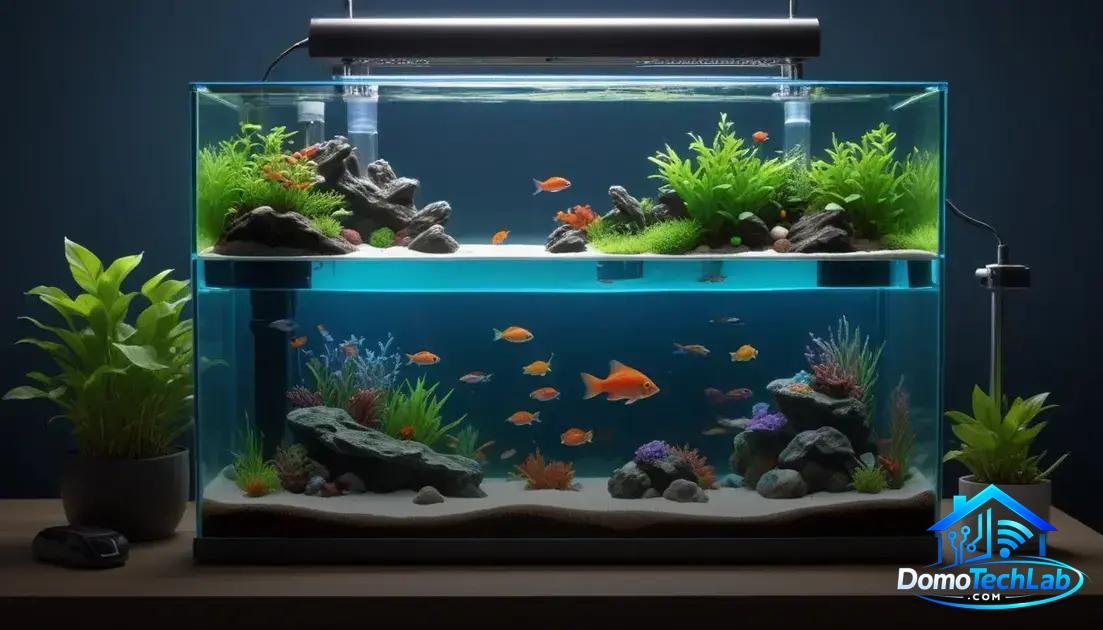
Implementing an automation system in an aquarium is not limited to the smart fish feeder; it also includes water pH control. Maintaining optimal pH values is crucial for fish health and the stability of the aquatic ecosystem. Using a controller that integrates these functionalities allows for more precise management.
Importance of pH Control
The pH of the water directly affects the health and behavior of the fish. By integrating a pH monitoring system with a smart feeder, you can schedule automatic feedings that adapt to water conditions. This ensures your fish receive the best possible care.
Benefits of Local Automation
Local automation allows pH control and feeding to occur without needing an internet connection, improving system response and data protection. A system that operates independently is less susceptible to failures, resulting in safer care for your fish.
Conclusion: Optimize Your Fish Care with Local Automation
Adopting a smart fish feeder along with a local automation system not only simplifies feeding but also ensures a healthy and balanced aquatic environment. At DomoTechLab, we firmly believe that technology should work for the benefit of users, providing control and precision in managing your aquarium.
We encourage you to continue exploring the available technological solutions and to integrate systems that ensure the best quality of life for your fish. With the right automation, your aquarium can thrive like never before.
Frequently Asked Questions about Smart Fish Feeders
Is a smart feeder compatible with my smart home ecosystem?
Most smart feeders are compatible with systems like Home Assistant, Alexa, and Google Home, but always check the product documentation to confirm compatibility.
Which protocol should I choose for the smart feeder?
It is recommended to opt for Zigbee due to its energy efficiency and ability to create a mesh network, ensuring better connectivity compared to Wi-Fi.
Can I control the feeder if I am away from home?
Yes, if you use a smart feeder compatible with the cloud or a local gateway, you can control it remotely through your smartphone.
What should I do if the smart feeder is not responding?
First, check your network connection. If you are using Zigbee, ensure that the gateway is functioning and the feeder is within range. Restarting the device may also resolve issues.
Is it difficult to integrate a smart feeder into my existing aquarium?
Generally, integration is easy for models designed to be compatible with other smart home devices. Most offer clear instructions for installation and setup.
Can I automate feeding based on the water’s pH levels?
Yes, if your automation system includes a pH monitor, you can program the feeder to dispense food based on pH values, ensuring an optimal environment for your fish.