
A robotic lawn mower optimizes garden maintenance by providing time savings and minimal intervention, efficiently integrating into smart home automation systems using protocols such as GPS and wireless boundary limitations.
Robotic lawn mowers have become an essential tool for those seeking a perfect lawn without effort. Can you imagine enjoying a well-manicured lawn automatically, without worrying about the manual task? Here we will explore how these devices transform garden care.
Fundamentals and Protocols of Robotic Lawn Mowers
Robotic lawn mowers utilize a combination of advanced technologies to deliver performance and efficiency in garden maintenance. One of the pillars of their operation is the integration of protocols such as GPS and wireless boundary limitations, which allow the device to navigate accurately and avoid obstacles.
Technical Features of Robotic Lawn Mowers
These devices are equipped with sensors that facilitate navigation and mapping of the garden. Their mulching technology allows the cut grass to become natural fertilizer, promoting healthy growth. In our labs, we have observed that lawn mowers utilizing GPS navigation provide more efficient coverage and significant time savings compared to more basic models.
Integration with Smart Home Automation Systems
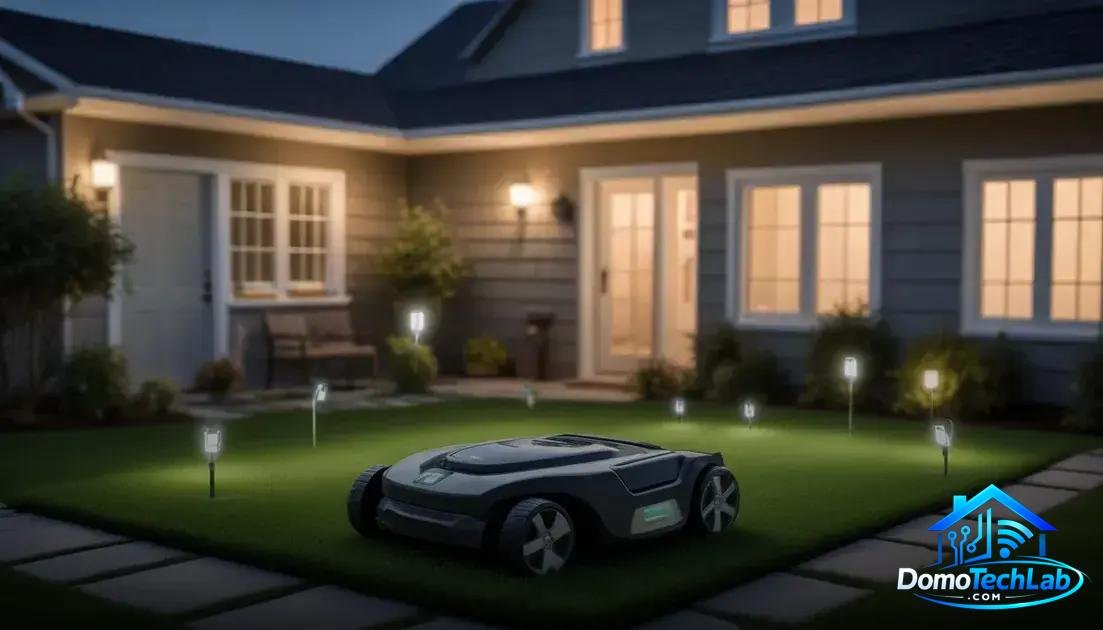
The integration of a robotic lawn mower with smart home automation systems is fundamental to maximize its functionality. Using platforms like Home Assistant, you can effectively control and schedule your lawn mower, aligning its operation with other smart devices in your home.
Device Interoperability
The ability of a robotic lawn mower to communicate with other devices, such as smart plugs and light bulbs, allows for automated routines. For example, you can schedule the lawn mower to activate when the garden lights turn off, thus optimizing energy and time usage.
Performance in Residential Environments
The performance of robotic lawn mowers in residential environments has been the subject of various tests. These devices must face different types of terrain and weather conditions, which tests their efficiency and reliability. In our laboratory, we evaluate how they handle slopes, obstacles, and weather changes.
Efficiency Assessment
Robotic lawn mowers equipped with GPS navigation demonstrate superior performance when cutting lawns on varying degrees of incline. The mapping technology allows for more comprehensive coverage, reducing operating time and ensuring a uniform finish.
Time Savings and Minimal Maintenance
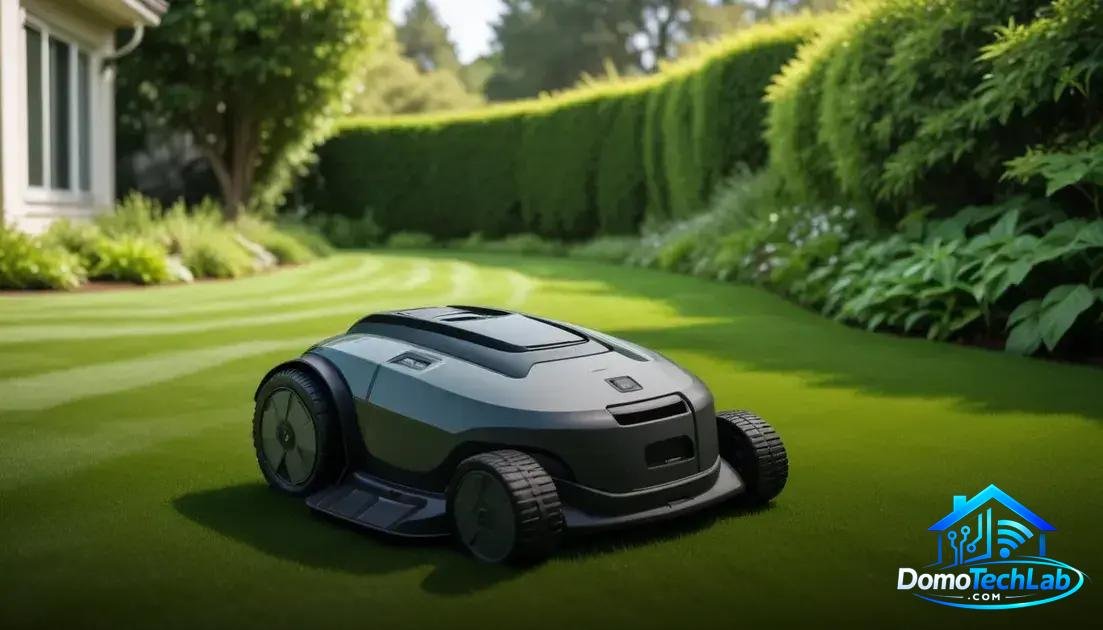
Robotic lawn mowers are an efficient solution for those seeking time savings and minimal maintenance for their garden. Thanks to their automatic scheduling, these devices can mow the lawn at specific times of the day, freeing up valuable time for other activities.
Benefits of Automatic Use
By using a robotic lawn mower, the need for regular manual mowing is reduced. This not only saves time but also avoids wear and tear on heavier equipment. With proper blade maintenance and periodic cleaning, the lawn mower can operate optimally for years, thus minimizing additional costs.
Conclusion: Optimize Your Garden with a Smart Robotic Lawn Mower
Implementing a robotic lawn mower in your home not only represents an improvement in the aesthetics of your garden but also transforms the way you manage maintenance. At DomoTechLab, we emphasize the importance of local automation to ensure efficient and private control of your devices.
We encourage you to learn more about robotic lawn mower technology and how they can integrate into your smart home ecosystem. Every step you take towards automation is a step towards a more efficient and convenient home.
Frequently Asked Questions about Robotic Lawn Mowers
Are robotic lawn mowers compatible with all Wi-Fi networks?
Not all robotic lawn mowers are compatible with all Wi-Fi networks. Be sure to check compatibility with the protocols your router supports; some models may require a connection to a 2.4 GHz network.
How do robotic lawn mowers integrate into a smart home automation system?
The integration is achieved through compatible applications that allow you to control the lawn mower from a smartphone, and in some cases, they can be linked to platforms like Home Assistant or Alexa for automation.
Can robotic lawn mowers operate in adverse weather conditions?
Most robotic lawn mowers are designed to withstand light rain, but they should not be used in extreme conditions such as thunderstorms or snow, as this can damage the device.
What limitations do robotic lawn mowers have in garden design?
Robotic lawn mowers work best in gardens with clearly defined boundaries. Complex obstacles, such as narrow pathways or highly ornamental gardens, can hinder their operation, affecting their efficiency.
Are there robotic lawn mowers that connect to mesh networks like Zigbee?
Some advanced models are beginning to incorporate technologies like Zigbee to improve communication with other smart devices. However, most still connect via Wi-Fi.
How do wireless boundaries affect the performance of robotic lawn mowers?
Wireless boundaries are crucial for the optimal functioning of a robotic lawn mower, as they define the areas the device can cut. Without proper boundary establishment, the mower may stray outside the designated areas and not operate efficiently.