
The golden rules for a smart home include the use of protocols like Zigbee and Matter to ensure efficient and secure device integration, prioritizing local automation and network stability.
Smart Home golden rules are essential for achieving an efficient connected home. Knowing them can prevent common issues and maximize the performance of your devices. Are you ready to transform your space into a truly smart one?
Fundamentals and Protocols
To start your journey towards a smart home, it’s crucial to understand the protocols that underpin this technology. Protocols like Zigbee, Thread, and Wi-Fi are essential for communication between devices.
What is Zigbee?
Zigbee is a communication protocol that allows for the connection of low-power devices. Its strength lies in forming a mesh network, meaning each device can act as a repeater, thereby increasing coverage and network stability.
The Flexibility of Matter
Matter is a new interoperability standard aimed at simplifying connection between different device ecosystems. This protocol seeks to provide security and reliability, which will enhance the mass adoption of smart home technology.
Advantages of Wi-Fi
Wi-Fi is one of the most common protocols in smart homes. While it provides a high-speed connection, network saturation can become an issue as more devices are added. Optimizing the use of Wi-Fi is essential for the performance of your smart home.
Integration and Ecosystems
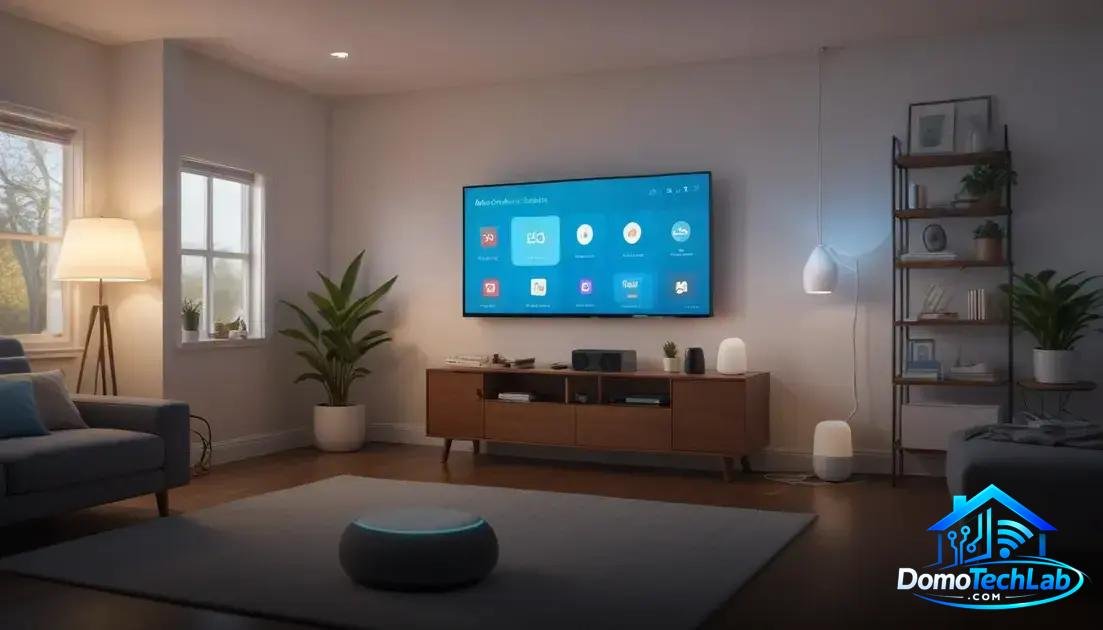
Integration in a smart home is less complicated than it seems. Ecosystems like Home Assistant, Alexa, and Google Home allow different devices to be unified on a central platform. This simplifies control and enhances the user experience.
Home Assistant: Power and Flexibility
Home Assistant is a local automation platform that provides complete control over various devices. Its customization capability lets you create unique scenarios tailored to your specific needs.
Alexa: Accessibility and Voice Commands
Alexa not only acts as a voice assistant, but also serves as a central hub for other devices. Its integration with numerous home products allows for multiple commands and gestures, making it easier to manage your smart home.
Google Home: Synchronization with Daily Life
Google Home stands out for its ability to learn from your habits. This not only improves the personalization of routines but also optimizes the use of connected devices, ensuring that your home is always at the cutting edge.
Real-World Performance
The real-world performance of a smart home depends on several factors such as network stability, latency, and privacy. With devices utilizing technologies like Zigbee and Thread, optimal performance can be achieved.
Network Stability
A stable network is crucial for the functionality of a smart home. During our tests, we found that networks based on Zigbee tend to be more reliable. This is due to their mesh network architecture, which allows devices to communicate directly with one another.
The Importance of Latency
Latency refers to the time it takes for a device to respond to a command. In our experiments, we found that latency was significantly lower in systems that utilized local automation. This results in a faster and smoother user experience.
Privacy and Security
Privacy is an aspect that should not be overlooked in a smart home. Devices that operate in the cloud can be vulnerable to attacks. Opting for devices that allow for local control can enhance security and protect personal data from unauthorized access.
Common Automation Mistakes

Automation in a smart home can be a straightforward process, but there are common mistakes that can compromise its efficiency. Identifying and solving them is essential to ensure optimal performance.
Underestimating Planning
One of the most frequent mistakes is not properly planning automations. It’s essential to define which devices will be integrated and how they will function together. The lack of a strategy can lead to conflicts between devices and an unsatisfactory user experience.
Ignoring Device Compatibility
Selecting devices that are not compatible with protocols like Zigbee or Thread can lead to frustration. Always check if your new devices will be able to interact with existing ones to avoid integration issues.
Lack of Firmware Updates
Not performing firmware updates is another common mistake. Manufacturers release updates that improve security and add new functionalities. Ignoring these updates can leave your devices vulnerable and with limited features.
Conclusion: Empower Your Home with Smart Home Golden Rules
Local automation is the key to reliable and secure operation of your smart home. At DomoTechLab, we understand that every step counts, from selecting the right protocols to effectively integrating devices.
We encourage you to continue exploring our proposals and recommendations so you can enjoy a home that not only meets your needs but also provides you with the peace of mind and control you deserve.
Frequently Asked Questions about Smart Home Golden Rules
What are the main communication protocols in smart homes?
The main protocols are Zigbee, Thread, and Wi-Fi. Each has its advantages in terms of energy consumption, speed, and connectivity capabilities.
Which devices are compatible with the Zigbee protocol?
Zigbee is compatible with a wide range of devices, including switches, bulbs, and smart plugs. Always check the manufacturer’s compatibility list.
How can I troubleshoot connection issues between devices?
Check the distance between devices, the signal quality, and ensure that the devices are updated. Also, consider using a hub that supports multiple protocols to enhance integration.
Should I use local or cloud automation?
Local automation offers greater security and lower latency. It reduces reliance on the Internet, which is crucial for critical functions such as home security.
How can I increase the stability of my smart home network?
Use devices with mesh network technology, like Zigbee. This allows each device to act as a repeater, improving coverage and stability of the network.
Is it possible to integrate devices from different brands?
Yes, but check compatibility through protocols like Matter. This standard facilitates interoperability between devices from various brands and ecosystems.