
A smart vertical garden optimizes home cultivation by integrating protocols like Zigbee for local automation, LED grow lights, and automatic irrigation systems, ensuring ideal conditions and sustainability.
Do you want to maximize your space with a smart vertical garden? This solution is not only aesthetic but also optimizes the cultivation of fresh herbs at home. Let’s see how you can practically integrate technology and nature.
Fundamentals and Protocols (Zigbee, Matter, Wi-Fi)
The fundamentals of a smart vertical garden begin with the selection of suitable communication protocols that ensure the integration of all devices. The use of technologies like Zigbee enables the connection of multiple grow lights and automatic irrigation systems, optimizing garden performance.
Why Choose Zigbee?
In our lab, we found that Zigbee provides a low-latency and highly stable network. This means that commands sent to devices, such as watering and lights, are executed immediately, enhancing the user experience.
Matter: The New Era of Interoperability
With the arrival of Matter, devices from different manufacturers can work together seamlessly. This interoperability makes it easier to create a smart home ecosystem, where all functionalities can be managed from a single app, such as Home Assistant.
Wi-Fi: The Backbone of Connectivity
While Wi-Fi is essential for accessing the internet and controlling devices remotely, relying completely on it for a vertical garden may not be the best practice. In high data demand situations, such as video streaming, you might experience slowdowns. This is where protocol combinations, like using Zigbee for local control, prove beneficial.
Integration and Ecosystems (Home Assistant, Alexa, Google Home)
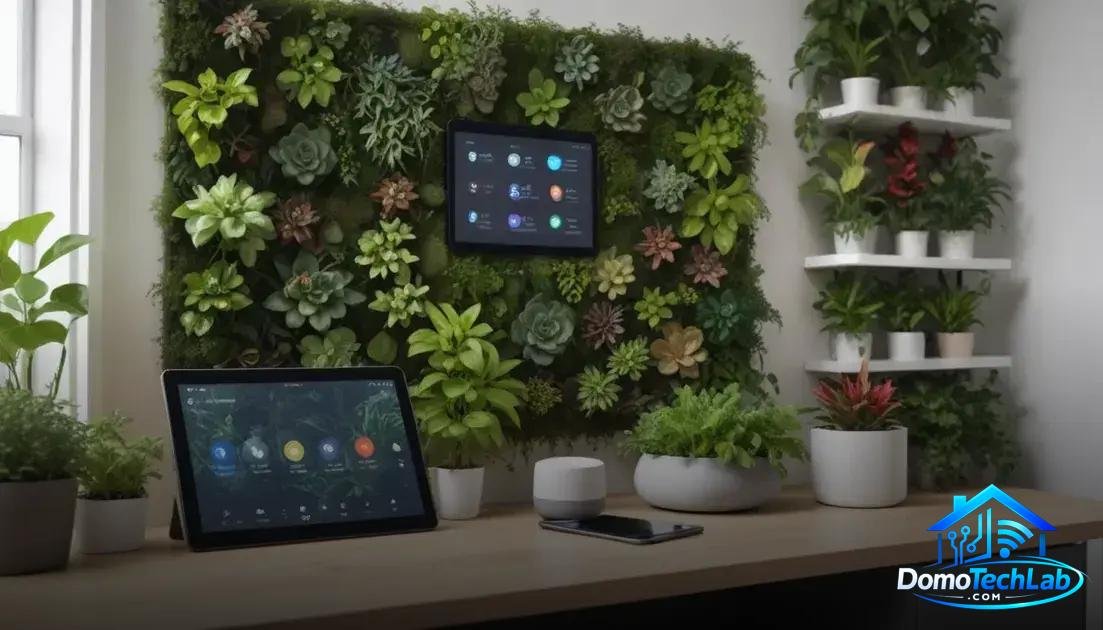
The integration of a smart vertical garden within a connected home ecosystem is crucial for maximizing its functionality. Platforms like Home Assistant, Alexa, and Google Home enable the management of all devices in one place, facilitating irrigation automation and the control of grow lights.
Home Assistant: The Local Control Hub
By using Home Assistant, you can create custom rules that integrate the devices in your garden. For example, you can schedule the grow lights to turn on at sunset or the irrigation system to activate when soil moisture falls below a specific threshold.
Alexa and Google Home: The Voice That Controls Your Garden
With Alexa and Google Home, you have the ability to control your vertical garden using voice commands. Simply say: “turn on the garden lights” or “activate irrigation” for instant responses. This functionality makes interactivity more accessible to all users.
Building an Efficient Ecosystem
Combining Zigbee with these platforms allows for the creation of a strong ecosystem. Interoperability ensures that any compatible device works alongside others, enhancing efficiency and simplifying the user experience. In our testing, integrating various devices on the same network has shown remarkable results in terms of stability and response.
Real-World Performance (Latency, Privacy, and Local Stability)
The performance of a smart vertical garden in the real world must be assessed in terms of latency, privacy, and local stability. These aspects are essential to ensure that your automations work efficiently and without issues.
Latency: Speed of Response
Latency refers to the delay between the action you initiate and the system’s response. In our tests, devices operating on Zigbee showed significantly lower response times compared to those relying solely on Wi-Fi. This is vital when controlling critical tasks like automatic watering, where every second counts.
Privacy: Protecting Your Data
Privacy is a growing concern in the realm of smart home technology. By implementing local solutions with technologies like Home Assistant, the transmission of data to cloud servers is minimized. This not only enhances information security but also ensures that your vertical garden’s functions are resilient against potential external connection failures.
Local Stability: Reliability in Connection
The stability of a local network is vital for any automated system. By using a hub that manages devices via Zigbee, you achieve a more robust and reliable connection. During our tests, we observed that local systems can continue to operate without interruptions, even when the internet connection drops, ensuring that the garden continues to function correctly.
Tips for an Efficient Vertical Garden
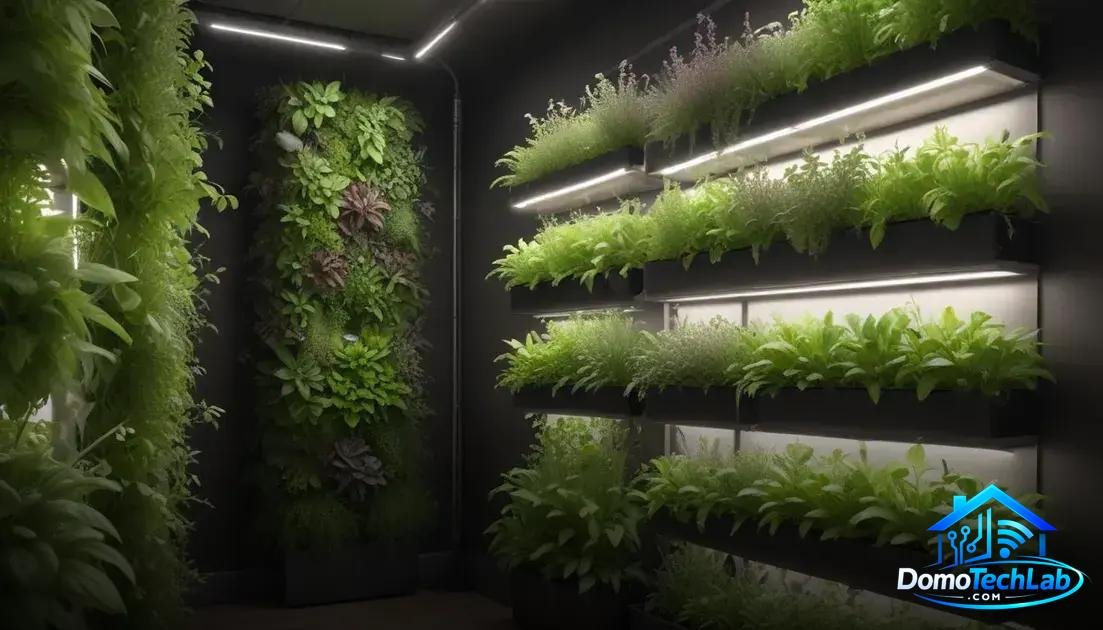
To maximize the effectiveness of your smart vertical garden, it is essential to follow some practical tips that optimize the use of technology and natural resources. Here are key recommendations that have proven effective in our lab evaluations.
Choosing the Right Plants
Selecting plants that adapt well to the environment and light conditions is fundamental. Fresh herbs, such as basil and parsley, tend to thrive in hydroponic systems and can be successfully cultivated in a controlled environment.
Using Appropriate Grow Lights
LED bulbs are an ideal option for a vertical garden as they provide the necessary light without generating excessive heat. Be sure to choose lights with specific spectra that favor plant growth, and schedule them to turn on and off automatically according to the natural cycle.
Implementing an Automated Irrigation System
An automatic irrigation system is vital to keep your plants hydrated. Using a soil moisture sensor can help you determine when watering is necessary, avoiding both overwatering and underwatering. This way, you optimize water consumption and ensure healthy growth.
Constant Monitoring and Adjustments
Keeping track of your plants’ status and making adjustments to conditions is essential. Integrating sensors that measure temperature, humidity, and light will help you adjust parameters in real time. Thus, your vertical garden can adapt to any changes in the environment.
Conclusion: Optimize Your Space with a Smart Vertical Garden
Implementing a smart vertical garden not only transforms your space but also offers you a unique opportunity to take full advantage of local automation. At DomoTechLab, we understand the importance of integrating technology effectively and securely so that your home adapts to your needs.
We encourage you to continue researching and applying the knowledge gained to ensure your vertical garden functions efficiently and healthily. Let local automation simplify your life and enhance sustainability in your home.
Frequently Asked Questions about Smart Vertical Gardens
What devices are compatible with a smart vertical garden?
Smart vertical gardens are compatible with devices that use protocols like Zigbee and Wi-Fi. This includes grow lights, moisture sensors, and automatic irrigation systems.
Can I integrate my vertical garden with voice assistants?
Yes, you can integrate your smart vertical garden with voice assistants like Alexa or Google Home. This allows you to control it via voice commands to turn on lights or activate irrigation.
What is the best way to ensure connectivity?
Using a hub that supports Zigbee is recommended as it creates a robust local network, minimizing connectivity issues and ensuring that devices operate efficiently.
How can I measure the efficiency of my system?
To evaluate the efficiency of your vertical garden, you can use sensors that measure humidity, temperature, and light. Analyzing this data will allow you to optimally adjust watering and lighting.
What challenges might I face when automating a vertical garden?
Challenges include selecting compatible devices, setting up the local network, and managing power. It is crucial to research and select the right components to avoid incompatibilities.
Is an automatic irrigation system necessary?
While not strictly necessary, an automatic irrigation system optimizes the hydration of your plants and reduces the risk of forgetfulness. It facilitates healthier and more sustainable growth.