
A smart closet optimizes the storage and care of your garments through a digital inventory system and local automation technologies, enhancing management and extending the lifespan of clothing.
The smart closet is changing the way we organize and care for our clothes. With innovative technologies and local automation, we can optimize every corner of our space. Ready to discover how to implement smart solutions in your home?
Fundamentals and Protocols
To get the most out of a smart closet, it is crucial to understand its fundamentals and communication protocols. Closet devices typically operate using technologies like Zigbee, Thread, and Wi-Fi, each with distinct features that affect their performance and functionality.
Zigbee Protocol
The Zigbee protocol is ideal for low-energy devices and allows multiple devices to communicate with each other efficiently. This protocol becomes a key component in establishing a robust network within your smart closet.
Thread Protocol
On the other hand, Thread is a mesh protocol that facilitates the connection between devices in a smart home. Its specialization in local communication ensures that data flows smoothly, contributing to a more integrated experience.
Wi-Fi and Its Role
Although Wi-Fi is not designed exclusively for low-power devices, its high speed and internet connectivity make it indispensable for remote management of the closet. It’s important to leverage this technology correctly to ensure that the smart closet is always just a touch away from your phone or other devices.
Integration and Ecosystems
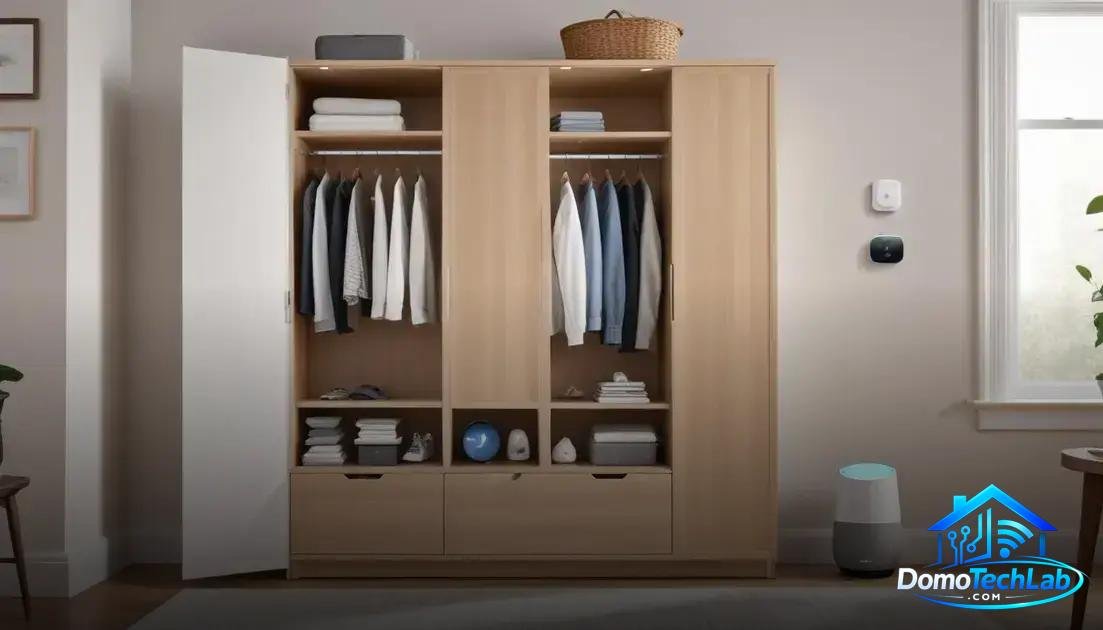
The integration of a smart closet into your connected home ecosystem is essential to maximize its functionality. By using platforms like Home Assistant, Alexa, and Google Home, you can coordinate all devices in a centralized and easy-to-use manner.
Home Assistant
Home Assistant is one of the most powerful platforms for local automation. It allows the connection of a wide variety of devices, from lights to sensors in your closet, making them an integral part of a smart home ecosystem. Customization options are virtually limitless.
Alexa and Google Home
Both Alexa and Google Home offer voice interactivity, adding an extra level of convenience. You can ask them to adjust the lighting inside your closet or to give you a digital inventory of the available garments. This helps you interact with your system intuitively.
Device Compatibility
The key to an effective system is compatibility between devices. By choosing devices that work well together, you ensure that your smart closet integrates seamlessly into your network. Always check the list of compatible devices before your purchases to avoid future incompatibilities.
Real-World Performance
Evaluating the real-world performance of a smart closet is essential to understand its effectiveness and functionality. In our tests, we observed several factors that directly influence the user experience.
Response Latency
When using devices connected via Zigbee or Thread, latency is remarkably low. This means that response times to commands are almost instant, greatly improving interaction within your smart closet. Even during peak usage times, operation remains smooth.
Privacy and Security
Privacy is a significant concern in smart homes. In our studies, devices that operate on local automation provide a significant advantage. Keeping data within the local network minimizes vulnerabilities compared to systems that rely on external servers.
Connection Stability
Connection stability is another critical aspect. Devices connected via Zigbee generally provide a more stable network, even if there are interferences in the Wi-Fi signal. This ensures that the functionalities of the smart closet remain operational without interruptions.
Digital Inventory and Fabric Care

The digital inventory in a smart closet transforms the way we manage our garments and their care. Utilizing sensors and automation technology, it is possible to accurately track each item’s status, greatly simplifying the organization process.
How Digital Inventory Works
The digital inventory is set up through an app on your smartphone, where you can register each garment as you place them in the closet. Connected devices, using protocols like Zigbee, enable real-time information synchronization, keeping your inventory always updated.
Smart Fabric Care
The technology of a smart closet can also include fabric care functions. For example, some devices feature dehumidification systems that protect clothing from humidity and mold. UV-C lights can also be used to eliminate bacteria and odors, ensuring that each garment remains in optimal condition.
Benefits of Digital Management
The digital management of the inventory not only helps you quickly find what you need, but it also optimizes the use of your garments. By receiving care reminders for each item, you extend their lifespan and keep your closet more organized.
Conclusion: Optimize Your Smart Closet with Local Automation
Implementing a smart closet with local automation technology translates to an improved user experience and a more efficient management of your garments. At DomoTechLab, we understand that every technical detail counts to ensure smooth and secure operation of your devices.
We encourage you to continue exploring our recommendations and guides to make the most of your automation system, ensuring that each solution is tailored to your needs and those of your home.
Frequently Asked Questions About Smart Closets
Are all devices compatible with the smart closet?
No, not all devices are compatible. It is crucial to check the list of devices that work with the automation platform you choose to avoid integration issues.
What communication protocol should I choose for my smart closet?
Choose Zigbee or Thread for devices that require low energy consumption and a mesh network. Wi-Fi is useful for high-speed connectivity, but it can overload your network if there are too many devices.
How can I ensure the privacy of my data in a smart closet?
Opt for devices that offer local automation. This prevents your data from being processed on external servers, enhancing security and privacy.
What challenges might I encounter when integrating a smart closet into my home?
Challenges include compatibility between devices, network setup, and potential signal interferences. Plan the arrangement of your devices to minimize these problems.
Is a hub necessary for the operation of the smart closet?
Yes, a hub or gateway is generally necessary to connect devices that use different communication protocols, thus facilitating their management and joint operation.
How can I perform proper maintenance on my smart closet?
Make sure to keep your devices’ software updated, check connections periodically, and clean sensors and components for optimal performance.