
The security of IoT data in your smart home is strengthened through the use of guest networks, regular firmware updates, strong passwords, and firewalls, ensuring the privacy and local stability of your connected devices.
IoT data security is crucial to maintain privacy and control in your smart home. But how can you ensure that your network is protected? Today we will explore practical measures you can implement.
Fundamentals and Protocols (Zigbee, Matter, Wi-Fi)
The fundamentals of communication in a smart home are essential to ensure efficient and secure operation. Protocols like Zigbee, Matter, and Wi-Fi are key in the structure of IoT networks.
Zigbee: Efficiency and Low Power Consumption
Zigbee is known for its low power consumption and ability to connect multiple devices simultaneously. Ideal for sensors and lights, this protocol allows for a robust network without saturating bandwidth.
Matter: Interoperability
Matter is a protocol that seeks harmony among different smart devices. It facilitates the integration of brands and technologies, ensuring that they are compatible with each other, simplifying the user experience in the connected home.
Wi-Fi: High Speed and Stable Connection
Wi-Fi provides the necessary speed for devices that require high bandwidth, such as security cameras and streaming devices. Make sure to have a secure network by using strong passwords and setting up a guest network for your IoT devices.
Integration and Ecosystems (Home Assistant, Alexa, Google Home)
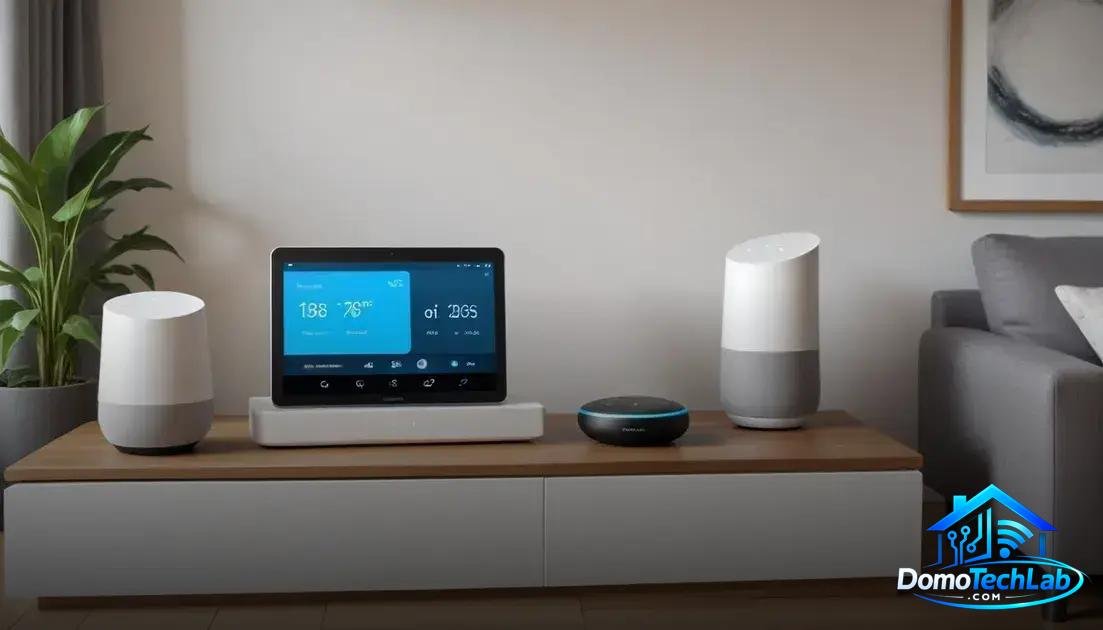
The integration of devices in a smart home is fundamental to maximizing functionality. Platforms like Home Assistant, Alexa, and Google Home offer robust ecosystems that enable interoperability among various devices.
Home Assistant: Total Control and Customization
Home Assistant is one of the most versatile options for those looking to customize their smart home. It offers an easy-to-use interface and allows the integration of devices from different brands, managing everything from a single location. Its ability to work offline is a great advantage in terms of security.
Alexa: An Assistant That Simplifies Life
Alexa from Amazon allows voice control of your IoT devices. This platform is especially useful for automating everyday tasks, whether it’s turning on lights or adjusting the thermostat temperature. Its wide compatibility makes it a popular choice in many homes.
Google Home: Integration with Google Services
Google Home stands out for its integration with Google services, providing a seamless ecosystem for managing devices, playing music, and obtaining information. Its machine learning capability enhances the user experience by adapting to your daily habits and preferences.
Real-World Performance (Latency, Privacy, and Local Stability)
The performance of a smart home in the real world depends on various factors such as latency, privacy, and local stability. These elements play a crucial role in the user experience and data security.
Latency: Importance of Quick Response
Latency refers to the time it takes for a device to respond to a command. In our tests, local control systems, such as those using Zigbee, demonstrated faster response times than those relying entirely on cloud servers. This results in a smoother experience when interacting with your devices.
Privacy: The Key in Automation
Privacy is an increasing concern in the field of IoT. Implementing devices that allow for local automation minimizes the transmission of sensitive data to external servers. This not only protects your personal information but also reduces the risk of hacking.
Local Stability: Reliability in Connection
Local stability is essential to ensure that all devices function consistently. A well-designed system that operates without a permanent internet connection can maintain control and automation of critical devices, even during service interruptions.
Best Practices in IoT Data Security

Best practices in IoT data security are essential for protecting your smart home and personal information. As technology advances, so do the threats, so it’s crucial to stay one step ahead.
Use of Guest Networks
Setting up a guest network for your IoT devices is an effective measure. This isolates your smart devices from the rest of your main network, limiting access to sensitive data and providing an additional layer of security.
Regular Firmware Updates
Manufacturers often release firmware updates that fix vulnerabilities. Keeping your devices updated not only improves their performance but also closes potential doors to external attacks. Set alerts to stay informed about these updates.
Strong and Unique Passwords
Use strong and unique passwords for each device. Avoid easy-to-guess combinations. Consider using a password manager to facilitate the management and generation of secure combinations.
Firewall Configuration
Implement a firewall to protect your network. This acts as a barrier between your devices and the outside world, filtering unwanted traffic and helping to prevent unauthorized access.
Conclusion: Ensure IoT Data Security in Your Smart Home
Local automation is essential to maximize the performance and security of your smart home. At DomoTechLab, we understand that technology can be overwhelming, but we provide you with the tools and knowledge necessary to simplify it.
We encourage you to implement the good practices we have discussed to protect your home and your data. Stay informed about the latest trends and solutions in automation, and transform your space into a sanctuary of security and efficiency.
Frequently Asked Questions About IoT Data Security
What factors should I consider when choosing devices for my smart home?
It is important to consider protocol compatibility, ease of integration into an existing ecosystem, and the security updates offered by the manufacturer.
How can I ensure the privacy of my data in an IoT system?
Make sure to use strong passwords, enable privacy settings on devices, and employ guest networks to separate IoT devices from your main network.
Can devices from different brands interoperate?
Yes, if they are compatible with open protocols like Matter or Zigbee. However, always check the compatibility list before making a purchase.
What should I do if latency on my IoT network is high?
Consider improving the quality of your Wi-Fi signal, reducing the distance between devices, or using a local controller that utilizes Zigbee to enhance performance.
Is it safe to connect IoT devices to the internet?
Yes, as long as you take appropriate security measures, such as using firewalls, keeping firmware updated, and reviewing each device’s access permissions.
How will the number of devices affect the network?
More devices can cause congestion on the network if not managed properly. Use protocols like Zigbee that allow for the creation of a mesh network to optimize communication between devices.