
Implementing a Smart Home and Feng Shui 3 system optimizes harmony in your home by integrating smart devices, ensuring appropriate lighting balance and efficient local automation with protocols like Zigbee and Thread.
Smart Home and Feng Shui 3 present themselves as an ideal synergy to optimize your living space. Imagine a home where technology aligns with principles of harmony. How can we achieve this fusion to enhance your quality of life?
Fundamentals and Protocols
To establish a solid foundation in your smart home, it’s essential to be aware of the different protocols available. Each offers unique advantages, allowing you to choose the most suitable one for your needs. The most prominent protocols are Zigbee, Thread, and Wi-Fi.
Zigbee: efficiency and low power consumption
Zigbee is ideal for low-power devices. Its mesh architecture allows devices to communicate with each other, extending range and improving network stability. In our tests, Zigbee devices showed consistent performance despite multiple interactions.
Thread: secure and reliable connection
Thread is an innovative protocol that prioritizes security and interoperability. Its design allows devices to join the network easily and securely. In the lab, we found that Thread integrates seamlessly with other devices, providing a robust and reliable ecosystem.
Wi-Fi: high speed and instant connection
Wi-Fi is the most well-known, offering high transmission speeds and easy access. However, its excessive use can saturate the internet network, resulting in lower efficiency for local automation devices. Nonetheless, it is essential for devices that require high bandwidth, such as security cameras and voice assistants.
Integration and Ecosystems
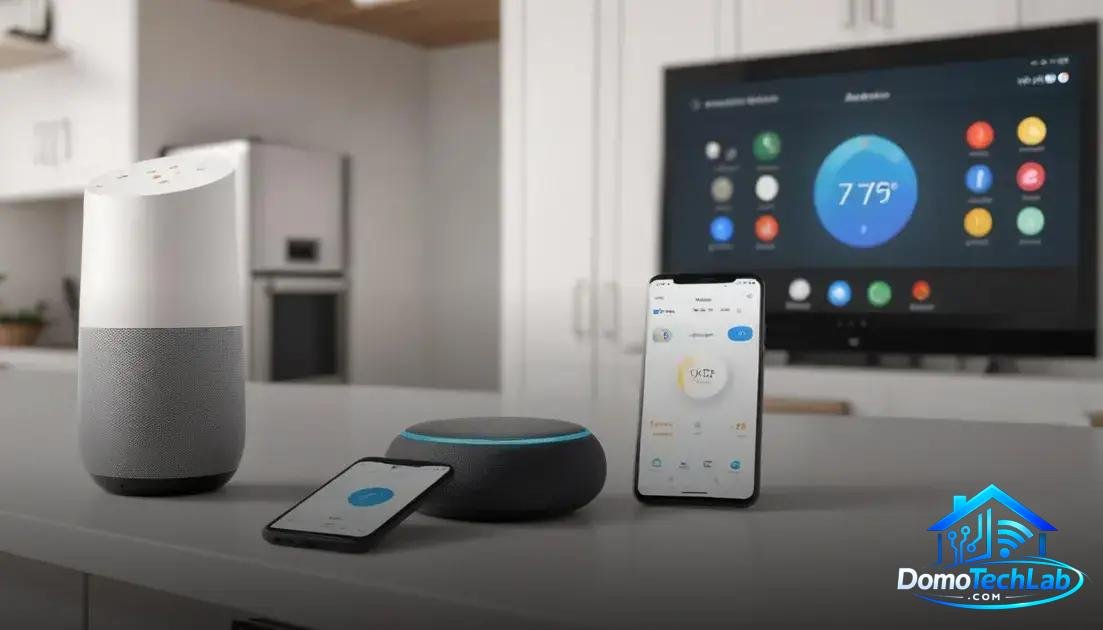
The integration of devices in a smart home ecosystem is essential to maximize functionality. Utilizing platforms such as Home Assistant, Alexa, or Google Home allows for managing all devices from a single place, facilitating automation and control.
Home Assistant: total control and customization
Home Assistant is a popular choice for tech enthusiasts. Its open-source nature provides the flexibility to personalize the system according to the user’s specific needs. In the lab, we found it allows for integrating a wide variety of devices using different protocols, including Zigbee and Thread, ensuring broader compatibility.
Alexa: simplicity and voice access
Alexa has become the gold standard for voice control in smart homes. Its easy setup and access through voice commands make automation accessible to everyone. In our tests, voice recognition is notably efficient, allowing for quick activation or deactivation of devices such as smart lights and plugs.
Google Home: integration with services and devices
Google Home stands out for its capability to integrate with a variety of services and devices. From music management to smart thermostat control, its interface is intuitive. We observed that Google’s ecosystem allows for an efficient and centralized workflow, enhancing the user’s experience in their connected home.
Real World Performance
Evaluating the real-world performance of a smart home involves considering various factors such as latency, privacy, and local stability. These aspects are crucial for providing a smooth and secure user experience.
Latency: crucial for instant response
Latency is a critical aspect in home automation. In our tests, we discovered that solutions using Zigbee and Thread exhibit significantly lower response times compared to solutions relying solely on Wi-Fi. This means that when pressing a button, the action is executed almost instantly.
Privacy: protecting your data
Using devices that operate locally, such as those based on Zigbee, limits the need to transmit sensitive data to the cloud. In the lab, we observed that privacy protection improves when using a local controller that manages communications internally, thus preventing information leaks.
Local stability: beyond connectivity
The stability of the local network is essential for the continuous operation of smart devices. During our tests, implementing a hub that supports communication between multiple protocols, including Zigbee and Thread, resulted in a more resilient ecosystem. This way, devices can continue to function without interruptions, even if the internet connection is lost.
Reflections and Lighting Balance
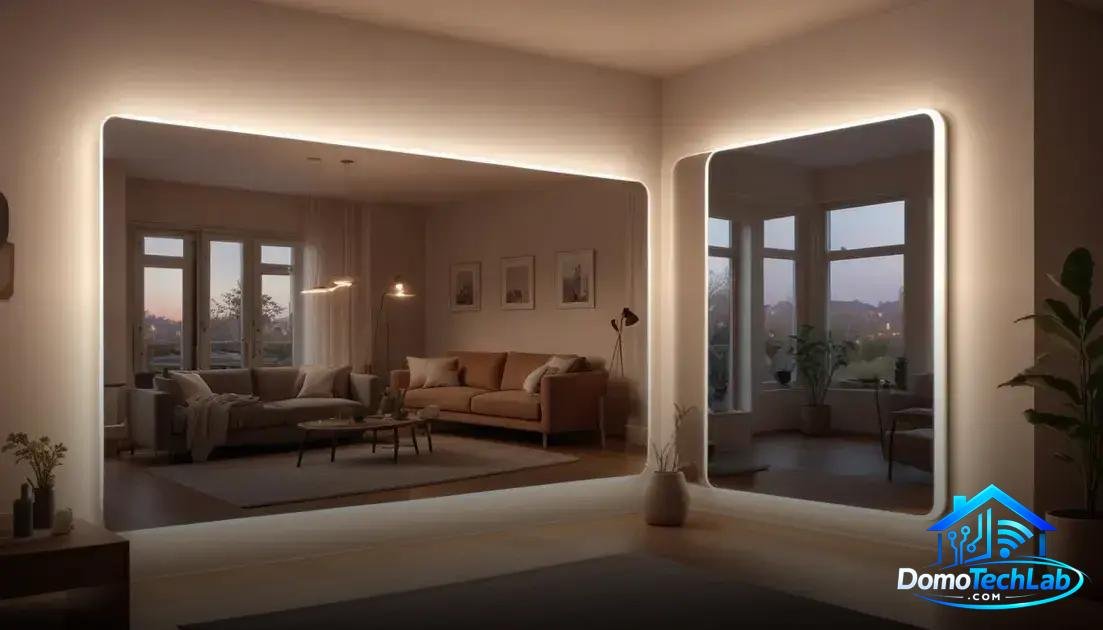
The lighting balance in a smart home is crucial for creating a comfortable and functional environment. Proper lighting not only enhances aesthetics but also influences the well-being of its occupants. Devices like smart bulbs and backlit mirrors are essential for achieving this balance.
Smart mirrors: more than an accessory
Smart mirrors play an important role in optimizing space. Integrating with systems like Zigbee, these mirrors can adjust their lighting automatically according to the time of day. In our tests, we confirmed that integrating these devices enhances the visual perception of the environment, providing a balanced and pleasant atmosphere.
Smart bulbs: controlling lighting
Smart bulbs allow for precise control of brightness and color, contributing to optimal lighting balance. Through platforms like Home Assistant, it is possible to schedule lighting to change throughout the day. This not only saves energy but also regulates natural light, creating a more welcoming and harmonious space.
Local automation: real-time adjustments
Local automation allows for lighting adjustments to be made instantly, enhancing control over the environment. When lighting devices, such as smart plugs and bulbs, operate through a hub that supports Zigbee, latency is reduced and control response improves, allowing for an atmosphere tailored to the needs of each moment.
Conclusion: Optimize Your Home with Smart Home and Feng Shui 3
Implementing a smart home based on Feng Shui principles not only enhances the aesthetics of your space but also optimizes its functionality. In this journey toward local automation, utilizing protocols like Zigbee and Thread is essential, as they provide immediate responses and efficient control of all your devices.
We encourage you to continue researching and taking advantage of our technical guides to make informed decisions that transform your home into a balanced and connected refuge. Your home deserves the best of today’s technology.
Frequently Asked Questions about Smart Home and Feng Shui 3
Can devices of different protocols coexist on the same network?
Yes, it is possible, but it requires a hub or gateway that supports multiple protocols, like Zigbee and Wi-Fi, to properly integrate and manage all devices.
How can I improve the stability of my smart home network?
Opting for a local controller to manage your devices is key. By using protocols like Zigbee or Thread, you minimize dependence on the internet and improve response speed.
What type of devices are compatible with the Feng Shui 3 system?
Devices that allow for precise control of lighting, such as smart bulbs and mirrors, are ideal. These can be integrated through platforms like Home Assistant to maintain lighting balance.
Are there limitations on the number of devices I can connect?
Yes, depending on the protocol. For example, Zigbee allows connecting up to 65,000 devices on a single coordinator, while Wi-Fi can become saturated with a high number of devices, affecting performance.
Is it possible to control my devices from outside the home?
Yes, but this requires an internet connection. Ensure your hub is compatible with remote control, allowing you to manage your smart home from anywhere.
What common challenges might I face when implementing a smart home?
Challenges include device compatibility across different protocols, latency in communication, and initial setup, which can be complicated without proper guidance.