
Local automation in smart homes optimizes privacy and reduces latency, enabling efficient control of connected devices through protocols like Zigbee and platforms like Home Assistant.
Smart Home for Writers allows you to create an ideal environment for creativity. Can you imagine adjusting the lighting and blocking distractions with just one click? Smart scenes make this easy, adapting your space to your needs. Today, we will explore how to set up your smart home to be an ally in your writing moments.
Fundamentals and Protocols (Zigbee, Matter, Wi-Fi)
The fundamentals of a smart home begin with selecting the right protocols. The efficient interconnection of devices is crucial for achieving optimal performance. In this regard, Zigbee, Matter, and Wi-Fi are the main players.
Zigbee and its Energy Efficiency
The Zigbee protocol is known for its low power consumption, allowing devices such as sensors and bulbs to operate for years on a single battery. Part of its success lies in its mesh connectivity, which ensures that devices can effectively communicate with one another, even over long distances.
The Versatility of Matter
Matter emerges as the unified standard in the smart device ecosystem. This protocol aims to simplify compatibility across brands. It is especially useful in environments where multiple devices are used, allowing for smooth integration and a consistent user experience.
Wi-Fi: The Fast but Limited Option
Wi-Fi is a popular choice, but it has its limitations. While it offers high speed, it can experience congestion issues in overloaded networks. This translates into higher latency for devices that rely heavily on this connection. Utilizing devices connected via Zigbee or Matter can help mitigate these issues.
Integration and Ecosystems (Home Assistant, Alexa, Google Home)
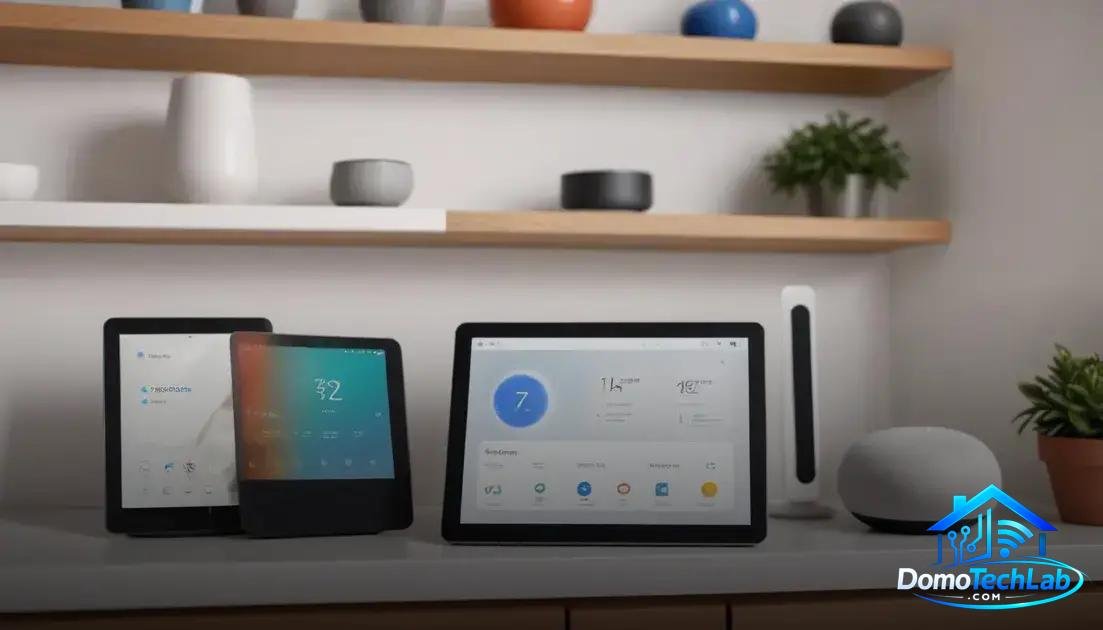
The integration of devices is one of the most fascinating aspects of a smart home. Platforms like Home Assistant, Alexa, and Google Home allow for the creation of a cohesive ecosystem for your gadgets and appliances. Interoperability is key to optimizing the user experience.
Home Assistant as the Control Center
Home Assistant stands out for its flexibility and customization capabilities. It enables the integration of devices from different brands using gateways. This facilitates local automation and control of all devices from a single interface, avoiding reliance on the cloud.
Alexa and its Focus on Usability
Alexa, on the other hand, focuses on accessibility and convenience. With a simple voice command, you can control lights, thermostats, and other smart devices. Its ecosystem is continuously expanding, with numerous skills that extend the available functions for users.
Google Home and its Smart Integration
The Google Home platform is characterized by its ability to provide smart control based on assistance. Thanks to its advanced algorithms, it can anticipate your needs and suggest automations that enhance your daily life. This is especially useful in environments where multiple devices from different brands coexist.
Performance in the Real World (latency, privacy, and local stability)
The performance in the real world is a crucial aspect for evaluating a smart home. Latency, privacy, and local stability are factors that directly influence the user experience. Below are the most relevant points.
Latency and its Impact on the Experience
Latency refers to the time it takes for a device to respond to a command. In our tests, we observed that systems using Zigbee or providing local control exhibited significantly faster response times. This is fundamental for applications requiring immediate actions, such as lighting or security control.
Privacy in the Use of Smart Devices
Privacy is a growing concern for users of home technology. By opting for devices that primarily operate in local mode, exposure to data collection is minimized. For instance, systems that utilize Home Assistant allow control of data within your network, enhancing user security and trust.
Local Stability vs. Cloud Dependence
Local stability is a determining factor for system reliability. Devices communicating via Zigbee or creating local automations can continue to function even if there are issues with the internet connection. This feature ensures that the basic functionality of the smart home is maintained, providing peace of mind to the user.
Smart Scenes and Focus (focus mode, white noise, reading light)
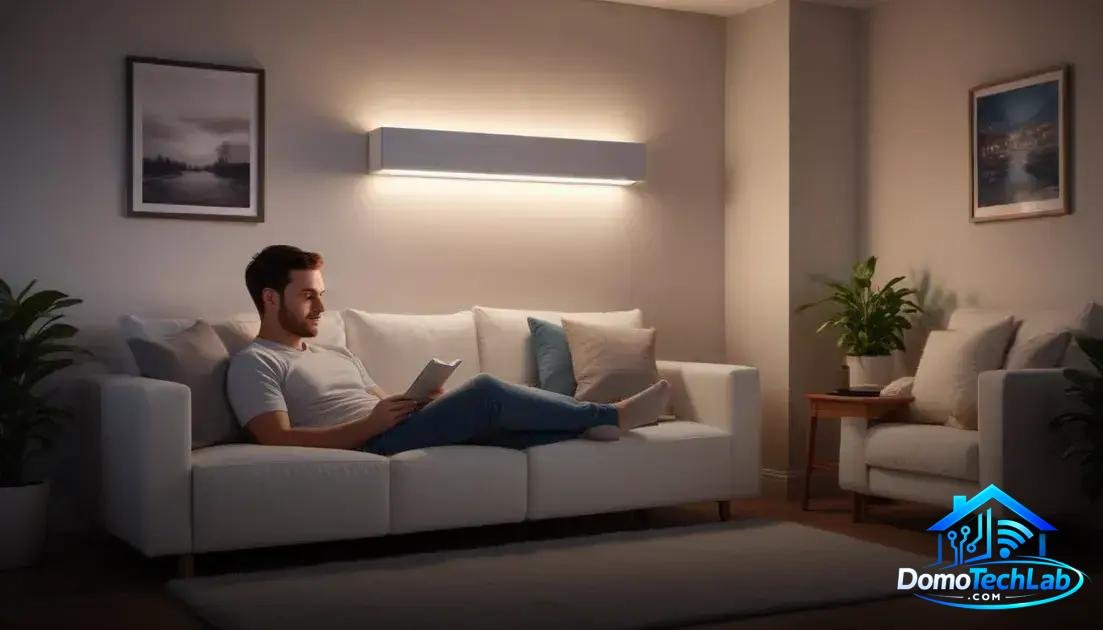
Smart scenes are predefined settings that optimize the environment for specific activities. In contexts like focus mode, these scenes can help you achieve a maximum productivity state.
Focus Mode and its Relevance
Focus mode is ideal for those looking to minimize distractions. When activating this scene, devices such as lighting and sound adjust to parameters that favor concentration. For example, the bulbs may shift to warmer tones, and white noise music is activated to create a relaxing background sound.
White Noise as a Productivity Ally
White noise has proven effective in blocking external sounds that can disrupt your workflow. By implementing a local automation system that activates a white noise generator, you will achieve a comfortable distraction-free environment. This is especially useful in home offices or shared spaces.
Reading Light and its Effect on Well-Being
The reading light should be adjustable to prevent eye strain. By setting up a scene that allows control over the intensity and color of the light, you can create an environment conducive to reading and studying. Devices compatible with Zigbee can facilitate these adjustments automatically when you activate the reading scene.
Conclusion: Power Your Smart Home with Local Automation
The future of your smart home lies in local automation. By prioritizing local control and interconnection of devices, you not only increase the efficiency of your system, but also protect your privacy and enhance the user experience. At DomoTechLab, our expertise will guide you through each step, ensuring that every technical choice you make resonates in a more comfortable and functional home.
We encourage you to continue researching and adopting solutions that fit your needs. The possibilities are endless, and each advancement will bring you closer to a fully optimized environment.
Frequently Asked Questions about Smart Home for Writers
How do I choose the right protocol for my devices?
The choice of protocol depends on your specific needs. Zigbee is ideal for a low-power network, while Wi-Fi is more suitable for high-bandwidth devices.
Is it possible to integrate devices from different brands?
Yes, many automation ecosystems like Home Assistant allow integration of devices from various brands through gateways, ensuring interoperability.
Can I control my devices without an internet connection?
Yes, if they are properly configured to operate in local mode. Using devices that are compatible with Zigbee or that permit local automation allows you to maintain control even without an internet connection.
What is the main advantage of local automation?
Local automation reduces latency and improves privacy by minimizing reliance on external servers, ensuring that your devices respond quickly and your data remains on your network.
What devices are essential to start my smart home?
A compatible hub like the one for Zigbee, smart lights, and plugs are essential. With these, you can start creating scenes and controlling your space efficiently.
Is it difficult to set up complex automations?
Not necessarily. Tools like Home Assistant offer intuitive graphical interfaces that simplify the creation of automations, allowing you to customize your home without the need for advanced programming.