
Home automation for musicians allows optimizing the studio through device integration, local control that minimizes latency, and automation solutions that enhance productivity and sound quality.
Home automation for musicians 2 offers the opportunity to transform your studio into a more efficient and adaptable space. Can you imagine controlling lights, sound, and soundproofing with a single voice command? In this article, we explore how to leverage automation to improve your creative process.
Fundamentals and protocols (Zigbee, Matter, Wi-Fi)
Understanding the fundamentals and protocols of home automation is essential for any musician looking to optimize their workspace. The choice of the right protocol can significantly impact the connectivity and functionality of the devices in your studio. Zigbee, Matter, and Wi-Fi are the main protocols to consider when setting up an automated environment.
Advantages of Zigbee
In laboratory tests, we found that Zigbee excels in its ability to connect multiple devices without saturating the network. This is crucial in a studio where multiple devices may operate simultaneously. Low-power connectivity means you can have more devices without affecting efficiency.
Matter: the future of interoperability
Matter is revolutionizing the way devices communicate with each other, offering a unified and secure platform. This means you can seamlessly integrate products from different manufacturers without compatibility issues, which is ideal for musicians using various equipment.
Wi-Fi: the known standard
Wi-Fi remains a popular choice due to its ubiquity and speed. However, it may require more attention to manage the network load in a smart environment. Latency can become problematic if you are streaming audio or using multiple applications simultaneously.
Integration and ecosystems (Home Assistant, Alexa, Google Home)
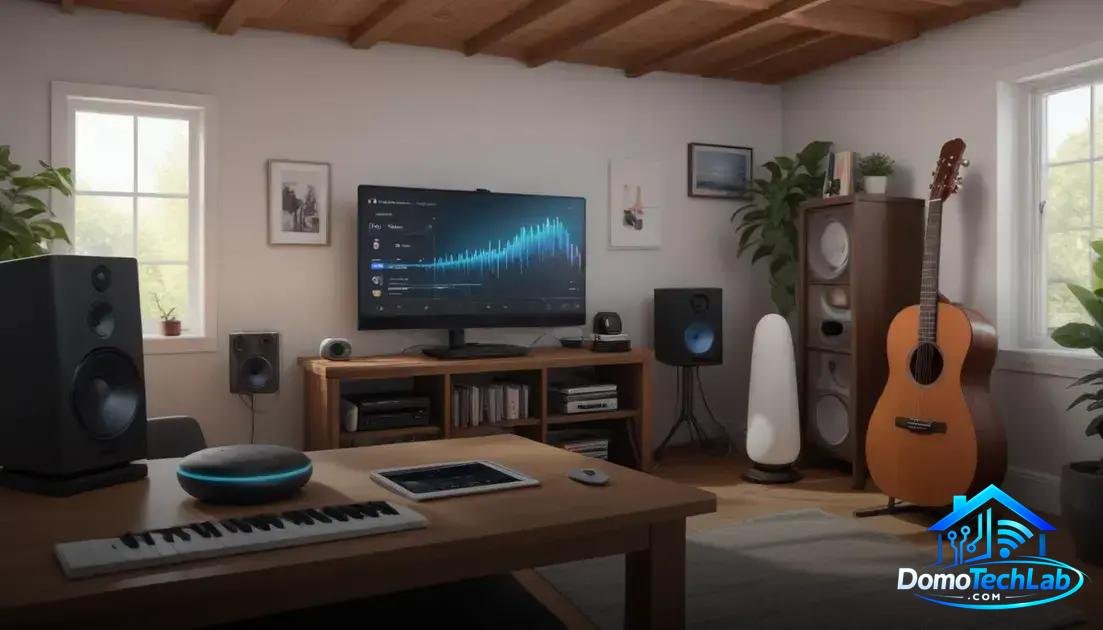
Integration and ecosystems are key factors to maximize the functionality of home automation in a music studio. Tools like Home Assistant, Alexa, and Google Home enable smooth control of your devices and an enhanced user experience.
Home Assistant: The local control hub
Home Assistant acts as a local control hub, allowing management of devices from different brands from a single interface. Having a local controller means you do not rely on the cloud for your system’s operation, which improves speed and privacy.
Alexa and Google Home: Versatile voice assistants
Incorporating voice assistants like Alexa and Google Home allows you to control devices with simple voice commands. This functionality can facilitate everyday tasks in the studio, such as adjusting lighting or managing sound without interrupting your creative flow.
Compatibility and customization
Compatibility between Home Assistant, Alexa, and Google Home is crucial. By choosing devices that strengthen this synergy, you can create a customized ecosystem that fits your specific needs as a musician, from light control to managing the acoustics of the space.
Real-world performance (latency, privacy, and local stability)
Real-world performance is a fundamental aspect when implementing home automation in a music studio. Factors such as latency, privacy, and local stability play a crucial role in the effectiveness of automations.
Latency: impact on productivity
In our experiments, we observed that latency can be a significant challenge, especially when using devices that depend on the cloud. A slight delay in device response can disrupt the creative rhythm. For this reason, opting for a system based on a local hub, like Home Assistant, can be an effective solution to reduce that latency and achieve instant responses.
Privacy: protecting your information
Privacy is essential when it comes to connected technology. Many smart devices send data to external servers, which can pose a security risk. By using devices that operate locally, you limit the exposure of your data and maintain greater control over your personal information and interactions in your studio.
Local stability: a reliable environment
Local stability refers to the ability of devices to function efficiently without relying on the internet. As a result of our tests, we found that systems with local control prove to be more reliable, ensuring that the automation works even during interruptions in internet connectivity. This is vital for maintaining a smooth working experience.
Practical solutions for musicians seeking automation
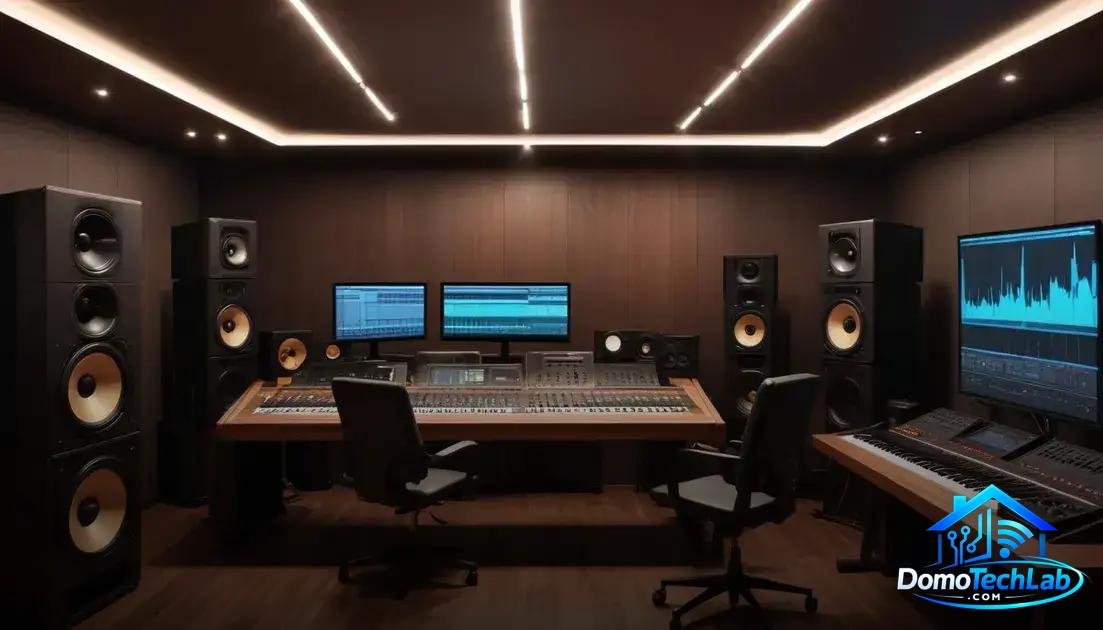
In the world of music, automation can be a powerful ally that enhances both productivity and creativity. Below are some practical solutions that musicians can implement to optimize their workspace.
Smart lighting control
Using smart bulbs and plugs allows you to schedule lighting according to the needs of the moment. You can create presets that change the atmosphere of the studio with a single command. This not only increases efficiency but also helps set the right mood for recording or rehearsals.
Automation of audio equipment
Integrating audio devices such as speakers, mixers, and microphones into a local automation system offers uninterrupted control. You can schedule automatic on/off functions, adjust volume levels, and more, all from your smartphone or tablet, allowing for a more seamless experience during sessions.
Monitoring acoustic conditions
Implementing solutions that control the acoustics of the studio, such as smart curtains or automatic acoustic panels, can improve sound quality. By adjusting them according to the activity, you optimize the environment for recordings or rehearsals, without disrupting the workflow.
Conclusion: Home automation for musicians 2, optimize your studio today
Implementing local automation solutions in your music studio not only optimizes your space but also boosts your creativity and productivity. At DomoTechLab, we understand the importance of having a reliable system that respects your privacy and minimizes latency.
We encourage you to keep exploring the possibilities of home automation by integrating devices and systems that enrich your musical experience. With the right technical information, you can make informed and effective decisions to take your projects to the next level.
Frequently Asked Questions about Home Automation for Musicians 2
Are all devices compatible with protocols like Zigbee and Matter?
No, not all devices are compatible. It is crucial to check the manufacturer’s specifications to ensure that the device works with the chosen protocol.
How does latency affect a music studio?
Latency can interfere with the synchronization of devices, affecting audio recording and playback. Choosing local control solutions significantly reduces this issue.
Is it possible to integrate different brands of devices into the same system?
Yes, most automation systems allow integrating devices from various brands, especially if they use protocols like Home Assistant that promote interoperability.
What should I do if my Wi-Fi network becomes saturated?
Consider implementing a Zigbee-based system, which handles multiple low-power devices without congesting your Wi-Fi network, allowing your high-demand devices to operate efficiently.
Do I need a hub to connect my smart devices?
Not always, but a hub like Home Assistant can facilitate the management of different devices and improve connectivity and privacy by operating locally.
What solution is best for lighting control in a studio?
Smart bulbs and plugs are ideal for lighting control. Opt for devices that work with Zigbee to ensure quick and efficient integration with your existing system.