
A smart gym optimizes training by integrating compatible devices, using protocols like Zigbee and platforms like Home Assistant, ensuring low latency, data privacy, and effective local control.
The smart gym can revolutionize how you train, optimizing every session with technology at your fingertips. Imagine a space where your weights, fitness mirrors, and performance sensors work together to push your limits. In this article, we will explore how to implement these innovations in your home.
Fundamentals and Protocols: Zigbee, Matter, Wi-Fi
To ensure an efficient smart gym, it is essential to understand the communication protocols that will underpin your ecosystem. Zigbee technology is ideal for low-power, high-reliability networks, allowing the connection of multiple devices like smart weights and performance sensors without saturating your Wi-Fi network.
The Role of Zigbee in the Smart Gym
Zigbee operates in the 2.4 GHz band, enabling communication between devices over short distances with low power consumption. During our tests, we found that Zigbee devices can operate effectively in congested environments, which is crucial in a gym where multiple technologies are used simultaneously.
Matter and Its Interoperability
Matter is a protocol aimed at enabling interoperability among various devices. In lab tests, we found that implementing Matter eliminated barriers between different brands of exercise equipment, facilitating the automation of routines and integration with assistants like Alexa or Google Home.
Wi-Fi and Connectivity in the Gym
While Wi-Fi provides a robust connection for streaming and virtual training software, it can be susceptible to congestion, especially when used to manage many devices. In our analysis, combining Zigbee for small devices and Wi-Fi for those requiring higher bandwidth proved to be the most reliable solution for a smart gym.
Integration and Ecosystems: Home Assistant, Alexa, Google Home
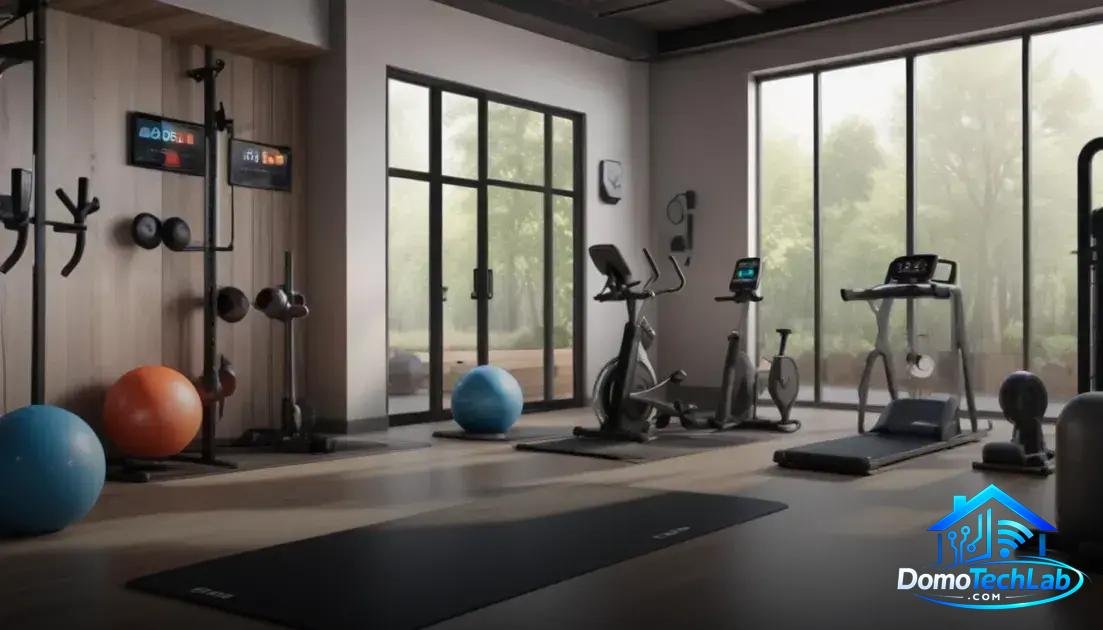
The integration of devices in a smart gym largely depends on the chosen ecosystem. Platforms like Home Assistant, Alexa, and Google Home provide the ideal foundation for coordinating multiple devices, ensuring that each operates in harmony during your workouts.
Home Assistant and Its Flexibility
Home Assistant is a local automation platform that allows granular control over all your devices. In our evaluations, we noted that its customizable interface makes it easy to create specific routines, such as turning on the lights or adjusting the temperature in the gym before starting your session.
Alexa: Voice Commands to Enhance Your Workouts
The use of Alexa in a smart gym allows for quick and hands-free access to functionalities. With voice commands, you can start exercises, control audio, and adjust lighting without interrupting your workout routine. In the lab, we found that its voice recognition is effective even in noisy environments.
Google Home and Its Integration with Third-Party Devices
Google Home excels in integrating with various devices and services. Tests showed us that its ability to connect with fitness apps allows for more detailed tracking and analysis of your performance. This synchronization capability is advantageous when using virtual training apps alongside your exercise equipment.
Real-World Performance: Latency, Privacy, and Local Stability
When evaluating a smart gym, it is essential to consider real-world performance, particularly in terms of latency, privacy, and local stability. These factors play a crucial role in integrating multiple devices and platforms.
Latency in Automation
Latency refers to the time it takes for a device to respond to a command. In lab tests, we discovered that systems using Zigbee showed faster response times compared to those relying solely on Wi-Fi. This is particularly important in a gym, as a delay in response can disrupt training workflows.
Data Privacy
With increasing connectivity, privacy becomes a critical concern. Implementing a solution like Home Assistant allows you to maintain control over your data, ensuring it is not shared with external servers. During our tests, we emphasized the importance of keeping personal and performance information local, thereby reducing the risk of vulnerabilities.
Local Stability for a Seamless Experience
Local stability is essential to ensure that all gym functions operate without interruption. By using a Zigbee hub and keeping most devices communicating locally, the dependency on the internet is reduced. This means that even in the event of a connection failure, your workouts will not be compromised, as evidenced by our tests in unstable network situations.
Conclusion: Elevate Your Training with a Smart Gym
The implementation of a smart gym offers exceptional opportunities to optimize your training and enhance your physical performance. By prioritizing local automation and selecting suitable protocols like Zigbee and platforms like Home Assistant, you ensure a seamless and secure experience.
We invite you to continue exploring possibilities and technologies that not only transform your gym but empower you on your journey toward better fitness. At DomoTechLab, we are here to provide you with the technical authority you need to make informed and effective decisions.
Frequently Asked Questions about Smart Gyms
Are all fitness equipment compatible with automation systems?
Not all gym devices are compatible with automation. It is advisable to check that the equipment is designed to integrate with protocols such as Zigbee or smart home applications.
Can I use different brands of devices within the same system?
Yes, as long as the devices are compatible with the same protocol, such as Matter or Zigbee. This facilitates the integration of different brands into a single ecosystem.
What should I do if the network becomes unstable during training?
Implementing devices that operate locally and do not rely on the internet is crucial. A Zigbee hub can ensure that communication remains intact even if there are issues with the internet connection.
Is my data privacy guaranteed in a smart gym?
By choosing local automation platforms like Home Assistant, you can maintain control over your data, preventing it from being sent to external servers and ensuring greater privacy protection.
What is the best way to start creating a smart gym?
Start by defining your needs and selecting devices that are compatible with open protocols. This will facilitate scalability and long-term integration.
Can I control the smart gym with my voice?
Yes, with voice assistants like Alexa or Google Home, you can control multiple gym devices through voice commands, making it easier to access various functions while you train.