
A smart children’s bedroom is significantly enhanced with local automation, ensuring safety and functionality through the integration of compatible devices such as smart bulbs and motion sensors, providing a comfortable and secure experience for the little ones.
The smart children’s bedroom is becoming a necessity for parents looking to create a safe and pleasant environment. How can you integrate night lights with soothing sounds to improve your children’s sleep?
Fundamentals and Protocols
To establish a smart children’s bedroom, it is essential to understand the fundamentals and protocols that enable efficient communication between devices. Technologies such as Zigbee, Thread, and Wi-Fi form the backbone of this smart infrastructure.
Zigbee and Its Relevance
Zigbee is known for its low power consumption, making it an ideal choice for devices that require long lifetimes, such as night lights. Its mesh network allows each device to act as a repeater, increasing communication range.
The Role of Thread
Thread is another relevant protocol, providing a reliable and secure connection. It is particularly effective in environments where multiple devices need to interact continuously. Its architecture allows devices to connect without the need for a central hub, thus facilitating local automation.
Wi-Fi: A Versatile Approach
While Wi-Fi is widely used, its high energy consumption can be a drawback for long-lasting devices. However, it is ideal for devices that require bandwidth, such as security cameras and star projectors, which are popular in smart children’s bedrooms.
Integration and Ecosystems
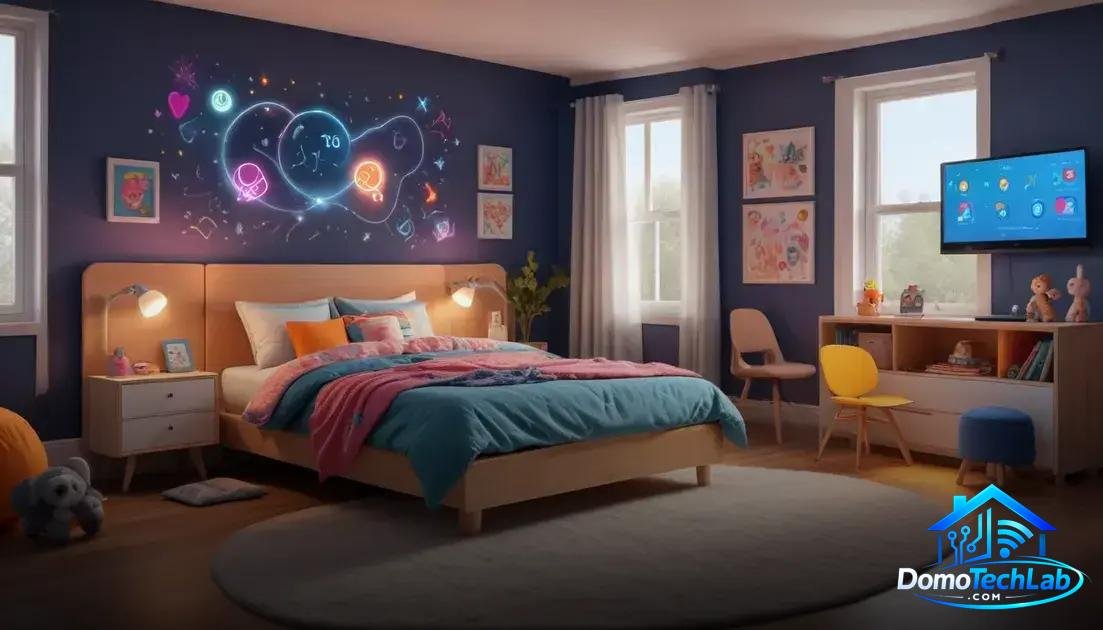
The integration of devices in the smart children’s bedroom is key to creating a seamless and functional ecosystem. By using platforms like Home Assistant, Alexa, or Google Home, you can manage multiple devices from a single interface.
Home Assistant: Total Control
Home Assistant enables local automation without relying on external servers. This means that lights, smart plugs, and sensors operate without latency, providing a much faster and more efficient user experience.
Alexa and Google Home: Virtual Assistants
Alexa and Google Home act as voice controllers. You can schedule daily routines, such as activating a night light or a star projector, simply with voice commands, which is very convenient for children.
Device Interoperability
Interoperability among smart devices is crucial. When choosing products that are compatible with multiple ecosystems, the potential for expansion and upgrading the smart bedroom increases, allowing for the integration of new technologies as they become available.
Real-World Performance
The performance of devices in a smart children’s bedroom is critical to ensuring a satisfying experience. Analyzing latency, privacy, and local stability are determining factors in the overall performance of these systems.
Latency in Communication
In our tests, we found that systems using Zigbee and Thread exhibit significantly lower latency compared to solutions based solely on Wi-Fi. This speed is essential for critical applications, such as triggering alarms or controlling lights at night.
Privacy and Security
The use of technologies that enable local automation reduces data exposure. Offline operational devices prevent personal information from being transmitted to external servers, thus increasing home security.
Local Stability in Operation
Stability is fundamental, especially in an environment where children are present. Systems that operate locally ensure that automations continue to function even during internet outages, providing peace of mind for parents.
Child Safety and Automation
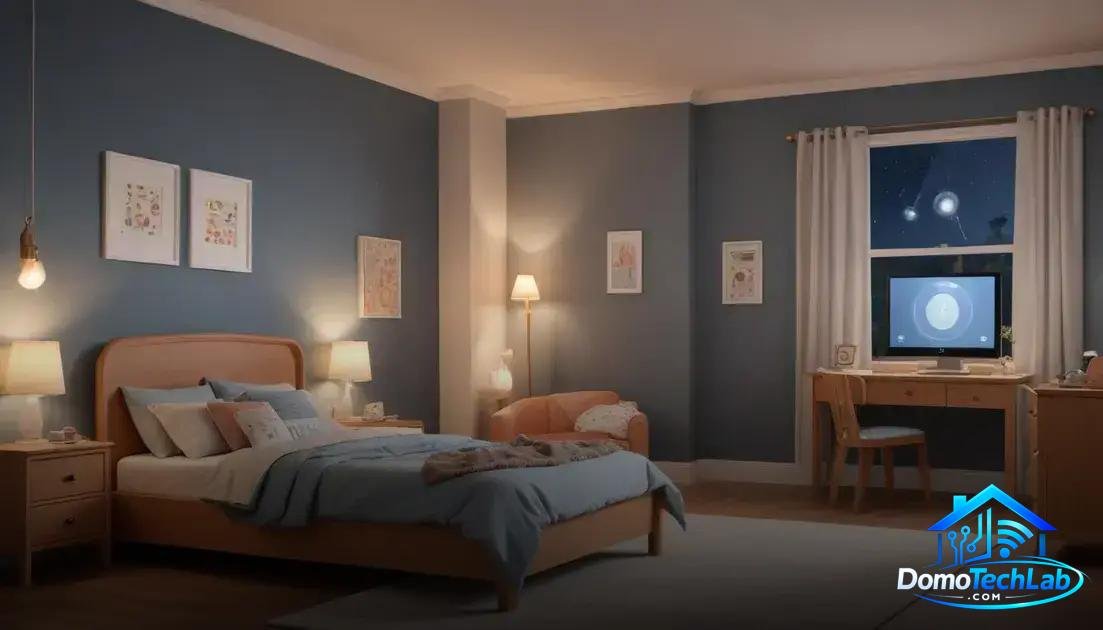
Child safety is one of the main concerns in a smart children’s bedroom. Utilizing local automation not only enhances functionality but also provides an additional level of security that is essential for parents.
Automatic Lighting
Installing smart bulbs that turn on automatically when motion is detected can help prevent nighttime accidents. By using technology like Zigbee, these bulbs can operate even without an internet connection, keeping safety active at all times.
Alarms and Motion Sensors
The use of motion sensors and connected alarms allows parents to be instantly notified if unusual activity is detected. These devices can easily integrate into platforms like Google Home, offering immediate alerts and the ability to view security cameras from your phone.
Automation for Peace of Mind
Setting up automated routines can provide comfort and peace of mind. For example, you can program a ‘good night’ scenario that ensures all lights are turned off and doors are locked at a set time, ensuring that children are always safe.
Conclusion: Powering the Smart Children’s Bedroom with Local Automation
Adopting a smart children’s bedroom is not just about comfort but also about safety and functionality. Local automation emerges as the ideal solution to ensure that your devices operate effectively, even without internet connectivity. At DomoTechLab, we understand that every technical choice can make a difference in your home’s day-to-day life.
We encourage you to continue exploring our guides and technical resources to make the most out of a smart bedroom, ensuring a safe and welcoming environment for your little ones.
Frequently Asked Questions about Smart Children’s Bedroom
Are all devices compatible with each other?
Not necessarily. It is vital to check compatibility between devices and protocols like Zigbee and Thread. Choosing products certified by the same ecosystem can facilitate integration.
How can I improve security in a smart bedroom?
Incorporate motion sensors, security cameras, and smart bulbs that activate automatically. Using local automation ensures that these functions remain operational even if there is an internet outage.
What to do if you experience latency in devices?
Latency may be due to Wi-Fi network congestion. Consider using Zigbee or Thread devices, which offer better performance in local automation and reduce dependence on Wi-Fi.
How many devices can I connect in a Zigbee network?
A Zigbee network can support up to 65,000 devices on a single network, but the practical number will depend on the quality of your gateway/hub and the distance between devices.
Is a hub necessary to use Zigbee devices?
Yes, Zigbee devices generally require a specific hub to communicate. This hub acts as a bridge between Zigbee devices and your home network, allowing control through applications.
How to integrate devices from different brands?
Use platforms like Home Assistant that allow integration of multiple brands and protocols in one place. Research the compatibility of each device before purchasing to ensure smooth integration.