
Aquarium lighting is essential for animal welfare, and by using local automation systems with protocols like Zigbee, light control is optimized, thus improving the health and growth of fish and aquatic plants.
Aquarium lighting is fundamental for creating a healthy and attractive environment. You want your fish to be happy and well cared for, right? In this article, we will explore best practices and tools for effectively illuminating your aquarium.
Lighting Fundamentals and Protocols
For effective aquarium lighting, it is crucial to understand the fundamentals and protocols of light. Different species of fish and aquatic plants require specific intensities and light spectra to thrive. Using technologies like LED and WiFi timer control systems allows for customizing the lighting to your aquarium’s needs.
Light Spectrum and Its Impact
The quality of light directly influences the health of aquatic organisms. A well-balanced spectrum not only promotes plant growth but also simulates the natural circadian cycle of fish, enhancing their overall well-being.
Lighting Control Protocols
Integrating protocols like Zigbee or Thread into your lighting system allows you to automate the switching on and off of lights efficiently. These systems are easy to manage, making it easier to maintain a healthy aquatic ecosystem.
Integration and Ecosystems in the Aquarium
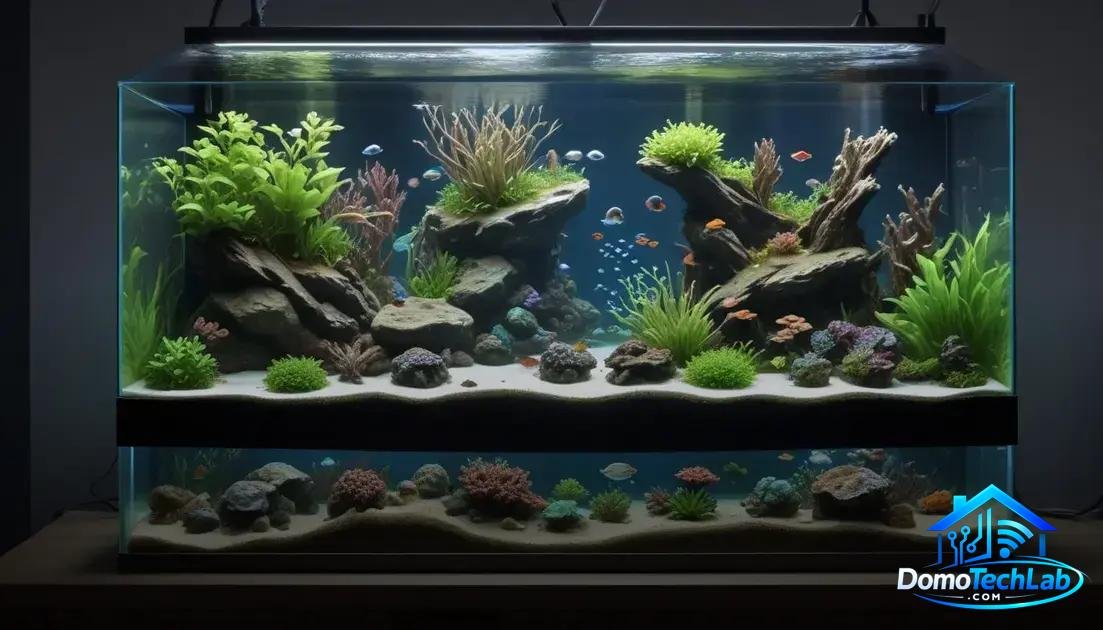
The integration of systems in an aquarium is key to maintaining a balanced environment. Using a hub compatible with protocols like Zigbee or Thread allows you to connect various devices, from water pumps to bulbs. This optimizes aquarium management through local automation.
Advantages of an Integrated Ecosystem
By integrating different devices, you can control temperature, lighting, and water quality from a single application. This not only simplifies maintenance but also ensures your fish and plants are in the best possible condition.
Examples of Compatible Devices
Devices like temperature sensors, LED lights, and smart plugs are essential for creating a monitored environment tailored to your aquarium’s needs. Their interaction improves efficiency and reduces the time for manual intervention.
Performance of the Lighting System
The performance of the lighting system in aquariums is crucial for the health of aquatic organisms. A well-calibrated system ensures an appropriate light cycle, which is essential for plant growth and fish behavior. Assessing the latency and stability of the system is a fundamental part of the process.
Latency in Lighting
Latency refers to the time it takes for a system to respond to a command. In our tests, systems using protocols like Zigbee have lower latency, allowing for faster and more efficient control of lighting.
Local Stability
Opting for a lighting system that does not rely solely on the cloud improves stability. Local systems provide continuous operation, even in the event of interruptions in the internet connection. This is vital for maintaining a healthy environment in the aquarium.
Animal Welfare Care through Light
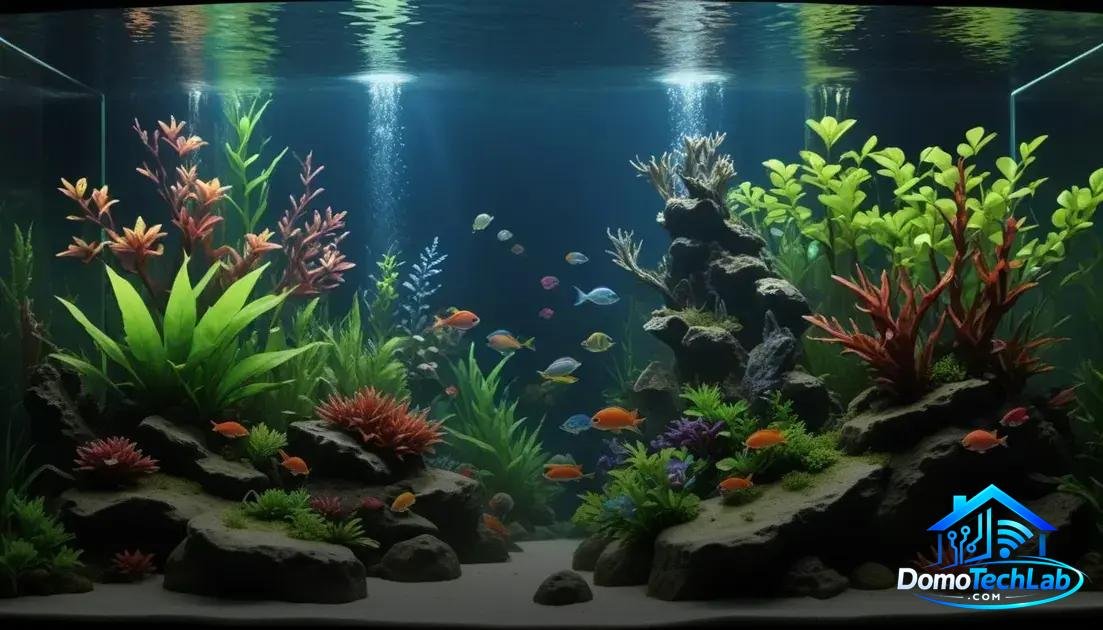
Animal welfare care in aquariums starts with adequate lighting. Light influences the behavior, health, and well-being of fish and plants. A well-designed lighting system can simulate natural conditions, promoting a healthier environment.
Circadian Cycle and Its Importance
Fish and aquatic plants depend on a regular circadian cycle. A lighting system with timers and light themes can replicate natural light patterns, helping organisms maintain their biological rhythms and improving their overall health.
Appropriate Light Spectrum
Using a light spectrum that includes suitable wavelengths is crucial for plant growth and fish vitality. Combining lights of different colors can create an optimal environment that facilitates both photosynthesis and animal welfare.
Conclusion: Lighting for Aquariums and Secured Animal Welfare
Implementing an aquarium lighting system with a focus on local automation is essential for ensuring the health and well-being of aquatic organisms. At DomoTechLab, we understand the importance of opting for advanced technologies like Zigbee and Thread, which enable efficient control and a balanced ecosystem.
We encourage you to continue researching and applying these practices to create an aquarium that is not only visually appealing but also optimal for aquatic life. Together, we can achieve healthier and more sustainable environments.
Frequently Asked Questions about Aquarium Lighting
What devices are compatible with aquarium lighting systems?
The majority of lighting systems are compatible with smart plugs and controllers that use protocols like Zigbee or Thread. This includes LED bulbs, Wi-Fi timers, and light sensors.
Is it difficult to integrate aquarium lighting into a smart home ecosystem?
No. Many aquarium lighting solutions are designed to easily integrate into existing smart home systems, using compatible hubs for simplified setup.
Can I control my aquarium lighting from a mobile app?
Yes, most modern aquarium lights allow control via mobile apps, offering the ability to adjust schedules and color settings according to your needs.
Can lighting affect the health of fish?
Definitely. The intensity and light spectrum are vital for the circadian cycle of fish and the growth of plants, so using high-quality devices and adjusting them properly is crucial.
What challenges might I face when using local automation systems?
Challenges include the initial setup of the network and compatibility between different devices. Ensuring that all devices are compatible with the same protocol like Zigbee or Thread greatly facilitates integration.
How can I optimize the performance of my aquatic lighting system?
To optimize performance, perform regular maintenance on the system, adjust configurations based on the specific needs of your aquatic species, and evaluate network latency to ensure a quick response.