
Smart Home DIY with ESP32 allows you to create custom devices that operate efficiently and securely, using protocols like Zigbee and Matter for seamless integration and local control without reliance on the cloud.
Smart Home DIY with ESP32 is an exciting way to customize your smart home. Imagine being able to create your own sensors and devices for a fraction of the cost. Today, we will explore how to do this efficiently.
Fundamentals and Protocols (Zigbee, Matter, Wi-Fi)
To understand the fundamentals of a smart home, it is essential to know the different protocols that enable communication between devices. Among the most popular are Zigbee, Matter, and Wi-Fi. Each protocol has its advantages and disadvantages, which will influence the choice of components for your system.
Zigbee: Efficiency and Range
Zigbee is a wireless communication protocol designed for home automation. It uses less energy compared to Wi-Fi, allowing devices like smart plugs and light bulbs to operate for long periods on small batteries. Its ability to create a mesh also improves coverage, allowing devices to communicate with each other and extend the overall range of the network.
Matter: The Interoperable Solution
Matter is a protocol aimed at interoperability between different devices and platforms. Designed to be easy to implement, it allows products from various manufacturers to work together seamlessly. This can be a significant advancement for users who want a more integrated and customizable home.
Wi-Fi: Fast and Accessible Connectivity
Wi-Fi is the most common communication standard in homes. It offers high speeds, ideal for bandwidth-hungry devices, like security cameras and streaming devices. However, network congestion can be an issue in areas with many connected devices.
Integration and Ecosystems (Home Assistant, Alexa, Google Home)
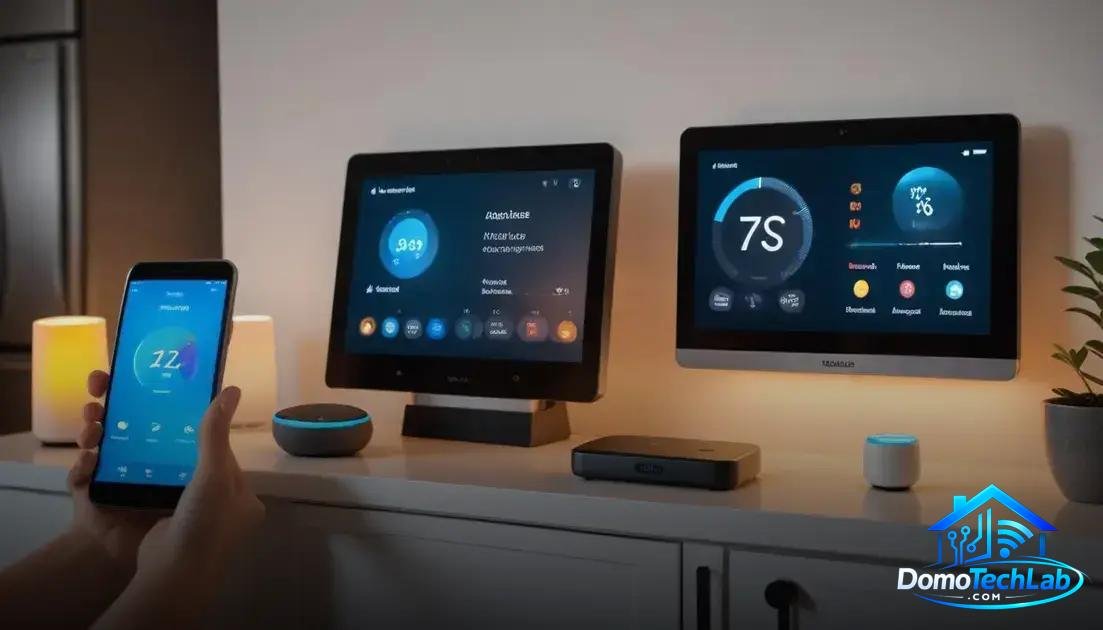
The integration of devices in a smart home is crucial for achieving a functional ecosystem. Platforms like Home Assistant, Alexa, and Google Home facilitate this integration, allowing various devices to work together harmoniously.
Home Assistant: Customization and Local Control
Home Assistant is one of the most robust options available. It allows you to centralize control of all your devices, offering great flexibility in terms of local automation. You can schedule specific routines and monitor the status of your devices in real time.
Alexa: Voice Convenience at Home
Alexa transforms how we interact with our devices. Through voice commands, you can control lights, plugs, and other connected devices. This intuitive user interface is ideal for those looking for a simple and efficient solution to manage their home.
Google Home: Smart Integration
Google Home offers a similar experience, but with a focus on integrating Google services. From controlling devices to getting contextual information, it is a useful companion for any smart home. Its ability to work across various platforms and devices makes it especially versatile.
Real-World Performance (Latency, Privacy, and Local Stability)
The performance of a smart home system depends on several factors, including latency, privacy, and local stability. Understanding how these elements interact can help you optimize your setup for the best results.
Latency: The Key to Fast Responses
Latency refers to the time it takes for a device to receive and execute a command. In our tests, we found that systems using local controllers, such as Home Assistant, exhibit significantly lower latency. This translates into faster reactions and a smoother user experience.
Privacy: Protecting Your Data
Privacy is a critical aspect of any smart home. By opting for a system that relies on a local controller, like a hub that operates without internet, your data remains at home. This reduces the risk of sensitive information being compromised or misused by third parties.
Local Stability: A Reliable System
Local stability refers to the ability of devices to communicate and function without needing the internet. During our tests, we found that devices operating with Zigbee offer a high level of reliability, even when internet connection is interrupted. This ensures continuous automation and convenience in your home.
Conclusion: Empower Your Smart Home with Local Automation
Beginning your journey towards a smart home can seem challenging, but the real secret lies in establishing a reliable local automation system. At DomoTechLab, we are committed to providing you with technical information and protocol analysis so you can make smart choices about your devices.
We encourage you to continue exploring our guides and resources to maximize the efficiency and security of your home. With a focus on local integration, you will not only enhance the functionality of your devices but also the privacy and stability of your network.
Frequently Asked Questions about Smart Home DIY with ESP32
Is the ESP32 compatible with devices from different manufacturers?
Yes, the ESP32 is highly versatile and can communicate with devices from various manufacturers as long as they use compatible protocols such as Zigbee, Wi-Fi, or Matter.
How to deal with latency in device control?
To minimize latency, it is advisable to use a local controller like Home Assistant, which allows for local processing and reduces reliance on external servers.
Can I integrate cheap sensors with advanced systems?
Yes, many low-cost sensors are compatible with platforms like Home Assistant, allowing them to be integrated into a more complex and functional system.
How is security during local automation?
Local automation allows you to keep control of your data within your network, which increases security by reducing exposure to external threats.
Do I need an additional hub to use the ESP32?
Not necessarily. The ESP32 can act as a hub and connect directly to other devices, but depending on the setup, an additional hub may enhance network management.
How to resolve compatibility issues between devices?
Check that all devices are compatible with the same protocol. Using a system that supports multiple protocols, like Matter, can facilitate integration and minimize issues.