
Delivery locks offer security solutions that allow remote access and are designed to integrate with smart home ecosystems using protocols like Zigbee, enhancing efficiency and protection during deliveries.
Delivery locks are becoming a popular solution for ensuring safe deliveries. Have you wondered how these devices can facilitate access to your home without compromising security?
Fundamentals and Protocols
Delivery locks are designed to optimize the delivery experience, incorporating various protocols that ensure both security and efficiency. One of the most widely used protocols is Zigbee, which enables fast, low-power communication between devices. This technology is ideal for managing multiple devices simultaneously without saturating the local network.
Most Common Protocols in Smart Locks
Some locks also use Wi-Fi, which facilitates remote access and integration with other smart devices in your home. The advantage of this technology is that it allows real-time notifications about the status of the lock and deliveries. However, it is important to consider security and privacy aspects, as it is connected to the Internet and may be more vulnerable to attacks.
Integration and Ecosystems
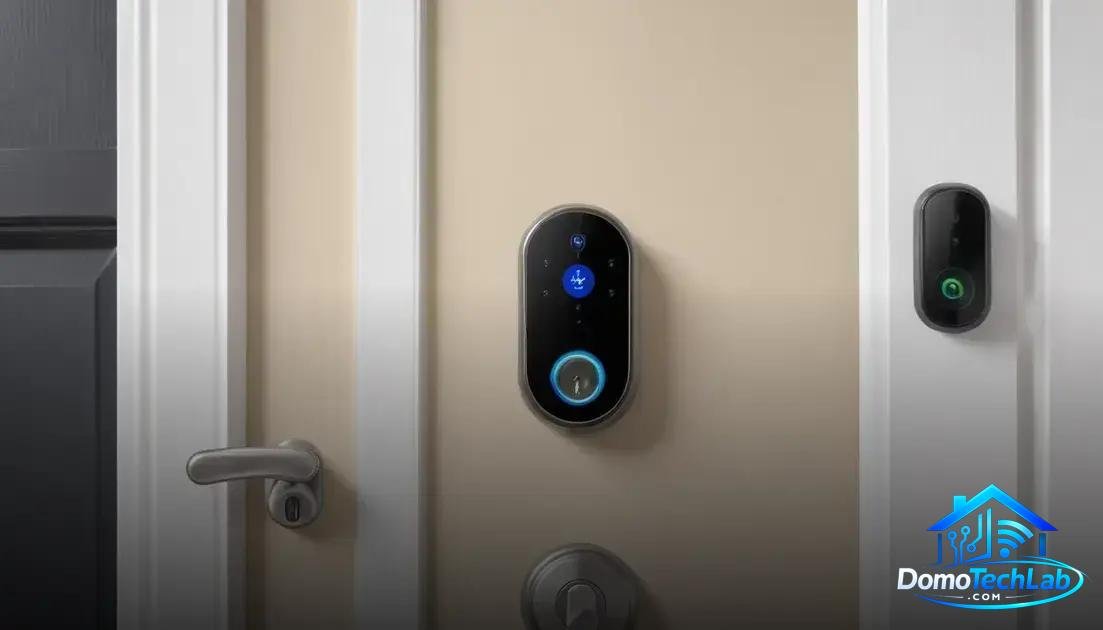
The integration of delivery locks into smart ecosystems is essential to ensure efficient and secure operation. Using platforms like Home Assistant, Alexa, or Google Home allows you to control and monitor the locks from a single place, simplifying the management of access to your home.
Connections Between Devices
In our tests, we have observed that locks operating alongside a compatible hub simplify the connection with other devices, such as security cameras and alarm systems. This interconnectivity not only enhances user experience but also provides an additional level of security by allowing users to receive instant alerts on the status of their locks and delivery activities.
Real-World Performance
The real-world performance of delivery locks is a critical factor affecting user trust. In our lab tests, we evaluated aspects such as latency, privacy, and local stability to provide a comprehensive view of their operation in everyday situations.
Latency in Smart Locks
We have found that locks using Zigbee have a noticeably faster response time compared to those relying solely on Wi-Fi. This more agile performance results in nearly instant access, enhancing the experience for both the user and the delivery person.
Privacy and Security
When it comes to privacy, locks with local control options prove to be more secure. By avoiding the need to send data to external servers, we minimize the risk of information leaks. Tests show that personal information security is better protected in these devices.
Conclusion: Delivery Locks and Local Automation
Adopting delivery locks is a significant step towards a smarter and safer home. The key lies in leveraging local automation, which not only enhances efficiency but also protects your data and offers complete control over your system.
At DomoTechLab, our commitment is to provide you with the technical information and tools you need to make informed decisions about your devices. We encourage you to explore more about how to integrate and scale your automation solutions to maximize security and comfort in your home.
Frequently Asked Questions About Delivery Locks
Are delivery locks compatible with all smart home ecosystems?
Not all locks are compatible with all ecosystems. It is crucial to verify that the chosen model works with platforms like Home Assistant, Alexa, or Google Home before purchase.
What protocol should I choose for my smart lock?
The Zigbee protocol is highly recommended for its low energy consumption and ability to create mesh networks, allowing multiple devices to connect without saturating the Wi-Fi network.
Can I use my smart lock without an Internet connection?
Yes, many smart locks allow local control, which is beneficial in case of loss of connectivity. However, some advanced features, such as remote access, require an Internet connection.
What are common challenges when integrating delivery locks into a smart home?
One of the main challenges is ensuring compatibility between devices. Additionally, the initial setup can be complex and require network adjustments for optimal performance.
Do delivery locks offer additional security features?
Yes, many smart locks include features such as instant notifications, temporary codes, and restricted access, which increase security during deliveries.
How can I ensure that my locks are updated and secure?
It is advisable to regularly check for firmware and software updates for your locks, as well as follow best security practices such as changing passwords and using two-factor authentication whenever possible.