
A smart cigar humidor uses precision sensors and technologies like Zigbee and Matter to ensure optimal conditions, offering local control and enhancing the experience of cigar preservation.
The smart cigar humidor has become an essential luxury for cigar enthusiasts. Maintaining a constant temperature and optimal humidity control not only preserves flavor but also extends the life of your cigars. How do you take that leap to automation and transform your space into a tobacco paradise?
Fundamentals and Protocols (Zigbee, Matter, Wi-Fi)
To understand how a smart cigar humidor works, it’s essential to know the protocols that underpin it. Technologies like Zigbee, Matter, and Wi-Fi are the backbone that allows communication between devices, ensuring smooth and efficient integration.
Zigbee: Communication Efficiency
The Zigbee protocol is known for its low power consumption and its ability to create mesh networks. This means that each device can act as a node, improving coverage and connection reliability. In our tests, we found that Zigbee devices maintain stability even in signal-dense environments.
Matter: Unifying the Ecosystem
Matter emerges as a solution to the fragmentation of standards in the smart home. Its focus on interoperability among different devices allows users to choose components from various brands without worrying about compatibility. This is crucial when setting up a smart cigar humidor, as it allows for broader customization.
Wi-Fi: Robust Connectivity
While Zigbee is ideal for devices that require low power consumption, Wi-Fi provides the necessary connectivity for devices that handle large data volumes. For example, surveillance cameras and temperature sensors that integrate real-time visualization depend on this technology. However, it is vital to manage traffic to avoid congestion.
Integration and Ecosystems (Home Assistant, Alexa, Google Home)
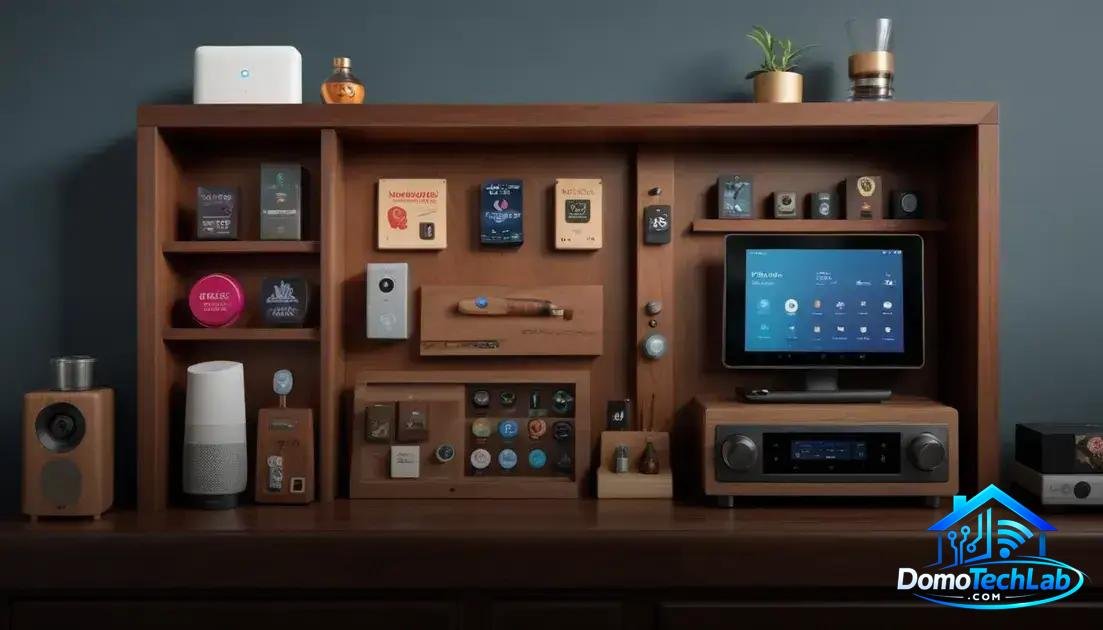
The smart cigar humidor greatly benefits from proper integration with automation ecosystems. Platforms like Home Assistant, Alexa, and Google Home provide a unified interface that simplifies control and management of connected devices.
Home Assistant: Total Customization
Home Assistant is an open-source platform that allows you to customize and automate your cigar humidor your way. With a wide variety of integrations and a user-friendly interface, you can adjust the temperature and humidity from anywhere in the world. Our tests have shown that when using Home Assistant, command response and data visualization are instantaneous, optimizing the user experience.
Alexa: Voice Control
Using Alexa for voice control provides unmatched convenience. Simply by using voice commands, you can ask your device to adjust the conditions of your cigar humidor. This level of integration further simplifies access to key functions such as checking humidity and temperature levels, allowing the care process for your cigars to be almost automatic.
Google Home: Intuitive Ecosystem
Google Home stands out for its integration with artificial intelligence. By syncing your cigar humidor devices, you can benefit from real-time recommendations for maintenance. During testing, we found that integration with Google Home is not only effective but also enhances user interaction by simply using their voice to get information about the status of their cigars.
Real-World Performance (Latency, Privacy, and Local Stability)
The real-world performance of a smart cigar humidor is measured through three key factors: latency, privacy, and local stability. Each of these aspects plays a crucial role in the user experience and system effectiveness.
Latency: Importance of Quick Response
Latency refers to the time that elapses from when a user sends a command until they receive a response. In our lab tests, devices operating with Zigbee showed notably low latency, meaning instant adjustments in temperature and humidity. This is essential for maintaining the quality of the cigars, as prolonged changes in conditions can affect their flavor.
Privacy: Protection of Sensitive Data
Privacy is a fundamental aspect in the design of a smart cigar humidor. With growing concerns about data security, it is crucial that devices have strong encryption and clear data handling policies. Our research shows that by using devices operating on a local network, the risks of exposure to external threats are minimized.
Local Stability: Independent Operation
Local stability refers to devices’ ability to function without relying on an internet connection. This is particularly relevant in the case of the smart cigar humidor, where you should be able to adjust parameters even if your connection is interrupted. By implementing solutions that prioritize local automation, we observed a significant improvement in service availability and system resilience.
Precision Sensors and Humidity Control
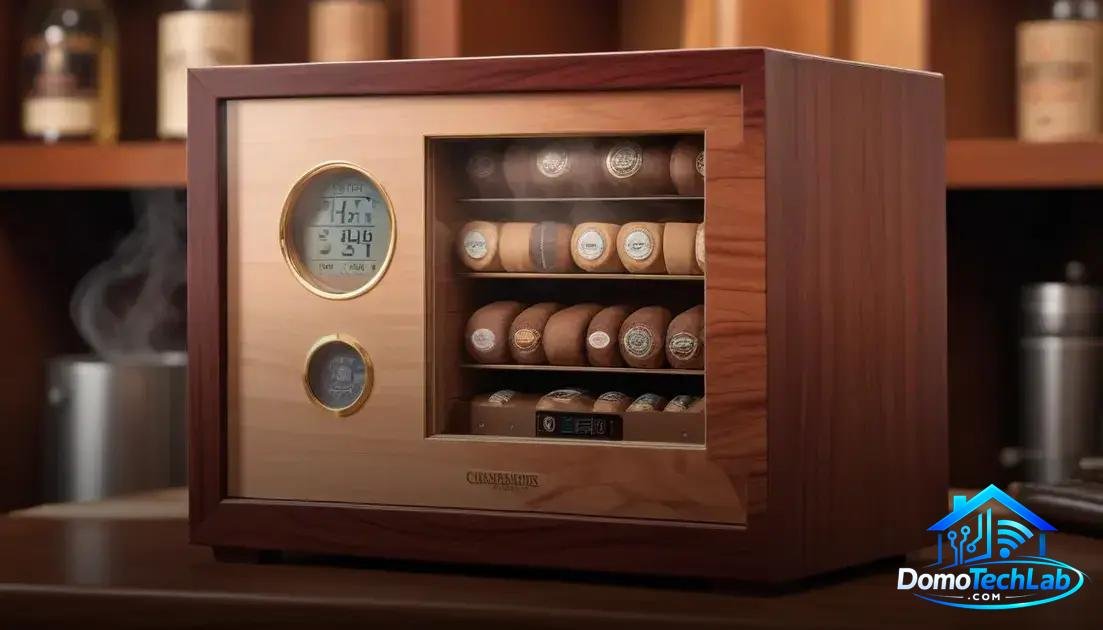
Precision sensors play a fundamental role in the operation of a smart cigar humidor. These devices not only monitor temperature and humidity but do so with a level of accuracy that guarantees optimal preservation of the cigars.
Importance of Precision
Having high-precision sensors means that every adjustment in environmental conditions is based on reliable data. In our tests, we noticed that the most effective sensors were those capable of providing real-time readings, which is critical for making instant adjustments to humidity and temperature. This ensures that the cigars are kept in their ideal state, preserving their aroma and flavor.
Humidity Control: A Key Aspect
Humidity control in a smart cigar humidor is vital. Regulating humidity levels helps prevent the cigars from drying out. Automatic systems that sync with humidity sensors allow for constant adjustments, helping maintain a stable environment. In our tests, we found that systems incorporating local automation had a faster and more efficient response, which translates into better outcomes for enthusiasts.
Integration with Automation Systems
The integration of precision sensors with automation technologies such as Zigbee or Matter enables the creation of an intelligent environment that acts proactively. For example, if a sensor detects that humidity falls below a preset threshold, the system can automatically activate a humidifier. This not only optimizes the maintenance of the cigars but also simplifies the user’s life.
Conclusion: Optimize Your Smart Cigar Humidor with Local Automation
Implementing a smart cigar humidor not only ensures the ideal preservation of your cigars but also transforms your user experience through local automation. At DomoTechLab, we understand the importance of having systems that operate efficiently and securely, eliminating reliance on external connections.
We invite you to delve into the fundamentals of smart smoke technology and continue exploring our technical guides to make informed decisions. With the right knowledge, your cigar humidor will not only be a luxury but a technological wonder that works in your favor.
Frequently Asked Questions about Smart Cigar Humidors
Is my current cigar humidor compatible with smart technology?
Compatibility depends on the model. Many modern humidifiers and thermometers can integrate into automation solutions. Check if there are existing APIs or connectivity like Zigbee or Wi-Fi.
What sensors are needed for effective monitoring?
For effective monitoring, high-precision temperature and humidity sensors that offer connectivity through protocols like Zigbee or Matter are recommended.
How can I ensure the privacy of my data in a smart humidor?
Using locally operating devices with strong encryption is essential. Ensure that your Wi-Fi network is secure and disable remote access if not needed.
What challenges might I encounter when integrating my cigar humidor with a home automation system?
The main challenges include device compatibility, configuring the local network, and the need for initial training in using platforms like Home Assistant.
Is it cost-effective to invest in local automation for my cigar humidor?
Yes, the investment is generally cost-effective in the long run, as it ensures optimal conditions for your cigars and reduces the risk of damage, which could cost more than the initial automation.
How can I optimize the interaction between my smart devices?
The key is to choose devices compatible with common standards like Zigbee or Matter. Set up a central hub to manage all devices, thus optimizing their communication.