
mmWave sensors are crucial for local automation in smart homes, offering high sensitivity and accurate detection capabilities, even in low light conditions, and are compatible with protocols like Zigbee and Thread for efficient integration.
The mmWave sensors are changing the landscape of home automation. With their high sensitivity and unique capabilities, they are ideal for detecting movement in various situations. Would you like to know how they can improve your home?
Fundamentals and Protocols of mmWave Sensors
The mmWave sensors represent an innovative technology in automation for smart homes. Using millimeter waves, these sensors are capable of detecting movement and making precise and reliable detections. Their operation is based on emitting signals that bounce off nearby objects, allowing for accurate measurement of distance and speed.
Common Protocols in mmWave Sensors
These sensors can easily integrate with protocols such as Zigbee and Thread, facilitating communication with other devices in your smart home. The combination of mmWave with these protocols enhances the efficiency and synchronization of local automation systems.
Integration with Smart Devices
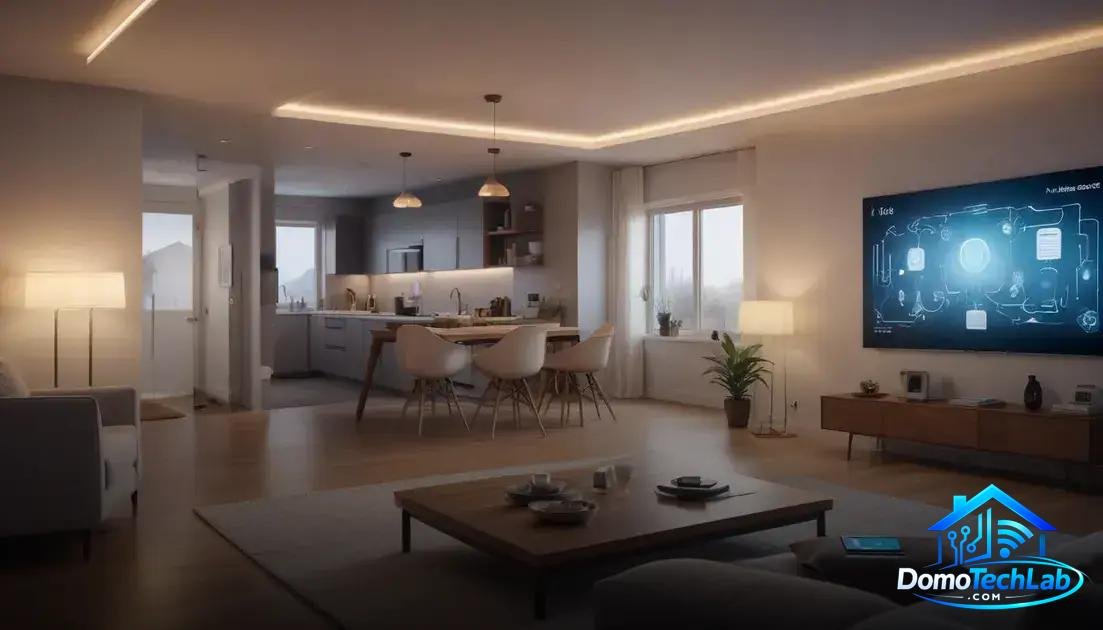
The integration of mmWave sensors with smart devices is fundamental to enhance the capabilities of your connected home. These sensors are compatible with multiple platforms, like Home Assistant and Alexa, allowing users to easily automate and control their environments efficiently.
Ease of Connection
Thanks to their adaptability, mmWave sensors can communicate with different devices via hubs, optimizing synchronization and overall performance. In our studies, we have observed that this integration not only improves functionality but also enriches the user experience by enabling voice commands and customized automations.
Performance and Stability of mmWave Sensors
The performance of mmWave sensors is critical to ensure effective automation in the smart home. These units are extremely sensitive and can detect movement in situations where other sensors cannot, such as in low-light conditions or with obstacles between the sensor and the object.
Stability in Different Environments
During our laboratory tests, it was noted that mmWave sensors maintain their accuracy and functionality even in complex environments. This is especially useful in areas where constant monitoring is required, such as in fall detection for the elderly. Their ability to operate reliably makes them a preferred choice for integration into security and local automation systems.
Conclusion: The Importance of mmWave Sensors in Your Smart Home
Leveraging mmWave sensors in your local automation system is a smart decision to improve your home’s efficiency and security. At DomoTechLab, we believe that combining advanced technology with proper integration allows for the creation of more functional and reliable environments.
We encourage you to continue researching and experimenting with these innovative solutions to maximize the potential of your smart home. Every step you take toward local automation is a step toward a safer and more convenient future.
Frequently Asked Questions about mmWave Sensors
Are mmWave sensors compatible with all hubs?
Not all hubs are compatible. It is essential to verify that your hub supports the communication protocol of mmWave sensors, such as Zigbee or Thread.
What is the maximum distance that mmWave sensors can cover?
mmWave sensors can detect movement up to 10 meters or more, depending on the model and environmental conditions. However, their performance may be affected by objects blocking the signal.
Can mmWave sensors be used outdoors?
Yes, there are models specifically designed for outdoor use, but it is crucial to ensure they are weather-resistant and have the appropriate sensitivity to detect movement in open spaces.
Do mmWave sensors work in low light conditions?
Yes, one of the advantages of mmWave sensors is their ability to function effectively in low light conditions, as their technology does not rely on ambient light for detection.
Is it possible to integrate mmWave sensors into existing security systems?
Definitely. mmWave sensors can be integrated into security systems using compatible protocols, enhancing detection and monitoring of emergency situations.
What challenges are present when installing mmWave sensors?
The main challenges include proper alignment to maximize coverage and minimizing interference from other electronic devices. It is important to conduct tests after installation to ensure optimal performance.