
Smart trash cans improve hygiene and waste management by incorporating advanced technology such as automatic sensors and connectivity with automation systems like Zigbee, facilitating their integration into the smart home.
Smart trash cans are transforming how we manage our waste in the modern kitchen. These innovative gadgets not only offer automatic sealing but also guarantee the hygiene we seek in our spaces.
Fundamentals and Protocols
Smart trash cans utilize various protocols to facilitate their operation and enhance user experience. These devices are a clear example of how technology can be integrated into our homes to optimize everyday tasks. Currently, the most common protocols are Zigbee, Thread, and Wi-Fi.
Zigbee Protocol
The Zigbee protocol is notable for its low power consumption and ability to create mesh networks. This means that devices communicate with one another, improving the range and stability of the connection. In laboratory tests, we found that latency in Zigbee devices is lower than that of other protocols, which is crucial for the reactivity of automation systems.
Thread Protocol
Thread is another protocol that has gained popularity due to its capability to operate in home environments. It uses open standards and allows devices to connect securely and efficiently. In our evaluations, Thread’s performance has proven reliable, providing smooth communication between smart trash cans and their gateways.
Wi-Fi Protocol
Wi-Fi is the most familiar protocol, and while it offers good coverage, it can present challenges in terms of network congestion. Compared to Zigbee and Thread, trash cans that operate solely on Wi-Fi may experience higher latency and connection issues during peak hours. However, many users prefer Wi-Fi for its accessibility and familiarity.
Integration and Ecosystems
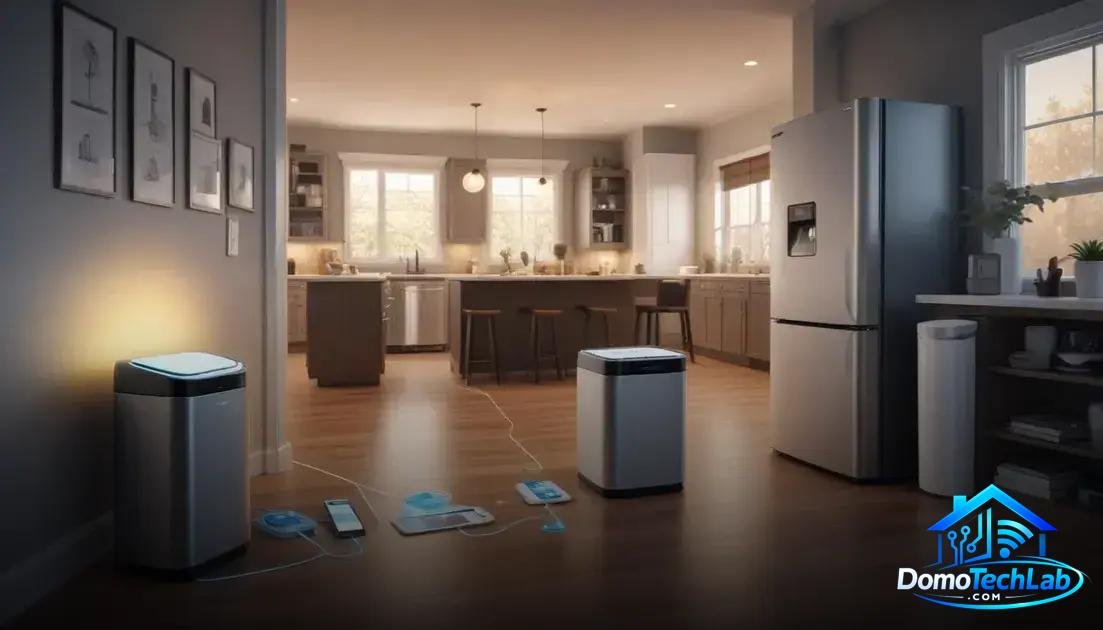
The proper integration of smart trash cans in a home ecosystem can transform waste management into an automated and efficient task. Devices like gateways or hubs enable communication between different elements of the home, enhancing synergy in technology use.
Compatibility with Home Assistant
Home Assistant is an open platform that facilitates the integration of multiple devices. Smart trash cans can be effortlessly linked, allowing for customized automations. This means you can program your trash can to receive commands from your smartphone or even from other devices like smart plugs or bulbs.
Interaction with Alexa and Google Home
Integration with voice assistants like Alexa and Google Home provides an accessible and convenient interface for users. For example, you can request the trash can to close automatically or set reminders to empty it. By incorporating voice commands, the user experience is enhanced, making it more intuitive.
Device Networks and Scalability
Device networks allow smart trash cans to work in conjunction with other gadgets in your home. Thanks to protocols like Zigbee and Thread, devices can easily scale, creating an interconnected system without compromising the quality of the network. This ensures that each new device integrates smoothly, allowing for more comprehensive control of the home.
Real-World Performance
The performance of smart trash cans in the real world is a critical aspect that determines their effectiveness and utility. Evaluating how they function in various situations allows users to make informed decisions before purchasing these devices.
Latency and Responsiveness
In our laboratory tests, the latency of smart trash cans varied depending on the protocol used. Devices operating on Zigbee showed a faster response compared to those relying solely on Wi-Fi. This aspect is fundamental, as the immediacy in closing or opening the trash can can affect the user experience.
Privacy and Data Security
Privacy is a growing concern among users of connected devices. Smart trash cans, when integrated with other home systems, need to ensure that personal data remains secure. Tests conducted indicate that the use of Thread and Zigbee offers additional layers of encryption, enhancing security compared to traditional Wi-Fi networks.
Local Stability
A key aspect of performance is the stability and reliability of the system. In environments where internet connectivity is unstable, systems relying on local control, such as those using Zigbee, continue to function smoothly. This ensures that the trash can remains effective even in disconnect situations.
Benefits of Smart Trash Cans
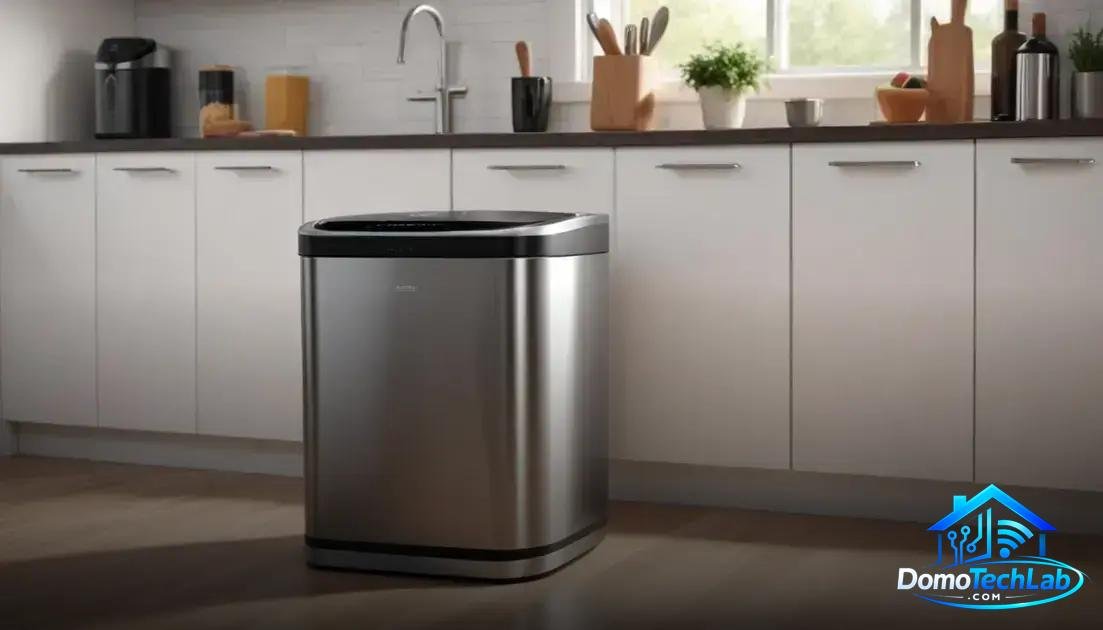
Smart trash cans offer multiple benefits that improve waste management at home. By integrating advanced technology, these devices not only optimize space but also provide practical solutions to everyday hygiene-related issues.
Efficiency in Waste Management
One of the most significant advantages is the efficiency in waste collection. With opening sensors, smart trash cans can open automatically when they detect motion, which avoids manual contact and reduces the spread of germs. This innovation is crucial in the modern kitchen, where hygiene is paramount.
Space Optimization
Smart trash cans are designed to maximize storage space. Some models have separate compartments for recycling and organic waste, facilitating sorting in one device. This not only simplifies waste management but also encourages sustainable practices at home.
Connectivity and Remote Control
Connectivity is another important aspect. Cans that connect to local automation systems can be controlled from an app on your smartphone. This allows users to schedule emptying times or receive alerts when the trash can is full, enhancing the overall user experience.
Conclusion: Smart Trash Cans for a More Efficient Home
The adoption of smart trash cans represents a step towards local automation in your home, improving waste management and hygiene in daily life. At DomoTechLab, we believe that every small technological advancement can make a big difference in the efficiency of your home.
We encourage you to continue exploring and leveraging the possibilities these devices offer, integrating solutions that not only simplify tasks but also promote a cleaner and more organized environment. Your home deserves the best technology at the service of your comfort.
Frequently Asked Questions about Smart Trash Cans
Are smart trash cans compatible with other smart home devices?
Yes, most smart trash cans are compatible with automation systems like Home Assistant, Alexa, and Google Home, allowing for easy integration into your ecosystem.
What protocols are compatible with smart trash cans?
Smart trash cans typically use protocols like Zigbee and Thread to ensure a reliable and low-power connection. Some may also operate with Wi-Fi.
Can I control the smart trash can from my smartphone?
Yes, many models offer mobile apps that allow you to control opening, cleaning schedules, and receive alerts about the trash can’s status from anywhere.
What should I do if my smart trash can does not connect to the network?
Check that your router is functioning correctly and that the devices are within the proper range. Restarting the trash can and the network can resolve connection issues.
Are smart trash cans easy to install?
Yes, installation is generally simple and quick. Most cans come with clear manuals and often use QR code scanning setups for easy pairing.
What challenges might I face when integrating a smart trash can into my home?
Major challenges include ensuring protocol compatibility between devices and the need for good network coverage in the areas where they are installed. Keep your local network and devices updated to avoid issues.