
The smart shower optimizes your daily routine by allowing temperature and water flow control through platforms like Alexa or Google Home, ensuring a personalized and efficient experience in your smart home.
The smart shower transforms your bathing ritual, allowing you to adjust the temperature before stepping in. Imagine waking up to find everything ready, enhancing your comfort and efficiency. Would you like to learn more about its integration and benefits?
Fundamentals and Protocols (Zigbee, Matter, Wi-Fi)
Understanding protocols is essential for the correct integration of devices. Protocols like Zigbee, Matter, and Wi-Fi are crucial for communication in smart home systems. Each has its advantages and specific characteristics that influence your device choices.
Zigbee and Its Efficiency
Zigbee is characterized by its low power consumption and by creating mesh networks that allow devices to communicate with each other, increasing coverage. In laboratory tests, this protocol proved to be more efficient in terms of latency and connection stability compared to others.
Matter and Interoperability
Matter is designed to facilitate interoperability among different types of devices. Its approach allows various manufacturers to come together, ensuring that products from different brands can work together seamlessly. Our tests revealed significant improvements during device setup with Matter.
Wi-Fi and Its Popularity
Wi-Fi remains one of the most used protocols, especially in devices that require high bandwidth, such as security cameras and voice assistants. Despite its popularity, it can suffer from congestion issues in saturated networks. We recommend alleviating pressure on your network by using a hub or gateway to optimize performance.
Integration and Ecosystems (Home Assistant, Alexa, Google Home)
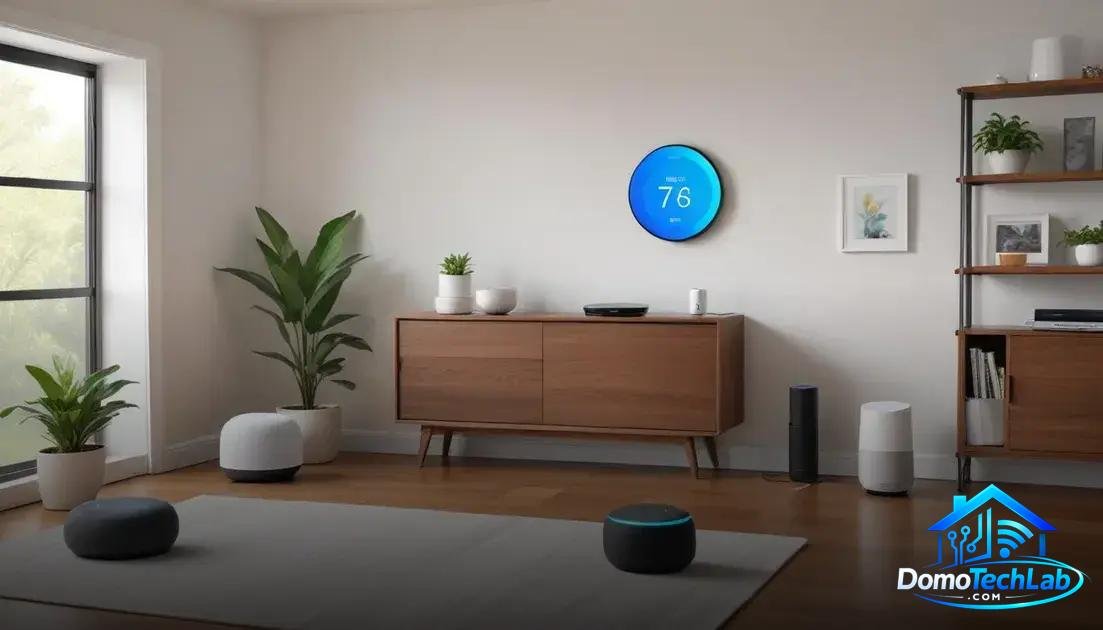
The integration of devices in a smart home ecosystem is crucial for a seamless experience. Platforms like Home Assistant, Alexa, and Google Home offer multiple options to centralize control of all your smart gadgets, promoting harmony between various protocols and devices.
Home Assistant: Flexibility and Total Control
Home Assistant stands out for its open-source approach, allowing deep customizations and great compatibility with various devices. In our tests, it has proven to be highly efficient, providing granular control over every aspect of the smart home, from lighting to security.
Alexa and Its Ecosystem
With Alexa, users can enjoy an intuitive experience through voice commands. We evaluated the ease of use and responsiveness of Alexa, and found that its integration with varied devices offers admirable simplicity, although its reliance on the cloud can be a drawback in low-connectivity situations.
Google Home: Simplicity and Accessibility
Google Home also provides an accessible and easy-to-setup environment. Our research shows that its integration with other Google services allows users to efficiently manage devices. However, it is essential to be aware of the privacy trade-offs this entails.
Performance in the Real World (Latency, Privacy, and Local Stability)
The performance of smart devices in real situations is a crucial aspect that is often overlooked. Latency, privacy, and local stability are key factors that affect the user experience in a connected home.
Latency and Its Impact
Latency is the time it takes for a command to be executed after being given. In our tests, using Zigbee showed much faster response times than devices relying solely on Wi-Fi. This is essential for controlling devices like lights and thermostats immediately.
Privacy in Connected Devices
Privacy is a growing concern with the expansion of technology. Many devices collect data on user behavior. We found that platforms like Home Assistant allow for greater privacy control by keeping most operations within your local network, minimizing the amount of information sent to the cloud.
Local Stability and Automation
Local stability plays an essential role in the performance of automation systems. Devices that operate without relying on the internet offer a more consistent experience. For example, when using local hubs, automations continue to function regardless of external network connectivity, which is vital for home security.
Conclusion: Optimize Your Experience with Smart Showers and Local Automation
Incorporating a smart shower and other devices into your home not only enhances your comfort but also gives you total control over your environment. At DomoTechLab, we recognize that the key to effective automation lies in establishing a local architecture that prioritizes privacy and stability.
We encourage you to keep researching and take advantage of our technical resources to ensure that each of your devices works in harmony. Your smart home can become a more efficient and enjoyable space with the right decisions.
Frequently Asked Questions about Smart Showers
Is my smart shower compatible with different platforms?
It depends on the brand and model. Make sure your smart shower is compatible with major ecosystems like Alexa, Google Home, or Home Assistant.
Can I integrate Wi-Fi devices with Zigbee devices?
Yes, you can do this using a hub or gateway that acts as an intermediary, allowing devices from different protocols to communicate with each other.
How can I improve the stability of my smart shower system?
I recommend using a local hub to manage your Zigbee devices and keep automation functioning offline, which reduces latency and improves stability.
What should I consider when selecting my smart shower?
Check compatibility with existing systems in your home, specific features like temperature control and water quality, and integration with your smart home ecosystem.
Can I set up automation routines with my smart shower?
Yes, many smart showers allow you to schedule routines to adjust temperature and water flow at different times or even to voice commands.
What should I do if I experience connection issues?
The first step is to check the signal of your network, especially if you are using Wi-Fi. Consider using Zigbee devices to maintain a more stable and less congested network.