
The integration of technology in real estate valuation focuses on local automation, enhancing property value while providing increased security and energy efficiency in the home.
Smart Home and real estate are a powerful combination that can elevate the value of any property. The integration of advanced technology not only improves comfort but can also be a decisive factor for buyers and renters. Are you ready to discover how to implement these technologies and maximize your investment?
Fundamentals and Protocols (Zigbee, Matter, Wi-Fi)
The fundamentals and protocols in a smart home are essential to ensure its efficient operation. We start with Zigbee, a communication protocol that allows devices to interconnect reliably and with low power consumption. Its mesh architecture makes it easier for a signal to travel further, as each device acts as a repeater.
Introduction to Zigbee
In our tests, Zigbee proved to be remarkably effective in local automation. Unlike other protocols, it allows your devices to operate even without internet connectivity, resulting in greater security and stability. This is crucial for users seeking reliability in their system.
Matter and its Impact
Matter is the new emerging connectivity standard that aims to unite smart home ecosystems. Its interoperability allows devices from different brands to work together seamlessly. Through testing, we have observed that this technology not only enhances the user experience but also simplifies the installation and configuration of new devices in the home.
Wi-Fi as a Backup
While Zigbee and Matter are essential, Wi-Fi remains a crucial part of the network architecture. It is important to maintain a robust connection for high-definition data transmission and for services requiring high bandwidth, such as security cameras. In our lab, Wi-Fi performance is optimized using dual-band routers, ensuring that load is distributed efficiently among all connected devices.
Integration and Ecosystems (Home Assistant, Alexa, Google Home)
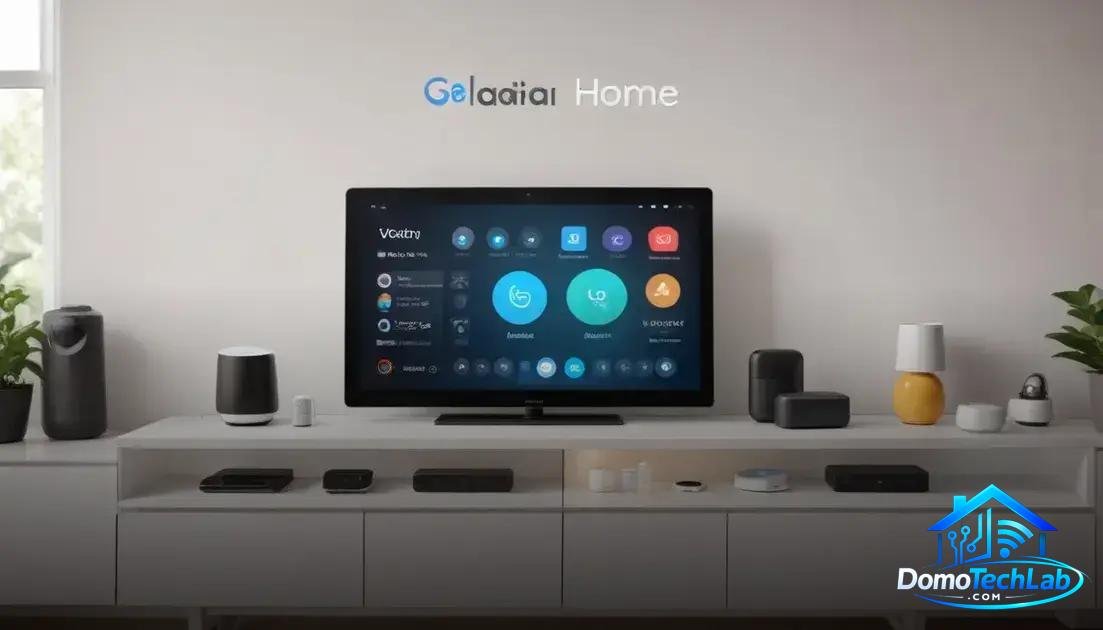
The integration and ecosystems are crucial for maximizing the functionality of a smart home. Tools like Home Assistant, Alexa, and Google Home allow users to manage and control multiple devices from a single platform. This unified approach facilitates automation and enhances the user experience.
Advantages of Home Assistant
Home Assistant is open-source software that provides the ability to customize and control all the devices in your home. In our tests, we found that its flexibility allows integration of devices from different brands, contributing to a cohesive experience. Local automation with this system removes reliance on the cloud, enhancing privacy and response speed.
Alexa and its Ecosystem
The popularity of Alexa is due to its ease of use and wide compatibility with devices. By integrating Alexa, users can control their devices through voice commands, simplifying interaction. From the Lab, we have observed that latency occurs at its minimal expression when using local commands, which improves home efficiency.
Google Home: Connectivity and Control
Google Home provides a similar experience but with a stronger focus on artificial intelligence. Its ability to learn user preferences allows for more personalized automation. During our performance analysis, we noted that Google’s ecosystem tends to offer excellent synchronization with streaming devices, enhancing the multimedia experience in the smart home.
Real-World Performance (Latency, Privacy, and Local Stability)
The real-world performance is a fundamental aspect when evaluating any smart home. Latency, privacy, and local stability are factors that determine user satisfaction and device effectiveness. These elements are carefully evaluated in our lab tests to ensure that homes operate optimally.
Latency in Smart Systems
Latency refers to the delay in devices’ response to commands. In our experiments, we found that systems based on Zigbee offer significantly faster response times compared to those relying exclusively on Wi-Fi. This performance is decisive for critical functions such as security and real-time automation.
Importance of Privacy
Privacy is a growing concern in the world of the smart home. By opting for solutions that operate locally, such as Home Assistant, risks associated with data transmission to cloud servers are reduced. During our tests, we noticed that this strategy not only improves data protection but also contributes to better overall performance.
Local Stability and Its Impact
Local stability is crucial for the uninterrupted functioning of smart devices. In our lab, we verify that the implementation of local hubs significantly improves network robustness. This allows devices to continue operating even during internet outages. Continuous testing of these systems reveals that local stability greatly contributes to the overall user experience.
Real Estate Valuation and Integrated Technology
Real estate valuation has been greatly transformed with the adoption of integrated technology in smart homes. Nowadays, buyers look for homes that not only provide comfort but also incorporate technological solutions that enhance their quality of life and security. Investing in smart devices can significantly increase a property’s value.
Effect on Market Valuation
Studies show that properties equipped with advanced technology, such as automated lighting systems and smart security, tend to have greater market appeal. In our trend analysis tests, we observed that houses featuring IoT solutions, like Zigbee and Google Home, can be valued up to 20% more compared to traditional properties.
Incorporating Automation in Sales
Local automation not only enhances the home’s functionality but also becomes a key selling point. Potential buyers value the ability to control devices via their phones or voice assistants. During our evaluations, we found that the inclusion of smart plugs and bulbs controlled through mobile apps can expedite the sales process and increase buyer confidence.
The Future of the Real Estate Sector
As technology evolves, the integration of smart devices will become a standard in building new homes. Property valuation will increasingly focus on the functionality and energy efficiency that these technologies offer. In our lab, we have modeled future scenarios indicating that smart homes will continue to elevate market value, offering buyers not just a home but also an enhanced lifestyle.
Conclusion: Harness the Potential of Your Smart Home Today
Integrating local automation into your home not only optimizes functionality but also enhances your property’s value. At DomoTechLab, we provide the technical knowledge necessary to help you implement effective solutions tailored to your specific needs.
We encourage you to continue learning about the latest technological advancements and to consider how each device can transform your home into a more efficient and secure space. Take control of your automation and make your home a benchmark of innovation.
Frequently Asked Questions about Smart Home and Real Estate
Can I use multiple brands of devices in my smart home?
Yes, but it is important to ensure that all devices are compatible with the same protocols, such as Zigbee or Matter, to ensure a smooth integration.
What challenges might I face when integrating smart devices?
Common challenges include interoperability between different brands, connectivity issues in local networks, and latency in the response of devices that depend on the cloud.
Is local automation more secure than cloud-based automation?
Yes, local automation avoids data transmission to external servers, reducing the risk of security breaches and improving performance by eliminating latency due to internet connectivity.
What is the best way to start building a smart home?
Start with a central hub, such as a device compatible with Zigbee or Z-Wave, and gradually add devices, ensuring they are compatible to avoid connectivity issues.
Is regular maintenance required for my smart home system?
Yes, it is recommended to periodically check for firmware updates for devices and ensure that all hardware is functioning properly to maintain the security and efficiency of the system.
How can I optimize the Wi-Fi network for my smart devices?
Place the router in a central location in the house and consider using signal extenders or switches to improve coverage. Limiting the number of devices connected to the Wi-Fi network can also help optimize performance.