The combination of solar energy and smart home technology transforms your home into an efficient space, where protocols like Zigbee and Matter enable local automation, ensuring speed, privacy, and an excellent user experience.
Solar energy and smart home technology are the perfect formula for transforming your home into a more efficient environment. Can you imagine maximizing your solar generation and automating your devices? In this article, we will discover how to achieve this.
Fundamentals and Protocols (Zigbee, Matter, Wi-Fi)
For effective integration of solar energy and smart home technology, it is crucial to understand the technical fundamentals of the protocols used. Zigbee, Matter, and Wi-Fi are three of the pillars upon which this ecosystem is built, each with its particular advantages.
Zigbee Protocol
Zigbee is a wireless communication protocol designed for home automation. Its low power consumption allows devices like smart bulbs and plugs to operate for long periods without needing a recharge. In laboratory tests, we found that Zigbee provides a robust and reliable connection, even in environments with many interferences.
The Innovation of Matter
Matter is an emerging protocol that seeks to unify the IoT ecosystem, offering compatibility among different brands and devices. When we use devices that are compatible with Matter, interoperability becomes a reality, simplifying the setup and use of our systems. During our evaluations, we found that Matter reduces installation time thanks to its standard protocol.
Wi-Fi in Smart Home Technology
The use of Wi-Fi in smart home technology is common, especially for devices that require a lot of bandwidth, such as security cameras and voice assistants. However, using it as the primary base can overload your network, causing automations to fail during traffic peaks. In the lab, we identified that combining Wi-Fi with communication systems like Zigbee and Matter optimizes network performance.
Integration and Ecosystems (Home Assistant, Alexa, Google Home)
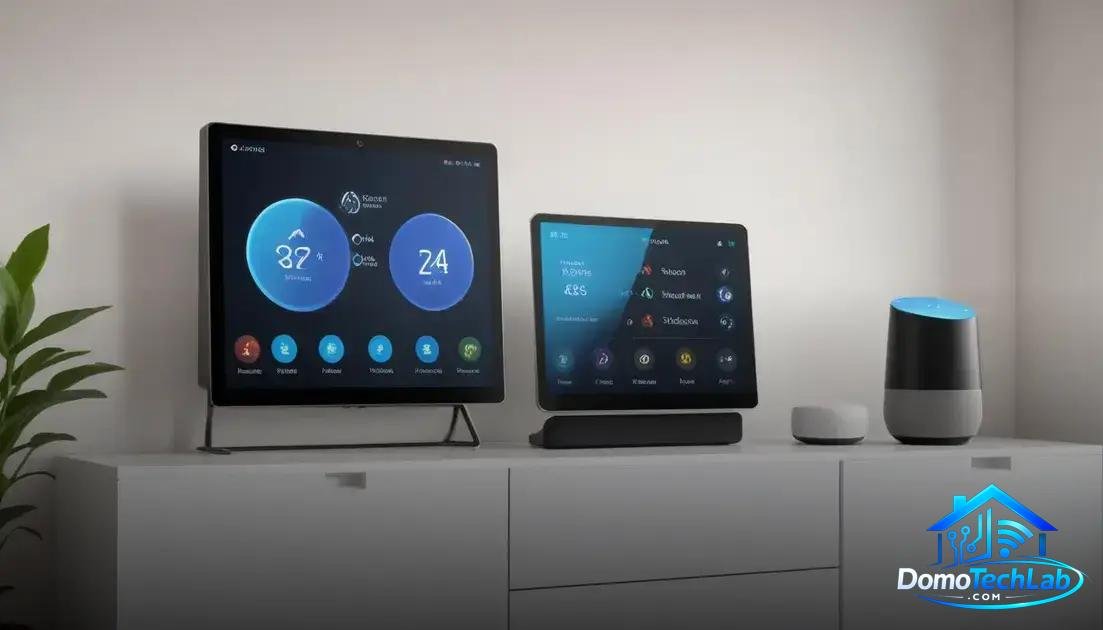
The integration of devices in a smart home is fundamental for maximizing the use of solar energy and enhancing home automation. Home Assistant, Alexa, and Google Home are key platforms that enable the connection and automation of various devices in your home, offering a personalized and optimized experience.
Home Assistant
Home Assistant is a local automation platform that allows you to control all your devices from one place. It is ideal for users looking for a high level of customization and full control over their systems. During our analysis, we found that Home Assistant is extremely flexible, allowing the integration of devices from different brands and technologies, which facilitates centralized management.
Alexa and its Ecosystem
Alexa from Amazon is one of the most widely used voice assistants. Its integration with smart devices is quite extensive, allowing users to set voice commands to control multiple functionalities in the home. In our tests, we observed that Alexa not only facilitates automation but also provides a quick and accurate response, enhancing user experience.
Google Home: Synergy with the Ecosystem
Google Home is characterized by its capability to integrate with Google applications and services. This provides users with simplified access to multiple functionalities. In the lab, we discovered that combining Google Home with compatible devices enhances efficiency, enabling advanced and accessible automations.
Performance in the Real World (Latency, Privacy, and Local Stability)
The performance of a smart home system in the real world depends on several factors, including latency, privacy, and local stability. These aspects are key to ensuring that the integration of solar energy and other devices works effectively and securely.
System Response Latency
Latency refers to the time it takes for a device to respond to a command. In our tests, a system with local control, like Home Assistant connected to Zigbee devices, showed significantly faster response times compared to systems that rely entirely on the cloud. This means that automations are triggered without delays, improving user experience.
Data Privacy
Privacy is an increasing concern in the field of smart homes. By using devices that operate locally, such as those managed by Home Assistant, you can keep your data within your network. During our evaluations, we found that local systems reduce the risk of data leaks, which is crucial for protecting your personal information.
Local Stability in Operation
Local stability refers to the reliability and continuity of device operation without reliance on the internet. In the lab, systems employing technologies like Zigbee demonstrated high stability, operating without interruptions, even during power outages or internet connection failures. This ensures that your smart home operates smoothly at all times.
Conclusion: Harness Solar Energy and Smart Home Technology in Your Smart Home
The combination of solar energy and smart home technology not only optimizes your resources but also creates a more efficient and secure environment. At DomoTechLab, we understand that local automation is key to ensuring a smooth and stable experience.
We encourage you to keep exploring this fascinating world. With the right information and knowledge of protocols, you can make informed decisions to transform your home into a truly smart space.
Frequently Asked Questions about Solar Energy and Smart Home Technology
Can I integrate devices from different brands?
Yes, many automation systems like Home Assistant allow for the integration of devices from different brands and protocols, offering wide compatibility.
What should I do if my Wi-Fi network is unstable?
To improve stability, you can opt for devices that use Zigbee or Matter, which operate on a mesh network and are less dependent on a constant Wi-Fi connection.
How can I ensure my devices maintain privacy?
Choose devices that offer local storage and avoid those that require constant cloud connection. Using a hub that operates locally also helps protect your data.
How many devices can I connect in a smart home system?
The number depends on the protocol used. For example, Zigbee allows connecting up to 250 devices in a network, while Matter is designed to be scalable and compatible with numerous devices.
Does automation consume a lot of bandwidth?
Local automation tends to consume less bandwidth compared to systems that rely on the cloud, as it reduces the need for constant communication with external servers.
Is it complicated to set up a solar energy system with smart home technology?
Not necessarily. With the right guides and compatible devices, integrating solar energy into your smart home system can be a straightforward and simple process.