
A WiFi weather station allows you to monitor weather conditions in real time, optimizing irrigation and crop management in urban agriculture, and easily integrating with systems like Home Assistant, Alexa, or Google Home.
The WiFi weather station can be your best ally in taking care of your urban garden. With accurate sensors, you’ll never have to guess the right climate for your plants again. Are you ready to optimize your garden?
Fundamentals and Protocols (Zigbee, Matter, Wi-Fi)
To understand how a WiFi weather station works, it’s essential to know the underlying protocols. The choice of technologies like Zigbee, Matter, and Wi-Fi will determine the effectiveness and integration of your weather measurement device in your home environment.
What is Zigbee?
Zigbee is a communication protocol that allows interoperability between smart devices. It is known for its low energy consumption and its ability to form mesh networks, ensuring wide coverage in outdoor areas, ideal for the installation of weather sensors.
Getting to Know Matter
Matter is a new connectivity standard that promises to simplify communication between devices from different brands. By adopting this protocol, your WiFi weather station will be able to easily interact with a variety of home automation systems.
Advantages of Wi-Fi
The use of Wi-Fi allows a direct connection to your home network, making real-time data access from any device easier. However, it’s crucial to consider network congestion and the possibility of connection losses compared to specialized technologies like Zigbee.
Integration and Ecosystems (Home Assistant, Alexa, Google Home)
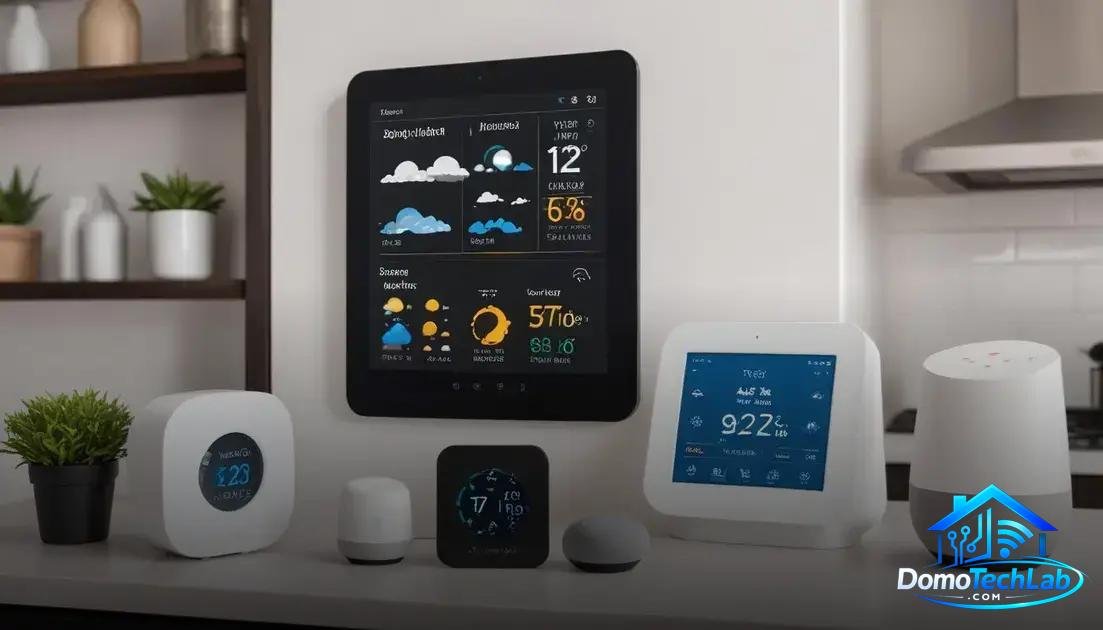
The integration of a WiFi weather station into home automation systems, such as Home Assistant, Alexa, and Google Home, maximizes its functionality and offers a more complete experience. These ecosystems allow devices to work together, providing centralized control of the climate in your home.
Integration with Home Assistant
Home Assistant is a local automation platform that allows devices to communicate smoothly. By integrating your WiFi weather station, you can set up automations based on weather data, like turning irrigation on or off based on detected rain.
Potential of Alexa
Linking with Alexa makes accessing data from the station easy through voice commands. You can ask about the current temperature or request humidity reports. This convenience enhances the interactivity of your smart home.
Usage with Google Home
Google Home, similar to Alexa, offers the ability to receive real-time weather updates. Integrating with this system allows you to customize alerts for special weather conditions, thus optimizing the care of your garden or urban orchard.
Real-World Performance (Latency, Privacy, and Local Stability)
When choosing a WiFi weather station, it’s crucial to evaluate its real-world performance, considering factors like latency, privacy, and local stability. These aspects determine the effectiveness and reliability of your climate monitoring system.
Latency and Its Impact on Response
Latency refers to the time it takes for a device to transmit data. In our tests, a WiFi weather station with a protocol like Zigbee demonstrated significantly lower response times compared to those depending solely on Wi-Fi. This is critical when activating automations based on weather conditions, such as adjusting irrigation.
Data Privacy
Privacy is another essential aspect. By opting for a solution that works locally, such as Home Assistant, you can minimize the exposure of your personal data to external servers. Data collection takes place locally, protecting sensitive information and providing greater control over access to your climate records.
Local System Stability
The stability of your system is intrinsically linked to its architecture. Using a local hub or gateway allows communication between devices to be more robust. During our tests, we noticed that systems with local integration had fewer interruptions and failures, enhancing the overall reliability of the WiFi weather station.
Outdoor Sensors and Their Application in Urban Agriculture
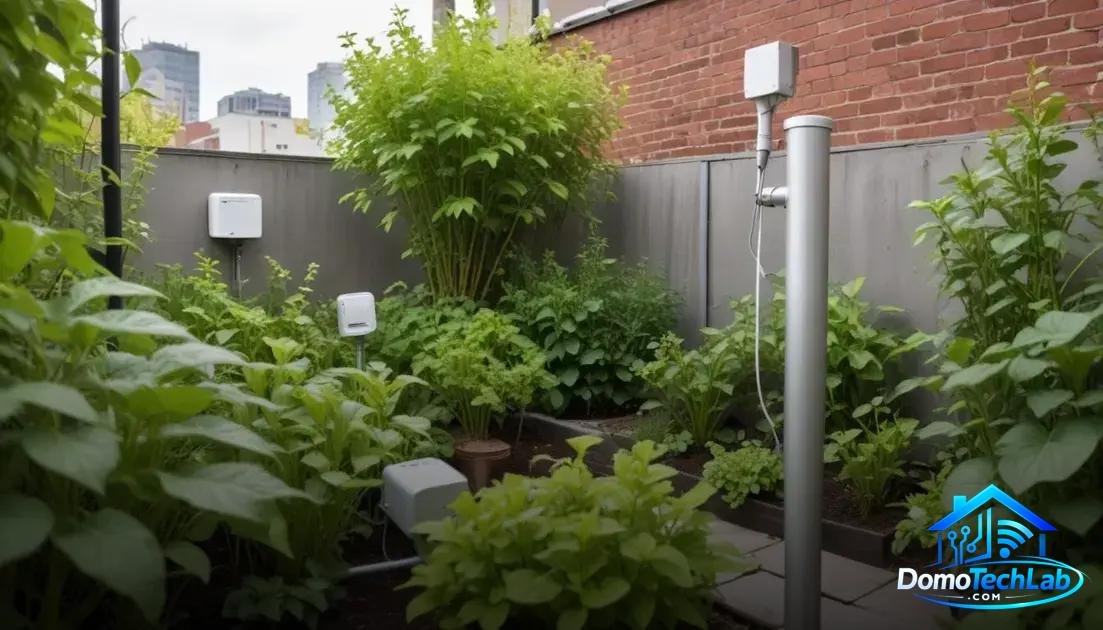
Outdoor sensors are key components in a WiFi weather station, especially in its application to urban agriculture. These devices allow for the collection of critical climate data that directly impacts plant growth and soil health.
Types of Sensors and Their Functionality
Among the most common sensors are rain gauges, which measure precipitation, and anemometers, which assess wind speed. This data assists urban farmers in making informed decisions about irrigation and crop protection against adverse weather conditions.
Data Integration for Efficient Agriculture
The real-time data collection through outdoor sensors allows for the optimization of resources such as water and fertilizers. By integrating this data into platforms like Home Assistant, farmers can set up automatic irrigation systems that adjust based on soil moisture and weather forecasts.
Benefits for Urban Sustainability
Using sensors in urban agriculture not only improves production but also promotes more sustainable practices. By minimizing the use of water and resources, a positive impact on the environment is achieved, fostering the development of healthier ecosystems in urban settings.
Conclusion: Empower Your Urban Garden with a WiFi Weather Station
Implementing a WiFi weather station enables optimal management of your green space. Investing in local automation not only enhances your responsiveness to climate changes but also reinforces the privacy and security of your data.
At DomoTechLab, we are committed to providing you with the technical information necessary for making informed decisions and transforming your garden into a sustainable and efficient environment. We encourage you to continue researching and applying these technologies in your home.
Frequently Asked Questions about WiFi Weather Stations
Are WiFi weather stations compatible with all home automation systems?
Not all weather stations are compatible with all systems. It’s crucial to check compatibility with specific platforms like Home Assistant, Alexa, or Google Home before making a purchase.
Which protocol should I choose for my WiFi weather station?
The choice of protocol depends on your needs. If you seek a more resilient and low-consumption network, consider using devices with the Zigbee protocol. If you prefer a direct and simple connection, Wi-Fi may be the best option.
Can I use outdoor sensors from different brands together?
This depends on the protocols used. If the sensors are compatible with the same standard, such as Zigbee or Matter, they will likely work together. Check the documentation for each device for more details.
How can I improve the stability of my network with multiple devices?
Using a local hub or gateway that manages all devices can improve stability. Additionally, keeping a separation between high-consumption devices and automation devices reduces Wi-Fi network congestion.
Do WiFi weather stations affect the privacy of my data?
Privacy depends on how data is managed. Using platforms that operate locally, like Home Assistant, minimizes exposure risk since data is not sent to external servers.
Is it complicated to set up a WiFi weather station?
Setup may vary by model, but many modern stations are designed to be intuitive. By following the manufacturer’s instructions and utilizing online tutorials, you can easily complete the installation.