
The comparison between presence sensors and motion sensors is key to optimizing automation in smart homes, with mmWave sensors being more accurate and versatile than PIR, enabling effective detection under various conditions and configurations.
Presence sensors vs motion sensors are crucial in home automation, but which one is right for you? Today, we will examine their differences and advantages to help you make an informed decision.
Fundamentals and Protocols (Zigbee, Matter, Wi-Fi)
It is essential to understand the protocols that govern communication in a smart home. Among the most common, we find Zigbee, Matter, and Wi-Fi. Each has specific characteristics that influence its performance and application.
Zigbee: Reliability and Efficiency
Zigbee is a wireless communication protocol that operates in a mesh network, allowing devices outside the gateway range to communicate with each other. This reduces load on the network and is especially useful in large installations where multiple devices need to interact.
Matter: The New Standard for Interoperability
Matter is an emerging protocol aimed at unifying communication between devices from different manufacturers. This standard promises to simplify the setup and control of devices in a smart home, ensuring that everything speaks the same language. The confidence that products from different providers will work together is a significant advancement in this field.
Wi-Fi: Breadth and Speed
Wi-Fi is the king of connectivity in many homes. It allows for fast and high-capacity data transmission. However, it may be less efficient for devices that require constant and low-latency communication, such as sensors.
Integration and Ecosystems (Home Assistant, Alexa, Google Home)
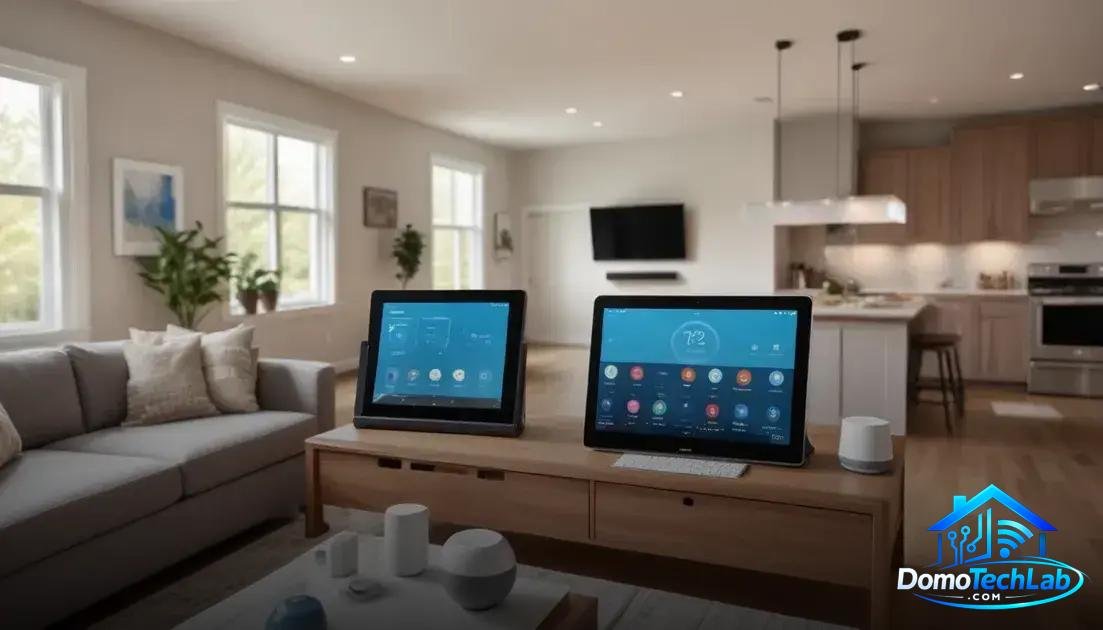
The integration of devices is essential to achieve an efficient smart home. Platforms like Home Assistant, Alexa, and Google Home facilitate the management of these devices, allowing you to control them from a single interface.
Home Assistant: Total Control
Home Assistant is an open-source solution that offers great flexibility. Users can integrate a variety of devices and custom configurations. Its capability to operate locally enhances privacy and reduces reliance on cloud services.
Alexa: Convenience and Accessibility
Alexa stands out for its ease of use and voice recognition. With the addition of skills, this platform can control compatible devices, create task lists, and even provide real-time information. Setup is quick and does not require advanced technical knowledge.
Google Home: Integration in Ecosystems
Google Home easily integrates with other Google services, providing a convenient ecosystem. Device control via voice commands is intuitive, allowing users to manage their entire smart home smoothly and naturally.
Real-World Performance (Latency, Privacy, and Local Stability)
The performance of a smart home in real situations can vary significantly. Factors such as latency, privacy, and local stability are essential to ensure a smooth and secure experience.
Latency: The Speed of Response
Latency refers to the time it takes for a device to respond to a command. In our tests, we observed that devices operating with Zigbee exhibited faster response times compared to those relying solely on Wi-Fi. This speed is crucial for applications like automatic lighting and security.
Privacy: Protecting Your Data
As devices communicate with each other, data privacy becomes a vital point. Solutions like Home Assistant allow data to be kept on the local network, avoiding transfer to the cloud. This not only keeps your data safer but also reduces the risk of external attacks.
Local Stability: Reliability in Operation
Local stability refers to a system’s ability to operate without an internet connection. Devices compatible with Zigbee and Matter often provide this autonomy, which is essential for a smart home. During our tests, local systems proved to be more reliable, especially in low-connectivity situations.
Sensor Comparison (PIR, mmWave, Detection Zones)
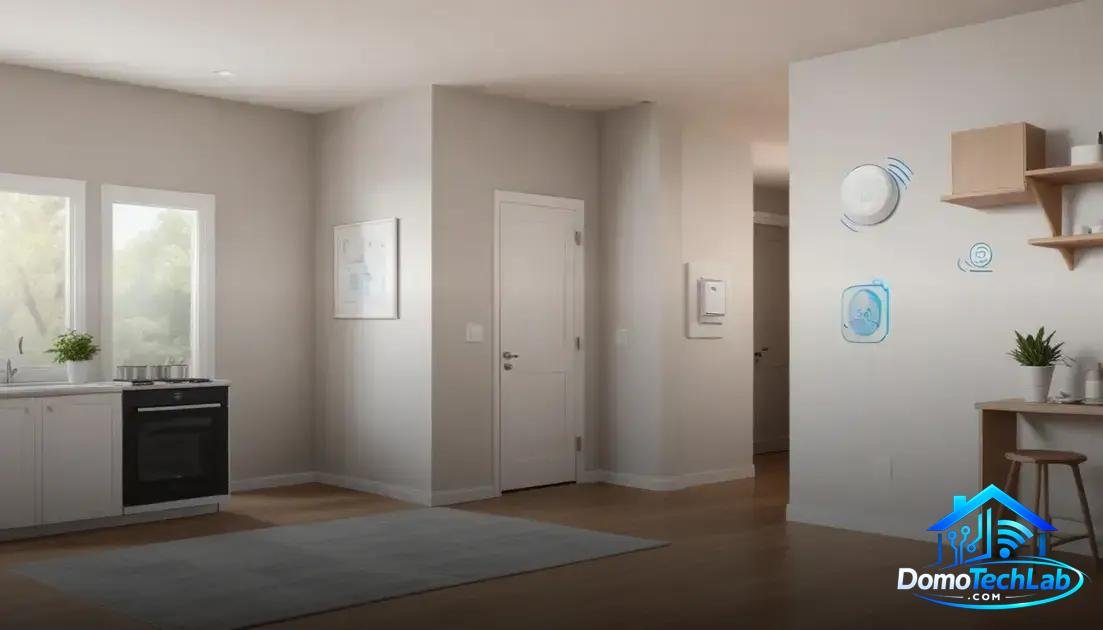
The choice of the right sensor is key to optimizing automation in a smart home. Motion sensors, such as PIR and mmWave, offer different characteristics and efficiencies in detection.
PIR Sensors: Traditional Detection
PIR (Passive Infrared) sensors are known for their reliability and relatively low cost. They work by detecting changes in infrared radiation, making them ideal for areas where human movement is constant. However, their detection range can be affected by obstacles and extreme temperatures.
mmWave Sensors: Precision and Flexibility
mmWave sensors, on the other hand, use millimeter waves to detect motion. They offer greater accuracy and can function in various environmental conditions. They are less susceptible to interference caused by temperature or light and can detect motion through walls, expanding their detection zone. This makes them a favorable choice for commercial and residential spaces.
Detection Zones and Effective Use
Configuring detection zones plays a crucial role in the functionality of the sensors. PIR works best in rooms where movements are evident and clear. In comparison, mmWave can be used in places where objects are in constant motion or where presence needs to be detected through barriers. The right choice depends on the environment and the desired application.
Conclusion: Compare Presence vs Motion Sensors for Effective Local Automation
The move towards a robust smart home begins with the proper selection of sensors. Local automation is essential to ensure the speed, privacy, and functionality of your home. At DomoTechLab, we are dedicated to providing you with the knowledge and tools necessary to make informed decisions about devices and protocols that best suit your needs.
We encourage you to continue researching and applying what you’ve learned, ensuring that your local automation system operates optimally for you and your family.
Frequently Asked Questions about Presence vs Motion Sensors
Are PIR sensors compatible with all automation systems?
Generally, PIR sensors are compatible with most automation systems that use standard protocols like Zigbee or Z-Wave. However, it is essential to verify specific compatibility with your gateway or hub.
What challenges might I face when integrating mmWave sensors into my home?
While mmWave sensors offer detection advantages, they may require more precise setup and be susceptible to interference in environments with many walls or objects. Be sure to check the specifications and installation conditions.
Can motion sensors be used alongside smart switches?
Yes, motion sensors can be seamlessly integrated with smart switches, allowing for automation of lights and other devices based on detected presence, thereby optimizing energy use.
How does latency affect the performance of my smart devices?
High latency can result in delays in the response of smart devices, affecting the user experience. It is advisable to opt for devices that prioritize local automation to reduce these response times.
What should I consider when choosing sensors for different areas of my house?
Consider the size and characteristics of each area. For example, in open spaces, an mmWave sensor might be more effective, while in small rooms a PIR sensor may be sufficient and more cost-effective.
Is it possible to mix different types of sensors in the same system?
Yes, you can mix different types of sensors as long as they are compatible with the protocol used by your automation system. This allows you to customize your setup to better meet the specific needs of each space.