
Local automation with ESP32 enables the creation of an efficient smart home by using protocols like Zigbee, ensuring a stable and secure system that operates without the need for an Internet connection.
Want to transform your home into a Smart Home DIY with ESP32? This guide will walk you through the fundamentals and show you how to do it effectively and affordably. Keep reading to discover the keys to home automation.
Fundamentals and Protocols
The fundamentals of a smart home are essential to ensure that all devices operate effectively. One of the main protocols you should consider is Zigbee, which allows communication between devices on a local network.
Established Protocols
Choosing the right protocols like Thread and Wi-Fi is crucial. Each has its advantages: while Zigbee consumes less energy, Wi-Fi offers greater bandwidth. This means smart bulbs and plugs can interact quickly without sacrificing network stability.
Local Automation with ESP32
Implementing a microcontroller like the ESP32 in your system allows local automation to occur without relying on external servers. This not only improves efficiency but also provides more secure control over your devices.
Integration and Ecosystems
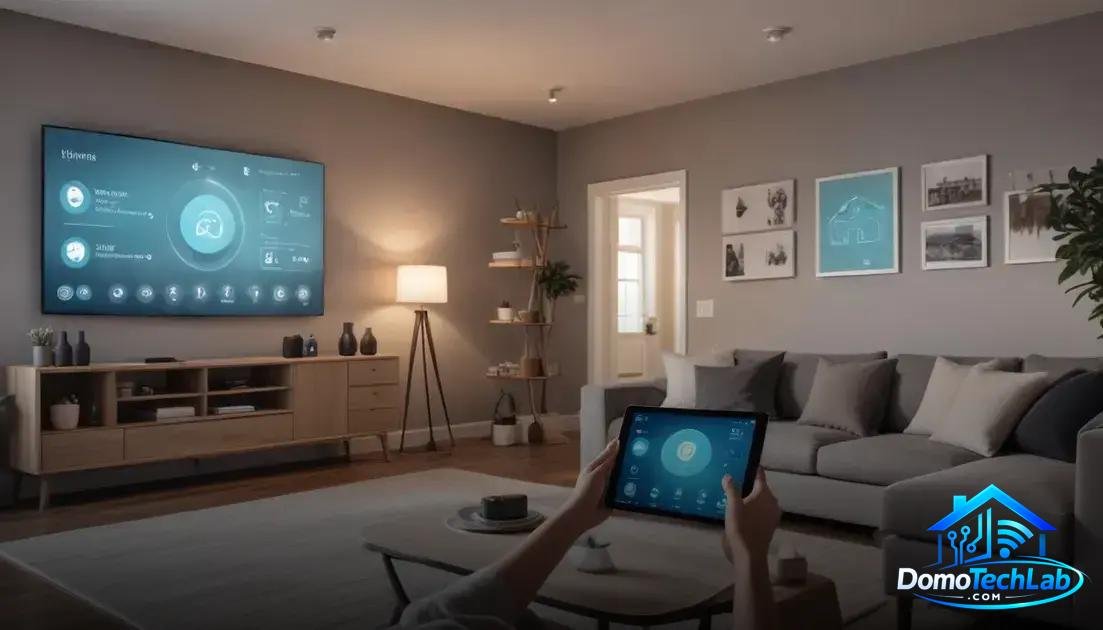
The integration of devices in a smart home ecosystem is fundamental for achieving smooth operation. With platforms like Home Assistant, you can bring together devices from different brands using protocols like Zigbee and Wi-Fi.
The Versatility of Home Assistant
In our tests, using Home Assistant has proven effective for centralizing control. You can manage bulbs, plugs, and sensors from a single interface, reducing the complexity of multiple apps.
Compatibility with Voice Assistants
Integrating your system with voice assistants like Alexa and Google Home enables even more intuitive handling. You can simply give voice commands to turn devices on and off, enhancing your home experience.
Performance in the Real World
The performance of a smart home system in the real world can vary significantly depending on the setup. By implementing technology like Zigbee, we have observed that network stability improves, especially in environments with multiple devices.
Latency and Response
In our studies, the latency in device response is critical. Using Wi-Fi for tasks that require greater bandwidth, such as security cameras, has shown more suitable performance, while Zigbee is better for low-power devices like smart bulbs and plugs that do not need to transfer large volumes of data.
Privacy and Security
It is essential to address privacy in a smart home. By opting for local automation, you can control your devices without relying on external servers, which reduces the risk of data exposure and enhances your home’s overall security.
Practical Projects with ESP32
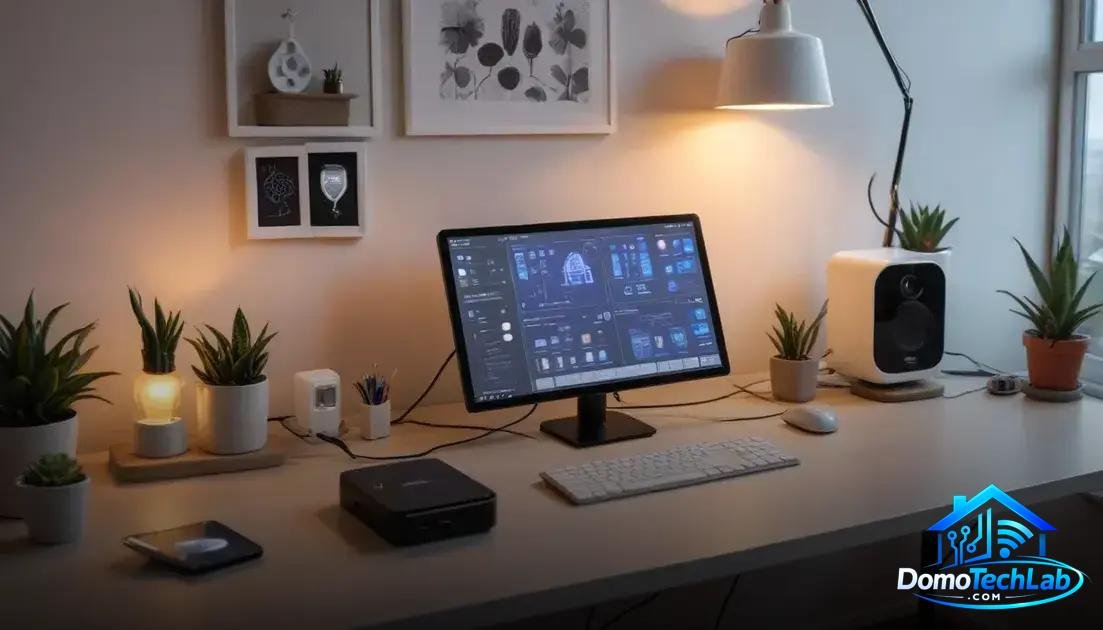
The use of ESP32 in smart home projects offers great customization and control possibilities. This microcontroller stands out for its connectivity capabilities and its versatility in local automation.
Creating a Smart Lighting System
A practical project is setting up a smart lighting system using Zigbee and the ESP32. This allows you to control the bulbs remotely and even schedule times to turn them on or off automatically.
Temperature and Humidity Monitoring
Another example is integrating temperature and humidity sensors to automate home climate control. With the ESP32, you can collect data from these sensors and, through Home Assistant, adjust the operation of fans or heating based on environmental conditions.
Conclusion: Empower Your Home with Smart Local Automation
Implementing a smart home system based on local automation is a valuable investment for enhancing the quality of life in your home. By using technologies like Zigbee and the powerful ESP32, you can have complete control over your devices, ensuring speed, security, and privacy.
We encourage you to continue exploring the possibilities that home automation offers and to build an environment that meets your needs. At DomoTechLab, we are here to support you every step of the way on this exciting journey towards home automation.
Frequently Asked Questions about Smart Home DIY with ESP32
Is the ESP32 compatible with Zigbee devices?
The ESP32 alone is not compatible with Zigbee devices unless a specific adapter or module is used. For full integration, it is recommended to use a hub that supports both protocols.
How can I ensure that all my devices work together?
It is essential to choose devices that support the same protocol or ecosystem. Using a versatile controller like Home Assistant can help manage communication between different brands.
What latency issues may arise in my smart home network?
Latency can occur if too many devices are connected to the same Wi-Fi network or if multiple hubs are used. Opting for a mesh network with Zigbee generally helps mitigate these issues.
What is the best approach to securing my smart home?
Using local automation, avoiding reliance on the cloud, is the best method to enhance security. It is also recommended to enable two-step authentication on the apps controlling your devices.
Is a central hub necessary for managing my devices?
While it is not always mandatory, a central hub can facilitate management and improve interoperability between devices from different brands and protocols, simplifying the user experience.
Can smart devices still operate without an Internet connection?
Yes, devices connected to a hub that allows local automation can continue to function even if the Internet connection fails, allowing basic functions to remain operational.