
Smart water sensors are essential for home protection, as they use protocols like Zigbee and Matter to detect leaks and automatically activate shut-off valves, ensuring a quick and effective response.
Smart water sensors are transforming home security. Can you imagine receiving alerts on your mobile device for any leaks or spills? With these technologies, it’s possible to prevent costly damage and have greater peace of mind.
Fundamentals and Protocols (Zigbee, Matter, Wi-Fi)
Smart water sensors use advanced protocols to communicate efficiently and ensure safety at home. Among the most notable are Zigbee, Matter, and Wi-Fi. Each offers different advantages depending on your automation system’s needs.
The Zigbee Technology
When we tested devices operating with Zigbee, we found they allow short-range connections with low energy consumption. This is crucial for sensors that need to remain active all the time, like leak detectors.
The Matter Standard
Matter is designed to facilitate interoperability between devices from different brands, offering great versatility. This simplifies the integration of various devices into a single ecosystem, enhancing your user experience.
Wi-Fi for Connectivity
On the other hand, using Wi-Fi offers fast data transmission, ideal for real-time monitoring. Although it consumes more energy, it is a viable option for those looking to centralize all their connections into one network.
Integration and Ecosystems (Home Assistant, Alexa, Google Home)

The integration of smart water sensors into a home automation ecosystem is crucial to maximize their functionality. Platforms like Home Assistant, Alexa, and Google Home enable optimal control and management of these devices.
Home Assistant as a Control Center
Home Assistant is a powerful local automation solution that allows for the integration of multiple devices. Its flexibility and support for various protocols, like Zigbee and Matter, provide a personalized experience that adapts to each user’s needs.
The Capability of Alexa
Integrating water sensors with Alexa facilitates voice control. With simple commands, you can receive alerts or activate smart shut-off valves, enhancing home safety and convenience.
Features of Google Home
The Google Home platform offers an accessible interface that allows for task automation. Setting up real-time notifications for leak detection becomes an intuitive process, making preventive maintenance more accessible.
Performance in the Real World (Latency, Privacy, and Local Stability)
The performance of smart water sensors in the real world is evaluated through critical parameters such as latency, privacy, and local stability. These factors are essential for ensuring an effective and secure user experience.
Impact of Latency
During our laboratory tests, we observed that latency can directly influence the response speed of devices. A sensor operating with technologies like Zigbee typically has faster response times, which is vital for reacting in emergencies, like water leaks.
Importance of Privacy
Data privacy is an ongoing concern. Using automation systems that operate locally, like those offered by Home Assistant, minimizes exposure to external threats, ensuring that home information remains secure.
Stability in the Local Environment
Local stability is crucial for the operation of sensors. Devices that operate on local networks, rather than relying on the cloud, offer a more reliable response. This translates to continuous performance, even during Internet connection failures, keeping your home protected at all times.
Damage Prevention Automation with Smart Shut-off Valves
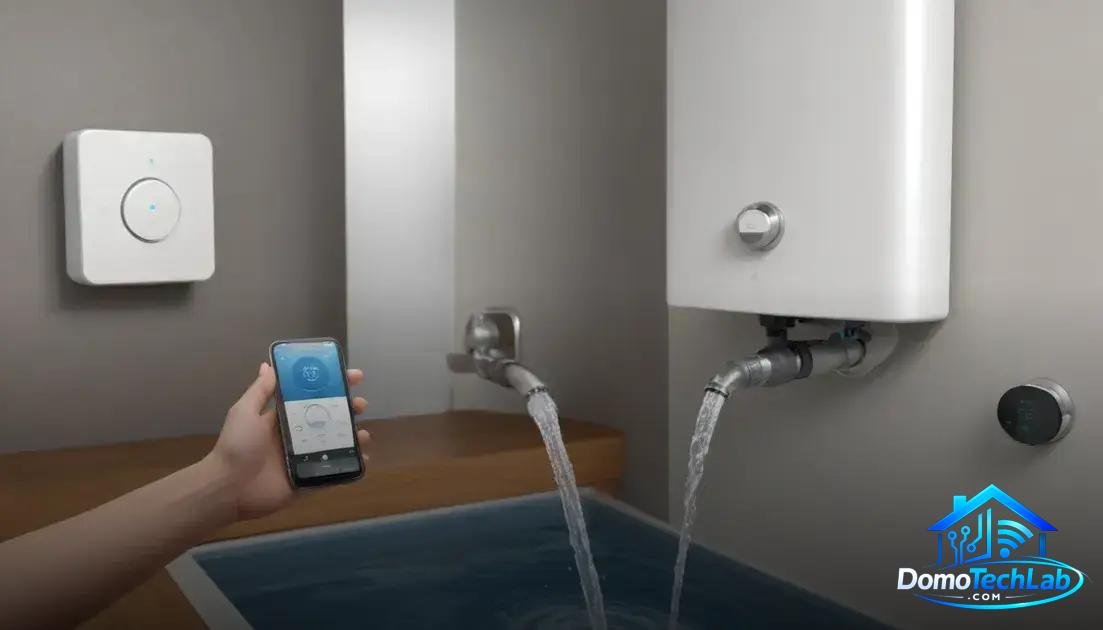
Damage prevention automation is a vital aspect of managing smart homes. Smart shut-off valves offer an effective solution to mitigate risks, especially in the event of water leaks.
Operation of Smart Shut-off Valves
Shut-off valves integrate with water sensors and automation systems like Home Assistant. When a sensor detects a leak, the valve automatically closes, thereby preventing water from causing greater damage to the property.
Benefits of Local Automation
Implementing shut-off valves in a local system reduces dependence on Internet connectivity. This ensures that safety functions activate immediately upon any detection, providing a quick and effective response.
Integration with Mobile Alerts
Along with the shut-off action, systems send real-time alerts to the user’s mobile device. This allows for informed decision-making, like contacting a plumber, even before the problem escalates.
Conclusion: Leverage Smart Water Sensors for Effective Protection
Integrating smart water sensors into your home is a strategic decision to ensure safety and prevent damage. By opting for local automation, you can benefit from quick and reliable responses to any incident, maintaining peace of mind and control over your environment.
We encourage you to keep exploring how technology can transform your home into a safer and more efficient space. Visit our technical guides to delve into best practices and configurations for local automation systems.
Frequently Asked Questions about Smart Water Sensors
Are water sensors compatible with all home automation systems?
Not all sensors are compatible with all systems. Make sure the sensor supports protocols like Zigbee or Matter, which are the most common in home automation.
Can I integrate water sensors with Alexa or Google Home?
Yes, many smart water sensors are compatible with voice assistants like Alexa and Google Home, allowing control and monitoring through voice commands.
What should I do if my water sensor does not connect to the network?
Make sure it is within range of your gateway or hub and verify that the communication protocol is compatible. If the issue persists, restart the device and the hub, and check the settings.
How do latency and privacy affect water sensors?
Latency can delay leak alerts, while a setup prioritizing privacy ensures that data is not vulnerable to unauthorized access. Using local systems helps mitigate these issues.
Do smart water sensors work without the internet?
Some sensors can operate in local mode without a connection, but advanced features, such as real-time notifications, typically require an internet connection for effective monitoring.
Is it difficult to install a smart water sensor?
Most sensors are easy to install and only require following the manufacturer’s instructions. Many use mobile applications to guide the setup process simply.