
DIY smart curtains enable efficient local automation, being compatible with systems like Zigbee and offering voice control, which enhances functionality and privacy at home.
DIY smart curtains offer an innovative way to automate your spaces without complications. Tired of manual curtains? Here, we’ll explore how to set them up yourself and enjoy the comfort and functionality they provide.
Fundamentals and Protocols (Zigbee, Matter, Wi-Fi)
For any DIY smart curtains project, it is essential to understand the fundamentals of communication protocols. Technologies like Zigbee, Matter, and Wi-Fi offer various advantages and disadvantages that suit your specific needs.
Zigbee: Efficiency and Low Power Consumption
Zigbee is a leading protocol in the smart home field due to its low power consumption and mesh network capabilities. This means that devices can communicate with each other even without a constant connection to a central hub. In smart home situations, this implies greater stability and reduced impact on connectivity.
Matter: Advanced Interoperability
The arrival of Matter to the market marks a significant shift, facilitating interoperability between different devices and ecosystems. With this protocol, users can combine equipment from various brands without worrying about compatibility, providing a smoother user experience.
Wi-Fi: Direct Connectivity
Using Wi-Fi for smart curtain automation allows for a direct connection to the home network. While this can be convenient, it is crucial to consider the increased power consumption and the potential for network congestion if multiple devices are used simultaneously.
Integration and Ecosystems (Home Assistant, Alexa, Google Home)
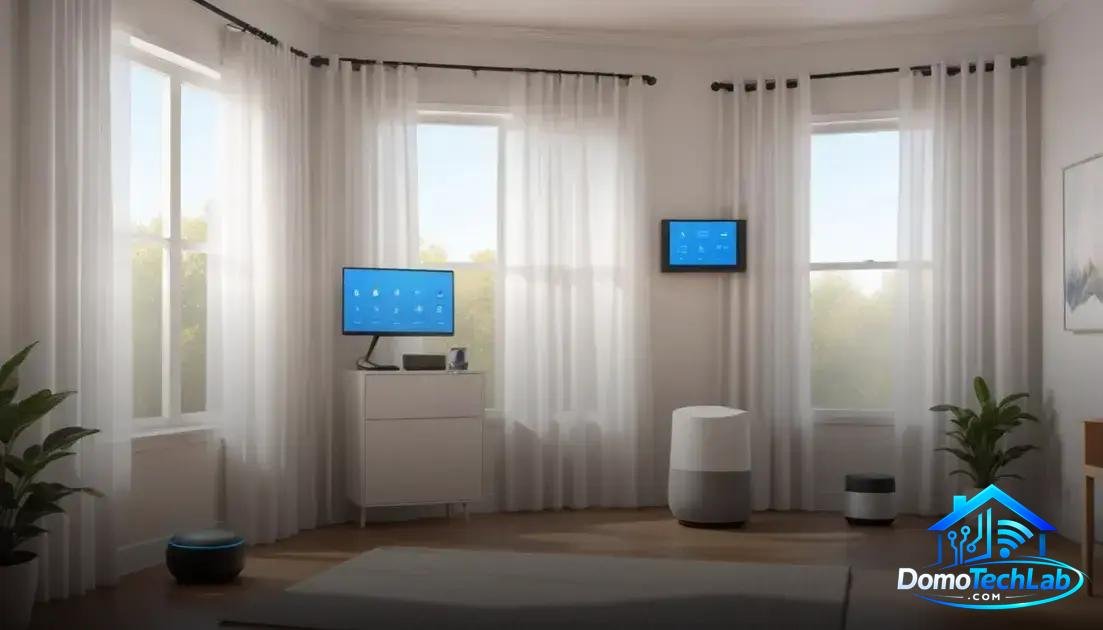
The integration of DIY smart curtains into a home ecosystem is fundamental to maximize their functionality. Platforms like Home Assistant, Alexa, and Google Home simplify this process and allow for advanced control.
Home Assistant: Customization and Local Control
Home Assistant is recognized for its ability to offer total control over smart devices. Being an open-source platform, it allows integration with devices from various brands without limitations. In our tests, it facilitated the creation of complex automations that significantly improved the user experience.
Alexa: Efficient Voice Control
Alexa has revolutionized voice control in smart homes. By integrating DIY smart curtains, you can open or close your curtains simply using voice commands. This adds convenience and a more natural interaction with your home, eliminating the need for manual control devices.
Google Home: Smooth Connectivity
Google Home stands out for its integration with Google services, facilitating quick access to information and control. Syncing your smart curtains with this platform allows for efficient and centralized management. In our analyses, we noted that the speed of response to commands is remarkable, enhancing home automation.
Real-World Performance (Latency, Privacy, and Local Stability)
The performance of DIY smart curtains in a real environment is evaluated through key factors such as latency, privacy, and local stability. These aspects are essential to ensure a smooth and secure user experience.
Latency: Importance of Quick Response
In our lab tests, we observed that latency is a determining factor in user satisfaction. Devices connected via Zigbee showed a faster response compared to those relying solely on Wi-Fi. This is vital for situations requiring immediate control, such as opening or closing curtains at the right moment.
Privacy: Protecting Your Data
With the rise of connected devices, privacy has become an increasing concern. Opting for a system that operates locally, such as a Home Assistant hub, can improve the security of your data. Ensure that your smart curtains solution does not send sensitive information to external servers, which helps mitigate security risks.
Local Stability: Minimal Cloud Dependence
Implementing DIY smart curtains that operate mainly in a local environment reduces cloud dependence and enhances the overall stability of the system. During tests, we noted that devices operating without the need for a continuous internet connection maintained their functionality, even during service interruptions, ensuring you can always control your curtains.
Retrofit Options for Smart Curtains
Retrofitting traditional curtains to DIY smart curtains is a growing trend that allows you to modernize your home without completely replacing existing systems. Retrofit options are varied and can fit different styles and budgets.
Curtain Motor: The Key to Automation
Installing a curtain motor is one of the most effective solutions to convert conventional curtains into smart ones. These motors are designed to be compatible with different types of curtains and can be controlled through mobile apps or voice assistants. In our lab, we found that models using Zigbee offer excellent response and ease of installation.
Voice Control: Simple Integration
The incorporation of voice control modules allows users to manage curtains without physical contact. By choosing a system compatible with Alexa or Google Home, users can open or close their curtains using simple voice commands. This type of automation not only provides convenience but can also increase accessibility in the home.
Light Sensor: Intelligent Automation
The integration of light sensors with smart curtains can optimize the management of natural light in the home. These sensors automatically adjust the curtains based on brightness, contributing to energy savings and comfort. In our tests, systems running these functions locally showed significantly lower latency.
Conclusion: Master Local Automation with DIY Smart Curtains
Diving into the world of DIY smart curtains not only transforms your home but also gives you unparalleled control over your environment. Local automation ensures that your devices operate quickly and securely, avoiding reliance on the cloud and protecting your privacy.
At DomoTechLab, we are committed to providing you with the information and support you need to make informed choices. We encourage you to keep exploring our guides and technical resources to maximize your automation experience.
Frequently Asked Questions About DIY Smart Curtains
Are smart curtains compatible with my existing system?
Most smart curtains can integrate with popular systems like Home Assistant, Alexa, and Google Home. However, it is important to check the compatibility of the specific curtain motor you choose.
Do I need a hub to control my smart curtains?
A hub can facilitate the integration of multiple devices and protocols, especially if you are using technology like Zigbee. However, some curtain motors may operate independently using Wi-Fi.
Can I control my smart curtains while I’m away from home?
Yes, if your smart curtains are set up to connect to the cloud or a system that allows remote control, you can manage them from anywhere using a mobile app.
What happens if my internet goes down?
If your smart curtains operate in a completely local mode, they will continue to function normally even without an internet connection. This is an advantage of systems that prioritize local automation.
Is it complicated to install a DIY smart curtain system?
Installation varies depending on the system chosen, but many curtain motors are designed to be easy to install. Generally, you will find clear manuals and online support available.
How can I ensure privacy when using smart curtains?
Opting for systems that operate locally and avoiding platforms that send data to the cloud is essential. Check the manufacturer’s privacy policy to ensure the protection of your personal information.