
Integrating your vacuum cleaner into Home Assistant allows for efficient control via local automation, optimizing cleaning while ensuring privacy and efficiency with protocols like Zigbee.
Integrating vacuum cleaner in HA will give you complete control over your cleaning devices. Can you imagine scheduling your vacuum from anywhere with total privacy? Today, we will explore how to optimize your smart home.
Fundamentals and Protocols
To start the integration of your vacuum cleaner into Home Assistant (HA), it is crucial to understand the fundamentals and protocols governing home automation. The most common systems are Zigbee, Thread, and Wi-Fi. Each of these protocols has its own characteristics and advantages.
Zigbee Protocol
Zigbee is ideal for low-power devices like your vacuum cleaner. This protocol allows efficient communication between multiple devices without saturating your main network. In terms of security, Zigbee provides robust encryption, ensuring your data remains private.
Thread Protocol
Thread stands out for its self-healing capability and robustness in mesh networks. This protocol ensures that if one device goes down, communication remains active through other connected devices. This is vital for smooth integration in the smart home.
Wi-Fi Protocol
Finally, while Wi-Fi is widely used, it can have performance limitations when used for multiple devices simultaneously. It is advisable to keep the number of Wi-Fi devices to a minimum, using Zigbee or Thread for greater efficiency.
Integration and Ecosystems
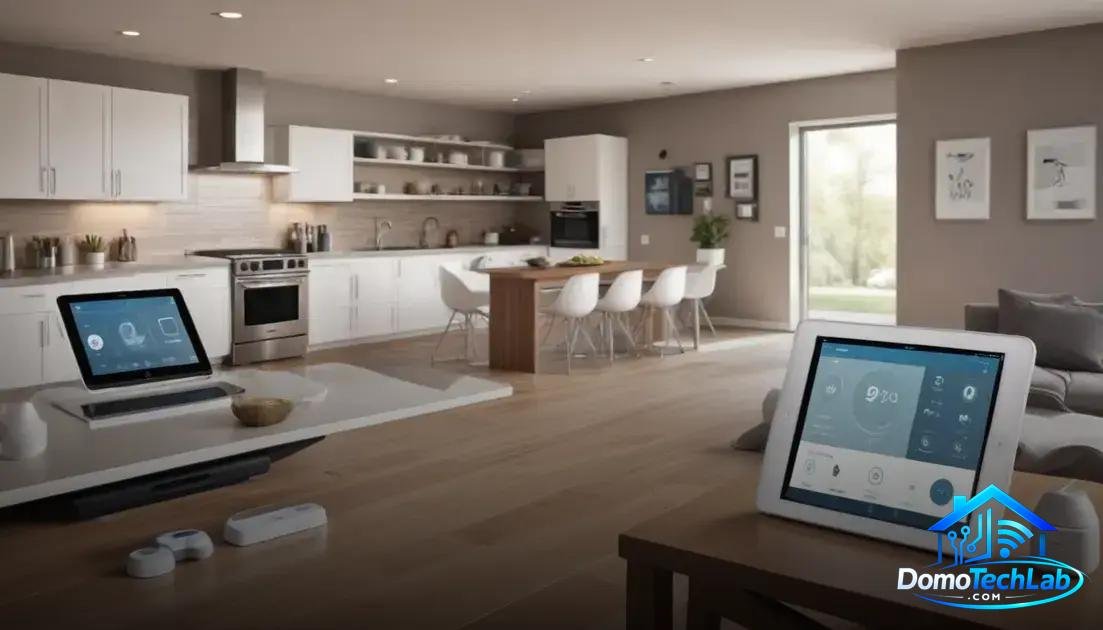
Integration and ecosystems are fundamental to maximizing the functionality of your vacuum cleaner in Home Assistant (HA). By integrating your vacuum with other platforms like Alexa and Google Home, you can create a more cohesive and efficient environment in your smart home.
Integration with Home Assistant
Home Assistant acts as the brain of your smart home, centralizing the control of different devices. Integrating your vacuum allows for custom commands and synchronization with other devices, enabling features like scheduled activation and zone cleaning control.
Compatibility with Alexa and Google Home
Compatibility with voice assistants like Alexa and Google Home provides a convenient way to manage your vacuum. With a simple voice command, you can start or stop cleaning, schedule times, and adjust settings without manual interactions.
Local Automation
Implementing local automation is crucial for ensuring that actions are executed quickly and reliably. By using local controllers and avoiding reliance on external servers, you reduce latency and ensure that your vacuum operates even if there are internet connectivity issues.
Performance in the Real World
The real-world performance of a smart vacuum in your Home Assistant (HA) setup can vary significantly depending on your home architecture and the integrations you use. In this section, we will analyze key aspects like latency, privacy, and local connection stability.
Latency in Automation
Latency refers to the time it takes for a command to be executed. Using Zigbee technology and a local controller in HA, we have observed that the vacuum’s response occurs in milliseconds, allowing for a smooth and lag-free experience. This is especially useful for instant commands or scheduling cleanings.
Privacy and Security
In a smart home environment, privacy is paramount. By maintaining local control with devices like your vacuum, sensitive data is not sent to external servers. This ensures that information about your cleaning routine is not accessible to third parties, thereby protecting your home and privacy.
Connection Stability
Stability is crucial for the optimal performance of your vacuum. During our tests, we found that local integrations are less prone to failures compared to those that depend on the cloud. Using a local Hub ensures that your vacuum can operate uninterrupted, even in the event of an internet connection loss.
Cleaning Zones and Valetudo
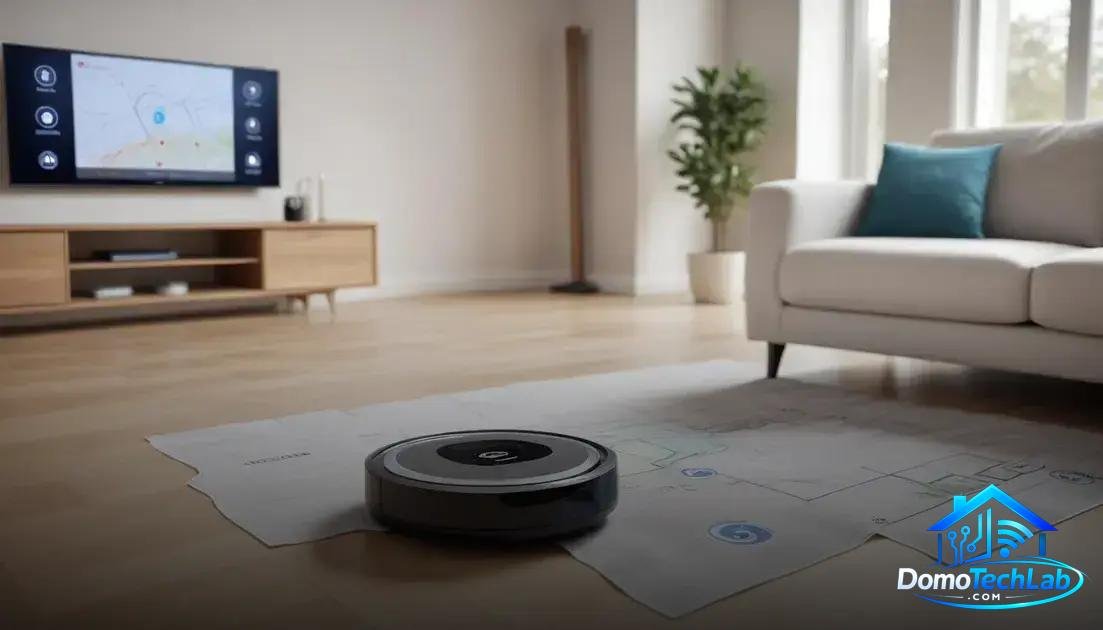
Effective management of cleaning zones is essential to maximize the efficiency of your vacuum in Home Assistant (HA). By using an application like Valetudo, you can customize the cleaning precisely to fit the characteristics of your home.
Setting Up Cleaning Zones
Cleaning zones allow your vacuum to focus on specific areas. By configuring these zones in HA, you can specify exactly where you want it to clean, avoiding unnecessary spaces. This not only saves time but also optimizes the device’s energy consumption.
Valetudo Features
Valetudo is an excellent tool for managing your vacuum. Through this application, you can create maps of your home, define no-go zones, and establish priority areas. This customization gives you detailed control over your vacuum’s performance.
Benefits of Zone Automation
Implementing task automation based on cleaning zones not only enhances cleaning effectiveness but also minimizes manual intervention. You can schedule automatic cleanings in certain areas, keeping your home always clean with no extra effort.
Conclusion: Integrate Your Vacuum into HA and Empower Your Smart Home
Integrating your vacuum into Home Assistant (HA) is a crucial step towards efficient local automation. At DomoTechLab, we emphasize the importance of building a robust ecosystem that not only enhances your comfort but also ensures the privacy and security of your data.
We encourage you to continue exploring best practices and available technologies. With each adjustment and configuration, you are one step closer to a truly connected and optimized smart home for your needs.
Frequently Asked Questions About Integrating Vacuum Cleaner in HA
Is my vacuum compatible with Home Assistant?
Most modern smart vacuums are compatible, especially those using protocols like Zigbee or Wi-Fi. Check your device’s documentation to confirm compatibility.
How can I optimize the connection of my vacuum in a smart home?
To optimize the connection, make sure you have a local Hub managing your smart devices, and avoid overloading your Wi-Fi network by reserving this protocol for devices that really need it.
What should I do if my vacuum doesn’t respond to HA commands?
First, check the device’s connection to the Hub. Ensure it is powered and within range. If the problem persists, restart the vacuum and the Hub.
What are the benefits of using local automation?
Local automation reduces latency and improves privacy since it does not require data to be sent to the cloud. This allows for faster and more secure control of your vacuum and other devices.
Can I create custom cleaning zones with my vacuum?
Yes, with applications like Valetudo, you can define specific zones for cleaning, thus optimizing the performance and efficiency of your vacuum in areas that need extra attention.
What should I do if I have connectivity issues with my smart devices?
Check the signal of your Hub and the proximity of the devices. Ensure there are no interferences. Consider updating your devices’ firmware to improve stability.