
Indoor air quality significantly impacts health, and devices that measure CO2, PM2.5 particles, and VOCs, along with local automation systems, allow you to optimize the environment and ensure a healthy home.
Indoor air quality influences our health and daily well-being. Did you know that CO2 and PM2.5 particles can affect your sleep and concentration? In this article, we will explore how to enhance your environment and optimize your health.
Foundations and Protocols (Zigbee, Matter, Wi-Fi)
Foundations and protocols are the backbone of any smart home automation system. When choosing how to interconnect your devices, it’s essential to understand the differences between technologies like Zigbee, Matter, and Wi-Fi.
Advantages of Zigbee
Zigbee technology is known for its low energy consumption and ability to create mesh networks. This means that Zigbee devices can communicate with each other even without a direct connection to a hub, improving the reliability of the system.
Introduction to Matter
Matter is the new standard designed to facilitate interoperability between different automation platforms. This protocol unites manufacturers and ensures that devices from different brands work together seamlessly.
Benefits of Wi-Fi
Wi-Fi is fundamental in smart home automation due to its bandwidth capacity. It allows for high-speed data transmission, ideal for devices that require a lot of information, such as security cameras and entertainment systems.
Integration and Ecosystems (Home Assistant, Alexa, Google Home)
Integration and ecosystems are crucial for maximizing your smart home automation system. Platforms like Home Assistant, Alexa, and Google Home allow devices from different brands to communicate and operate together efficiently.
Advantages of Home Assistant
Home Assistant is a local automation platform that offers advanced customization. It allows you to control all your devices from a single point. Its integration capability with multiple protocols facilitates the creation of complex scenarios.
Alexa as a Virtual Assistant
Alexa offers intuitive voice controls for various devices in your home. With simple commands, you can turn on lights, adjust thermostats, and much more. This functionality makes interactions with your home accessible and convenient.
Google Home and Its Ecosystem
Google Home easily integrates with compatible devices, offering features similar to Alexa. It is an excellent option for those already using Google services, making synchronization and control within the ecosystem easy.
Performance in the Real World (Latency, Privacy, and Local Stability)
The performance in the real world of smart home automation systems is measured through latency, privacy, and local stability. These factors are crucial to ensuring that your devices operate smoothly and securely.
Impact of Latency
Latency refers to the time it takes for a command to execute. Devices that utilize technologies like Zigbee tend to offer lower latencies, resulting in faster responses when interacting with your smart home. This enhances the user experience and allows for more effective automation.
Importance of Privacy
In the age of connectivity, privacy is a significant concern. Using solutions that operate locally, such as Home Assistant, helps minimize the risk of exposure of personal data. This ensures that your habits and preferences remain in your home, without needing to rely on external servers.
Stability in the System
Local stability plays a vital role in the continuous operation of your smart home automation. With networks that rely on internet connectivity, any disruption can affect the operability of your devices. Choosing a system that prioritizes local communication ensures that your smart home functions even without internet access.
Impact on Health (CO2, PM2.5 Particles, VOCs)
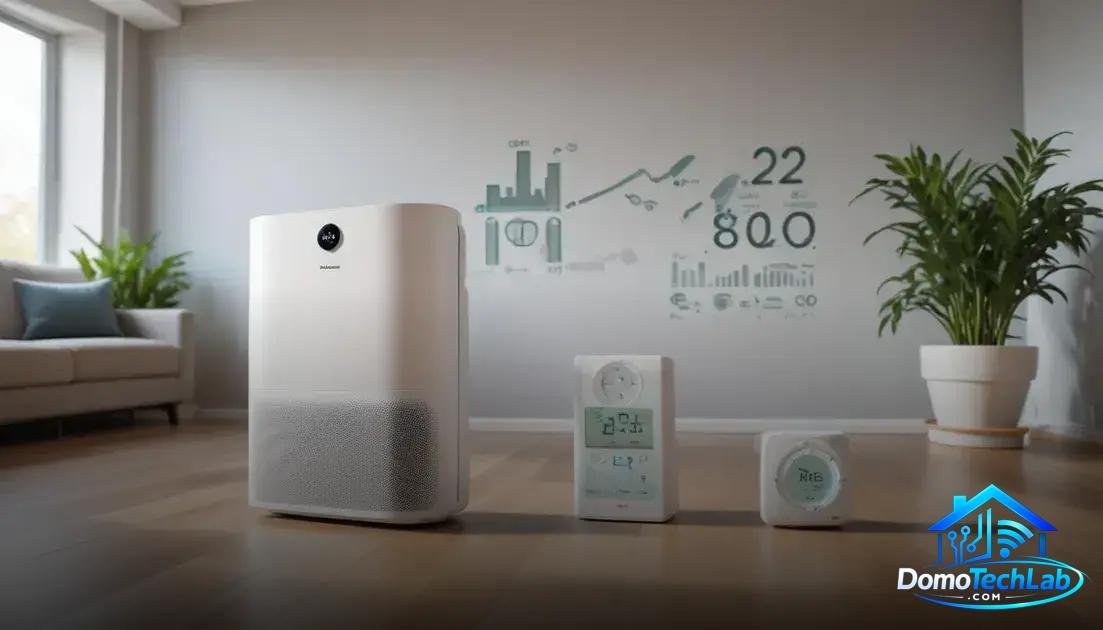
The impact on health of indoor air quality is significant and is affected by factors such as CO2, PM2.5 particles, and volatile organic compounds (VOCs). It is essential to understand how these pollutants can influence our daily well-being.
Effects of CO2
The accumulation of CO2 in enclosed spaces can cause fatigue, concentration problems, and even headaches. Maintaining proper ventilation levels is crucial to ensuring a healthy environment inside the home. Monitoring devices can help you track and control CO2 concentration in real time.
PM2.5 Particles and Their Risk
PM2.5 particles are tiny particles that can penetrate the lungs and cause various respiratory problems. The presence of these particles in the air can increase the risk of cardiovascular and pulmonary diseases. Using air purifiers helps to eliminate these particles and improve air quality.
VOCs and Their Impact on Health
VOCs are compounds emitted by many consumer products, ranging from paints to cleaning products. Prolonged exposure to these pollutants can cause symptoms such as irritation in the eyes and respiratory tract. Using cleaning products with low VOC emissions and ensuring good ventilation are key steps to protect your health.
Conclusion: Improve Indoor Air Quality with Local Automation
Indoor air quality is vital for your health and daily well-being. Adopting a local automation approach gives you the control needed to monitor and enhance your home environment. At DomoTechLab, we are committed to providing you with the technical guidance and tools necessary to make the most of available technologies.
We encourage you to continue exploring and learning about solutions that can transform your space into a healthy and safe environment. Your smart home awaits.
Frequently Asked Questions about Indoor Air Quality
What devices are compatible with local automation?
Most devices that use protocols like Zigbee and Z-Wave are compatible with local automation. Ensure that your hub or gateway supports the protocol you choose.
Can I integrate my air purifier with my automation system?
Yes, many modern air purifiers are compatible with automation platforms like Home Assistant, allowing for scheduling and remote control.
How can I measure air quality in real time?
You can use air quality sensors that connect to your local network. These devices measure CO2, PM2.5, and VOCs, and can be monitored via automation apps.
What challenges might I face when setting up a local automation system?
Some challenges include compatibility between devices from different brands and the need for good network configuration. It’s essential to review the specifications of each device before purchase.
Do I need a hub to integrate smart devices?
Not always, but a hub makes it easier to integrate and control multiple devices on a single platform, enhancing the overall system efficiency.
Can I use devices from different brands together?
Yes, as long as these devices are compatible with a common protocol like Zigbee or Matter, you can integrate them into a single network for centralized automation.