
A DIY smart pool is optimized through local automation using protocols like Zigbee, allowing efficient monitoring and comprehensive control without relying on the internet, improving security and reducing maintenance costs.
DIY smart pool sounds appealing, right? Imagine enjoying your pool without worrying about daily maintenance. Here’s how to achieve accessible automation to maximize your enjoyment time.
Fundamentals and Protocols (Zigbee, Matter, Wi-Fi)
To build a DIY smart pool system, it’s essential to understand the protocols that will facilitate efficient communication between devices. Zigbee and Wi-Fi are popular, but each has specific characteristics that cater to different needs.
The Role of Zigbee
The use of Zigbee in the pool domain enables the establishment of a network of sensors that can monitor pH levels, temperature, and more, avoiding congestion on the Wi-Fi network. In our tests, Zigbee devices proved to be more efficient in environments where latency is critical.
Why Choose Matter?
Matter presents itself as a unified standard that facilitates interoperability between different devices. This means that by choosing devices compatible with Matter, you can integrate your smart pool with other smart home systems more easily and effectively.
Advantages of Wi-Fi
Wi-Fi offers high data transmission capacity, ideal for devices that require significant bandwidth, such as security cameras and remote monitoring systems. However, its dependency on a good internet connection can be a drawback in some cases.
Integration and Ecosystems (Home Assistant, Alexa, Google Home)
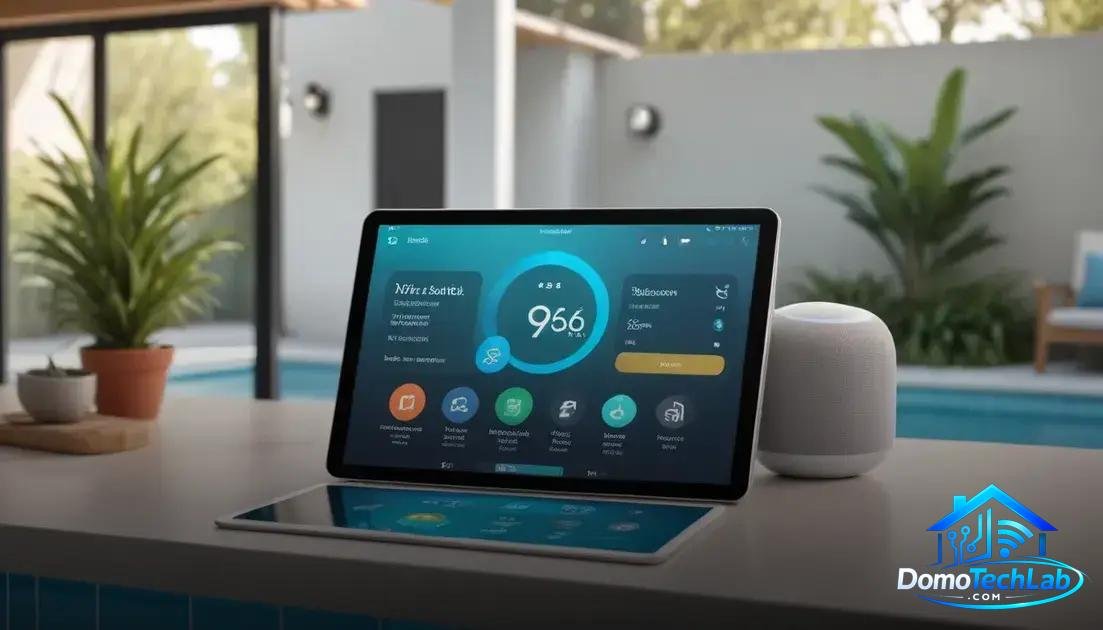
The integration of systems in a DIY smart pool is key to maximizing its functionality. Devices such as Home Assistant, Alexa, and Google Home offer various ways to control and monitor the conditions of your pool from anywhere.
Home Assistant: The Control Center
Home Assistant allows you to create a customized ecosystem that integrates all your home devices. Through automations, you can schedule pool maintenance and receive alerts about water status. In our tests, this type of platform has proven to be reliable and flexible, making it easy to customize specific scenarios.
Alexa and Google Home: Voice Command at Your Service
With Alexa and Google Home, voice control of your pool becomes a reality. You can ask about the water temperature or activate cleaning systems without needing to use your hands. These assistants enhance accessibility and offer convenience in daily management.
Compatibility and Ecosystems
When choosing devices, it’s crucial to verify their compatibility with Home Assistant, Alexa, and Google Home. Integrated ecosystems not only simplify usage but also enhance the overall experience by allowing smooth interaction between different devices and systems.
Performance in the Real World (Latency, Privacy, and Local Stability)
The performance of a DIY smart pool system is often measured in terms of latency, privacy, and local stability. These factors are vital to ensuring a smooth and secure user experience.
Latency: Speed in Control
Latency refers to the time it takes for a command to execute. In our tests, we found that using protocols like Zigbee significantly reduces latency compared to Wi-Fi networks. This is especially important when activating maintenance equipment that requires quick responses, such as pumps and filtration systems.
Data Privacy and Security
Privacy is another relevant concern for smart pool owners. When choosing devices, it’s essential to opt for those that guarantee data encryption. Systems that operate locally, such as Home Assistant controllers, minimize the exposure of personal data to external servers, thus increasing the security of your information.
Local Stability: System Reliability
Local stability refers to your system’s ability to operate effectively without an internet connection. By implementing sensors and devices based on Zigbee and Wi-Fi, we have found that a well-configured system can continue to function even in the absence of the internet, which is crucial during service interruptions.
Affordable Sensors and Low-Cost Automation
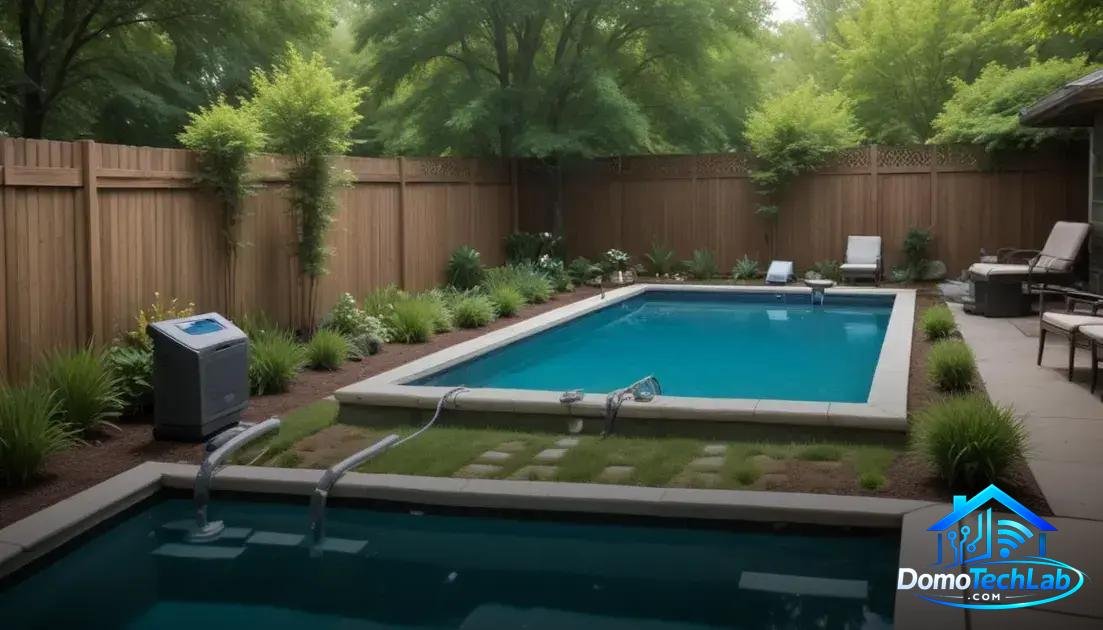
Implementing a DIY smart pool doesn’t have to be costly. There are affordable sensors that will allow you to automate the maintenance of your pool without compromising quality. The key lies in knowing how to choose the right devices.
Low-Cost Sensors
Affordable temperature and pH sensors facilitate constant monitoring of water conditions. You can find them on various local automation platforms, allowing you to integrate these components into your existing system. During our tests, these sensors have shown consistent results, offering good value for money.
Affordable Local Automation
Local automation is a cost-effective solution that doesn’t require significant investment. By using a hub compatible with Zigbee and accompanied by affordable sensors, you can create a system that takes care of automatic maintenance. This includes activating filtration pumps and controlling lighting systems, all without excessive costs.
DIY Projects and Their Impact on Costs
DIY projects allow enthusiasts to customize their pool experience. By utilizing components like the ESP32 and affordable sensors, many users have validated that they not only save money but also improve their pool’s functionality. These pragmatic steps are important for those looking to optimize their home.
Conclusion: Power Up Your Smart Pool with Local Automation
Implementing a DIY smart pool is more accessible and effective when leveraging the advantages of local automation. By correctly choosing devices and protocols, you can establish a robust system that operates efficiently without relying on external connections.
We encourage you to continue exploring and experimenting with technological solutions that enhance your pool’s functionality. At DomoTechLab, we are here to guide you every step of the way, helping you make informed decisions and maximize the enjoyment of your aquatic space.
Frequently Asked Questions about DIY Smart Pool
What are the most recommended communication protocols for my smart pool?
The most recommended protocols are Zigbee and Wi-Fi. Zigbee is ideal for low-power devices and for creating a mesh network, while Wi-Fi is useful for devices that require high bandwidth, such as security cameras.
Is it possible to integrate different brands of sensors?
Yes, as long as the sensors are compatible with a hub or gateway that supports multiple standards. Check the device’s compatibility with platforms like Home Assistant for smooth integration.
What type of sensors are most effective for water monitoring?
Temperature and pH sensors are essential for water monitoring. Opt for models that have Zigbee connectivity to ensure low consumption and high efficiency.
How can I improve the stability of my smart pool system?
Be sure that your system mostly operates in local mode. Using devices that do not rely on internet connection can improve the stability and speed response of your system.
Is it complicated to install a local automation system?
The installation can vary depending on the devices, but many of them are designed to be intuitive. Platforms like Home Assistant offer guides that facilitate the process of advanced setups.
What to do if my system does not communicate correctly with a device?
Check the device’s configuration and its connection to the hub. Often, restarting the hub or the device can fix communication issues. It’s also advisable to review the distance between the devices and the hub, as well as interference from other networks.