
A smart bathroom mirror enhances your daily routine by integrating technologies such as a touchscreen and adjustable LED lighting, optimizing functionality and user experience at home.
The smart bathroom mirror can change the way you start your day. Imagine being able to listen to music, watch the news, and adjust the lighting while you get ready. In this article, we will explore how this technology can add value to your daily routine.
Fundamentals and Protocols (Zigbee, Matter, Wi-Fi)
To understand how a smart bathroom mirror works, it’s essential to know the protocols that facilitate communication between devices. The three most relevant are Zigbee, Matter, and Wi-Fi.
Zigbee and Its Efficiency
The Zigbee technology stands out for its low energy consumption and its ability to manage multiple devices simultaneously. This is ideal for smart homes, where the interconnectivity of various devices can be critical for overall performance.
Matter: The New Standard
Matter is a recent protocol aimed at unifying and simplifying communication between smart devices. Its adoption promises greater compatibility and a smoother integration of products from different brands, which is vital for an efficient home ecosystem.
The Importance of Wi-Fi
Finally, connectivity through Wi-Fi allows for high-speed data transfer and a continuous internet connection. However, unlike Zigbee, using Wi-Fi can be more intensive regarding energy consumption, which requires careful resource management in a smart home.
Integration and Ecosystems (Home Assistant, Alexa, Google Home)
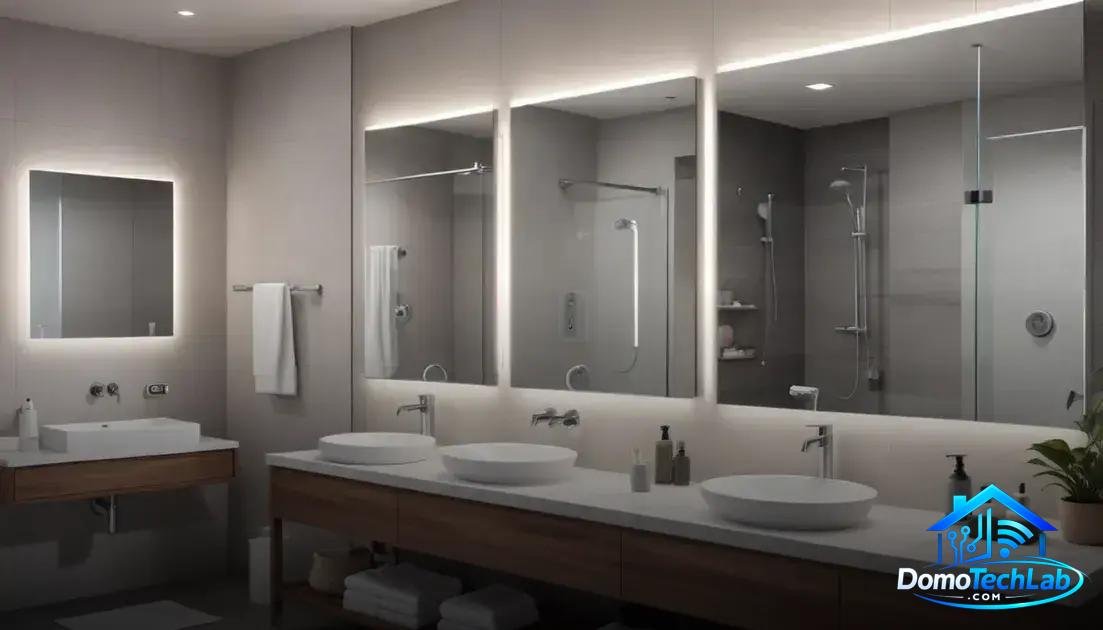
The integration of devices in a smart bathroom mirror system is achieved through platforms like Home Assistant, Alexa, and Google Home. These tools act as gateways that enable the control and automation of multiple devices from a single location.
Home Assistant: Optimal Local Control
Home Assistant is ideal for those who prefer to have complete control over their network of smart devices. It allows extensive customization and a secure connection, as most operations are performed locally, minimizing latency and improving the privacy of your data.
Alexa and Google Home: Convenient Solutions
Alexa and Google Home provide an accessible way to interact with your smart home. With voice commands, you can control everything from the smart mirror to lights and temperature. These platforms easily integrate with a wide range of devices, offering convenience and ease of use.
Interconnected Ecosystems
The true power of automation in the bathroom manifests when you combine devices with different protocols and platforms. For example, you can program your smart bathroom mirror to turn on automatically when it detects you entering the bathroom, thanks to integration with motion sensors and platforms like Home Assistant.
Real-World Performance (Latency, Privacy, and Local Stability)
When evaluating the real-world performance of a smart bathroom mirror, it’s crucial to consider aspects such as latency, privacy, and local stability. These factors directly influence user experience and the functionality of the entire automation system.
Latency in Smart Devices
Latency refers to the time it takes for commands to be executed. Devices operating with Zigbee technology typically have lower latency compared to those relying solely on Wi-Fi. This is particularly important for functions such as adjusting the mirror’s lighting or activating the defogger immediately.
Privacy in the Smart Home
Privacy is a fundamental concern when using connected devices. Implementing Matter allows for more secure communications between different devices, reducing the risk of vulnerabilities. Using a local controller also helps keep your data at home, preventing it from being constantly transmitted to remote servers.
Local Stability and Its Impact
Local stability is vital to ensure your devices operate without interruptions. By establishing a system that minimizes reliance on the internet, such as using local solutions, consistent performance is guaranteed even in situations where internet connectivity is poor. This ensures that your smart mirror, as well as other devices, maintain their functionality at all times.
Benefits of the Touchscreen and Adjustable LED Light
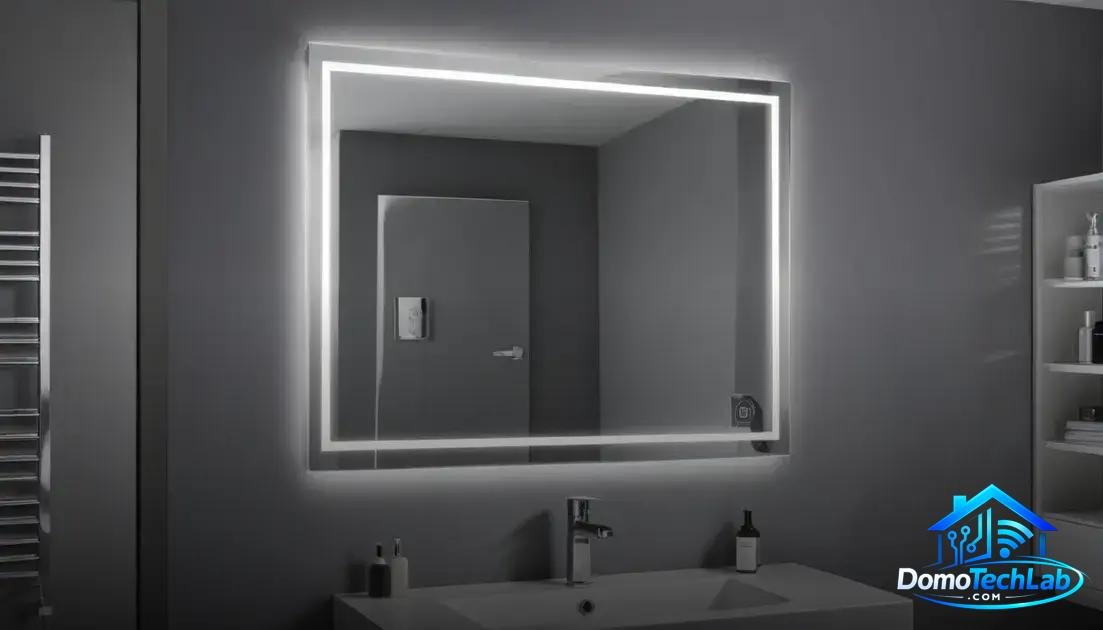
A modern smart bathroom mirror incorporates technologies such as a touchscreen and adjustable LED lighting, offering a unique and personalized experience. These elements contribute to enhancing both the functionality and aesthetics of the bathroom.
Advantages of the Touchscreen
The touchscreen allows for intuitive interaction with the mirror. With just a touch, you can access various apps, adjust settings, and even connect your phone via Bluetooth. This enhances convenience, allowing personal care routines to be completed more efficiently.
Adjustable LED Lighting
The adjustable LED light not only improves visibility but also allows for personalizing the bathroom’s atmosphere. By being able to adjust the brightness and color of the light, you can create a relaxing or energizing environment according to your needs. This is ideal for moments of relaxation or for getting ready during your daily routine.
Synchronization with Routines and Devices
Integrating the touchscreen and adjustable light with automatic routines is another great advantage. For example, you can program the light to adjust automatically when you approach the mirror, or to turn on and off with specific actions, such as when the mirror detects movement.
Conclusion: Maximize the Potential of Your Smart Bathroom Mirror Now
Diving into the world of smart mirrors and local automation offers an enhanced and personalized experience in your home. At DomoTechLab, we understand the importance of implementing a system that prioritizes privacy and performance, using reliable protocols such as Zigbee and Matter.
We encourage you to continue researching local automation options, as this not only optimizes the functionality of your devices but also creates a smart home environment that truly adapts to your needs. Explore our technical guides and start your journey towards a smarter, more efficient home!
Frequently Asked Questions about Smart Bathroom Mirrors
What devices are compatible with a smart mirror?
Smart mirrors are typically compatible with devices that use protocols such as Zigbee, Matter, and Wi-Fi. This includes lights, smart plugs, and voice control systems like Alexa or Google Home.
Can I integrate my smart mirror with other home devices?
Yes, your smart mirror can be integrated with other devices through automation platforms like Home Assistant. This allows you to create custom routines and scenarios.
What should I do if my smart mirror does not connect to the network?
Check the Wi-Fi signal in the area. Ensure the mirror is within range of your router. Restarting the device and the router may also resolve connection issues.
Are smart mirrors safe from a privacy perspective?
Security depends on how you configure your network. Using protocols such as Matter and maintaining local control can help protect your personal information from unauthorized access.
Is it possible to control the smart mirror without an internet connection?
Yes, you can control certain aspects of the mirror if it is set up to function locally. However, some features that require internet, such as software updates or remote control, will not be available.
How does latency affect the experience with a smart mirror?
Low latency is crucial. Using devices that operate with protocols like Zigbee can improve the responsiveness when controlling the mirror, ensuring that functions (such as light adjustment) happen immediately.