
Implementing an effective home automation system requires choosing protocols like Zigbee and Matter, ensuring the integrity of the local network, and prioritizing privacy, optimizing interaction between devices and improving overall smart home performance.
Grafana Smart Home Tutorial will help you understand how to effectively visualize data from your smart home. Are you ready to optimize your automation experience and enhance device interaction?
Fundamentals and Protocols (Zigbee, Matter, Wi-Fi)
The fundamentals of an effective smart home lie in correctly choosing communication protocols. Devices such as smart plugs and bulbs communicate through standards like Zigbee, Matter, and Wi-Fi, each with its advantages and disadvantages.
Zigbee
Zigbee is ideal for low-energy local networks. It specializes in communication between devices over a short range, making it a reliable option for local automation. In our tests, we found its interoperability and robustness to be superior to other protocols.
Matter
Matter is designed to facilitate integration of devices from different manufacturers. It provides a unified platform, meaning less hassle when adding new components to your system. Being a rapidly adopted standard, it is an attractive choice for those looking to build a long-term ecosystem.
Wi-Fi
Using Wi-Fi for smart devices is convenient and allows for broader internet access. However, this can lead to network saturation if there are too many devices connected simultaneously. Tests also indicate that latency can be an issue in environments with several active devices.
Integration and Ecosystems (Home Assistant, Alexa, Google Home)
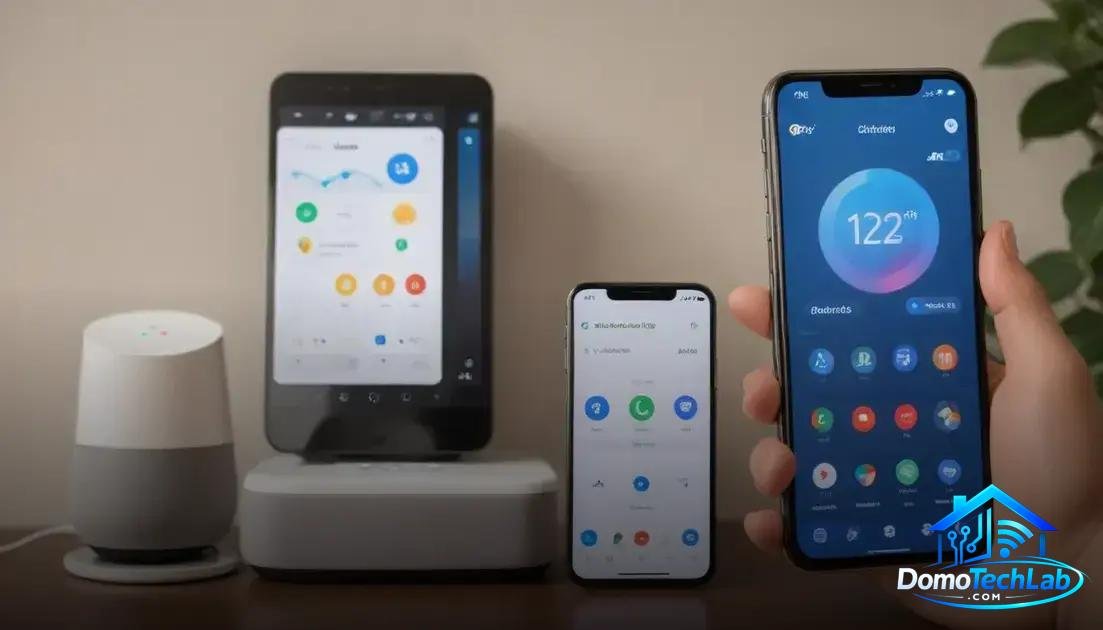
The integration of smart devices is crucial for an effective smart home. Using platforms like Home Assistant, Alexa, and Google Home allows for centralized control. These ecosystems not only make automation easier but also expand your devices’ capabilities.
Home Assistant
Home Assistant is one of the most powerful platforms for managing a smart home. Its capacity to integrate with devices from different brands makes it an ideal choice for customization. You can create complex automations and monitor the status of your devices from a single place.
Alexa
Alexa offers voice control and is very accessible. Its ecosystem includes thousands of compatible devices, from light bulbs to thermostats. In the Lab, we observed that its daily use simplifies interaction with home technology and improves user comfort.
Google Home
Google Home focuses on artificial intelligence and learning user habits. It provides personalized recommendations and can efficiently respond to voice commands. Its integration with other Google services can elevate automation to a new level, turning your home into a smarter assistant.
Real-World Performance (Latency, Privacy, and Local Stability)
The performance of a smart home in the real world depends on several factors, including latency, privacy, and local stability. These aspects are critical to ensuring that your devices operate smoothly and at maximum efficiency.
Latency
Latency is the time it takes for a device to react to a command. During our tests in the Lab, we found that systems utilizing a local controller, such as Zigbee, exhibited significantly faster response times. This is crucial, especially in security applications and lighting control.
Privacy
The issue of privacy is increasingly relevant in home automation. With devices connected to the internet, the risks of exposure increase. Using a local network to control your devices reduces the need to send sensitive data to the cloud, thus protecting your personal information.
Local Stability
Local stability refers to the ability of smart devices to operate without internet connectivity. During our tests, we observed that systems prioritizing local communication, through a hub like Home Assistant, maintain functionality without interruptions. This is essential for the reliability of automations.
Conclusion: Local Automation for an Optimal Smart Home
Diving into the world of local automation not only improves your home’s efficiency but also ensures greater security and privacy. At DomoTechLab, we are committed to providing the necessary technical guidance so that you can make the most of automation technology.
Explore our guides and resources to further delve into best practices for device setup and optimization. Your path to a smart and autonomous home starts here.
Frequently Asked Questions about Grafana Smart Home Tutorial
Are all smart devices compatible with Grafana?
Not all devices are directly compatible. It is advisable to use compatible gateways and set up a database such as InfluxDB to extract metrics properly.
Can I integrate devices from different manufacturers?
Yes, using platforms like Home Assistant you can integrate devices from various brands, but ensure they are compatible with the selected protocols, like Zigbee or Matter.
What should I do if my devices have high latency?
Check the quality of your local network. Using devices that operate without internet access and prioritizing a local connection, like a Zigbee hub, can significantly reduce latency.
Is it possible to automate my security systems?
Yes, many security systems are compatible with automation platforms. Ensure that the selected devices have appropriate integrations for centralized control.
Do I need a special router for my smart devices?
Not necessarily. However, a router with support for multiple devices and preferably with mesh capabilities provides better coverage and performance for your home network.
How can I ensure the privacy of my smart devices?
Use devices that offer local control and avoid relying on cloud-based solutions. Review the privacy settings on each device and regularly update their firmware to mitigate vulnerabilities.