
Local automation in a smart home, supported by protocols like Zigbee and Matter, offers efficient control, rapid response, and data privacy, enhancing both daily experiences and yoga practice at home.
Smart home and yoga 2 can transform your space into a well-being sanctuary. Imagine a system that not only helps you relax but also automates the perfect atmosphere for your yoga. Today, we explore how technology and practice can come together.
Fundamentals and Protocols (Zigbee, Matter, Wi-Fi)
To establish an effective smart home, it’s essential to understand the protocols that enable communication between devices. Protocols like Zigbee and Matter are fundamental for interoperability and system integration.
Understanding Zigbee
Zigbee is a communication protocol that operates at 2.4 GHz and is designed for home automation applications. Its low power consumption and ability to connect multiple devices through a mesh network make it a popular choice for plugs, bulbs, and switches.
The Role of Matter
Matter is a newer protocol aimed at unifying connectivity among different smart devices. Strongly supported by the Connectivity Standards Alliance, it seeks to simplify the way we interact with our devices, allowing seamless communication between brands and different ecosystems.
Wi-Fi in Home Automation
Wi-Fi is the most well-known protocol, and while its use is common for most devices, it can lead to network congestion if too many devices are connected simultaneously. However, most high-energy devices connect via Wi-Fi to ensure optimal performance.
Integration and Ecosystems (Home Assistant, Alexa, Google Home)
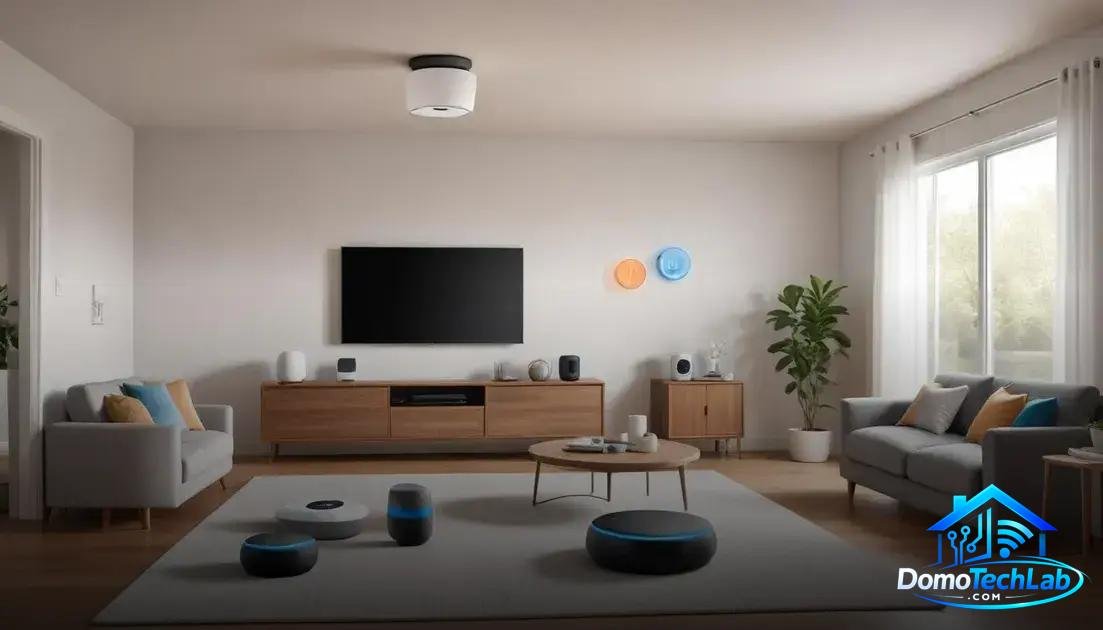
The integration of devices in a smart home is crucial for achieving harmonious and efficient functioning. Platforms like Home Assistant, Alexa, and Google Home offer solutions to connect and control your devices centrally.
Home Assistant: Customization and Total Control
Home Assistant is an open-source platform that allows extensive customization of home automation. Its flexibility lets you integrate almost any compatible device, resulting in a highly customizable ecosystem.
Alexa and Its Voice Ecosystem
Alexa, Amazon’s voice assistant, provides hands-free control of your devices through simple commands. Integration with devices from various brands allows users to control everything from bulbs to thermostats, making daily tasks easier.
Google Home: Simplicity and Connectivity
Google Home stands out for its ability to work in conjunction with other Google services. Voice control allows you to manage your smart devices smoothly, and its focus on convenience makes it an attractive option for those seeking simplicity in home automation.
Real-World Performance (Latency, Privacy, and Local Stability)
The real-world performance of a smart home depends on several critical factors, including latency, privacy, and local stability of devices. These elements are essential to ensure a smooth and reliable experience.
Latency in Home Automation
Latency refers to the time it takes for a device to receive an instruction and execute an action. In our tests, devices using Zigbee showed faster response times compared to those relying on Wi-Fi. This is due to its mesh network architecture, which allows for more efficient communication between devices.
Data Privacy
Privacy is an increasing concern for smart home users. By opting for systems that manage local automation, you can maintain greater control over your data and minimize exposure to external servers. This translates to a safer home where your data isn’t constantly sent to the cloud.
Local Stability as an Advantage
Local stability refers to devices’ ability to function without needing an internet connection. A well-designed system that uses Zigbee or local automation technology ensures that you can still control your devices even during network outages.
The Role of Augmented Reality in Home Yoga
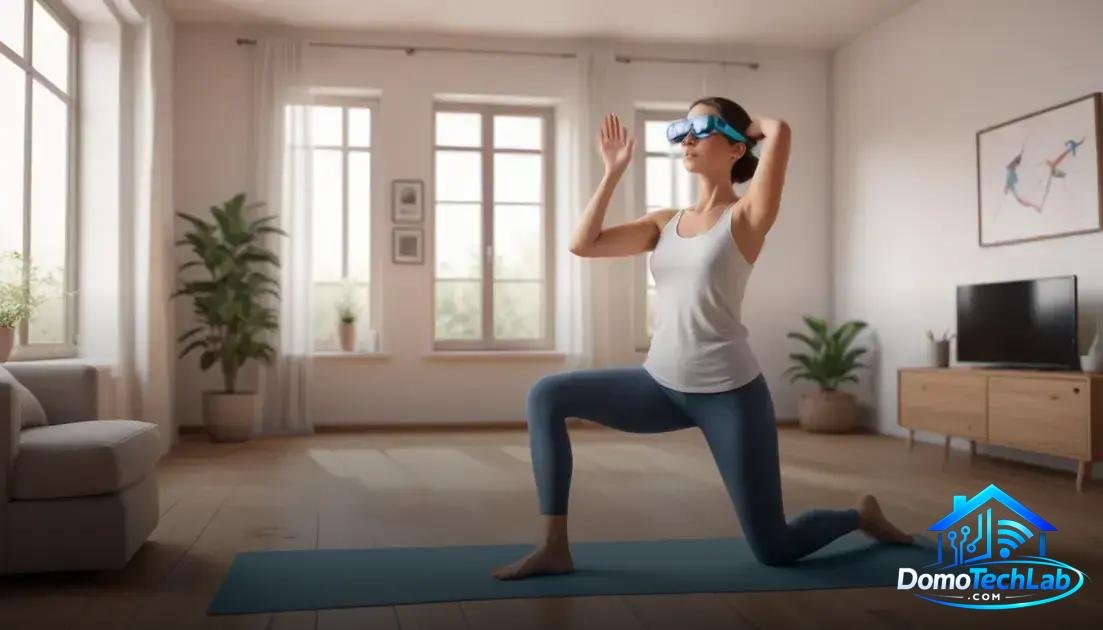
Augmented reality (AR) is emerging as a powerful tool to enhance the home yoga experience. By integrating this technology, practitioners can benefit from more interactive and personalized guidance during their sessions.
Enhancing Practice with Visuals
AR applications can project instructions and posture dynamics directly into the user’s environment. This allows practitioners to receive real-time visual feedback, helping to correct alignment and improving the effectiveness of each exercise.
Real-Time Personalized Adjustments
With augmented reality, it’s possible to tailor yoga sessions to the user’s needs, providing personalized adjustments. For example, a system might suggest variations of poses or changes in breathing based on the user’s skill level and observable progress.
Expanded Social Interaction
AR also fosters social interaction. Users can connect with friends or virtual instructors, creating a sense of community even in a home setting. This interaction not only makes practice more enjoyable but also provides the motivation needed to maintain a regular habit.
Conclusion: Optimize Your Smart Home with Local Automation
Diving into the world of home automation may seem overwhelming, but focusing on local automation offers significant advantages in performance and security. At DomoTechLab, we are committed to providing you with the knowledge necessary to ensure your smart home operates smoothly and efficiently.
We encourage you to continue researching different protocols and systems, as well as applying what you’ve learned to create a technological environment that meets your needs and improves your quality of life.
Frequently Asked Questions about Smart Home and Yoga 2
Can I integrate devices from different brands into my smart home?
Yes, as long as all devices are compatible with a common protocol like Zigbee or Matter. Platforms like Home Assistant facilitate this integration.
What challenges might I face when setting up a smart home?
Challenges include compatibility between devices, setting up secure networks, and managing latency, especially if using multiple protocols simultaneously.
How can I ensure that my data is protected?
Opting for local automation solutions and using devices that do not rely on the cloud can significantly improve your data privacy, ensuring that most actions take place within your local network.
Does latency affect the effectiveness of smart devices?
Yes, latency can impact how swiftly devices respond to commands. Using a system that favors local automation can minimize this issue.
What benefits does augmented reality bring to home yoga?
Augmented reality enhances the yoga experience by providing real-time visual instructions and posture corrections, allowing for greater customization and effectiveness in practice.
Is it complicated to set up a local automation system?
Not necessarily. Many devices are designed for easy installation and setup. With appropriate guides, most users can implement a smart home without being tech experts.