
Cooking robots and the Thermomix offer different advantages in smart kitchens, where integration, performance, and local automation are key to optimizing the culinary experience.
Cooking robots vs Thermomix is a debate that many cooking enthusiasts engage in. What are the advantages of each and how can they enhance your cooking experience? In this article, we will examine their features and help you decide which best suits your needs.
Feature Comparison
The feature comparison between cooking robots and the Thermomix is crucial to understanding which device fits your culinary needs best. Both offer advanced features, but their approaches are distinct. Cooking robots often include multiple functions such as chopping, mixing, and steaming, while the Thermomix integrates guided cooking, facilitating the preparation of specific recipes with detailed steps.
Multifunctionality of Cooking Robots
Cooking robots are versatile and can be used for a wide range of culinary tasks. They allow for both traditional cooking methods and more modern techniques such as low-temperature cooking. With various accessories, these devices can adapt to different cooking techniques, making them ideal tools for cooking enthusiasts.
The Specialization of the Thermomix
In comparison, the Thermomix stands out for its intuitive software and its ability to guide users through each recipe. This device is designed to optimize the cooking process with an interface that tells you what ingredients to add and when, which can be particularly helpful for those starting out in the kitchen.
Ease of Integration into Smart Kitchen Systems
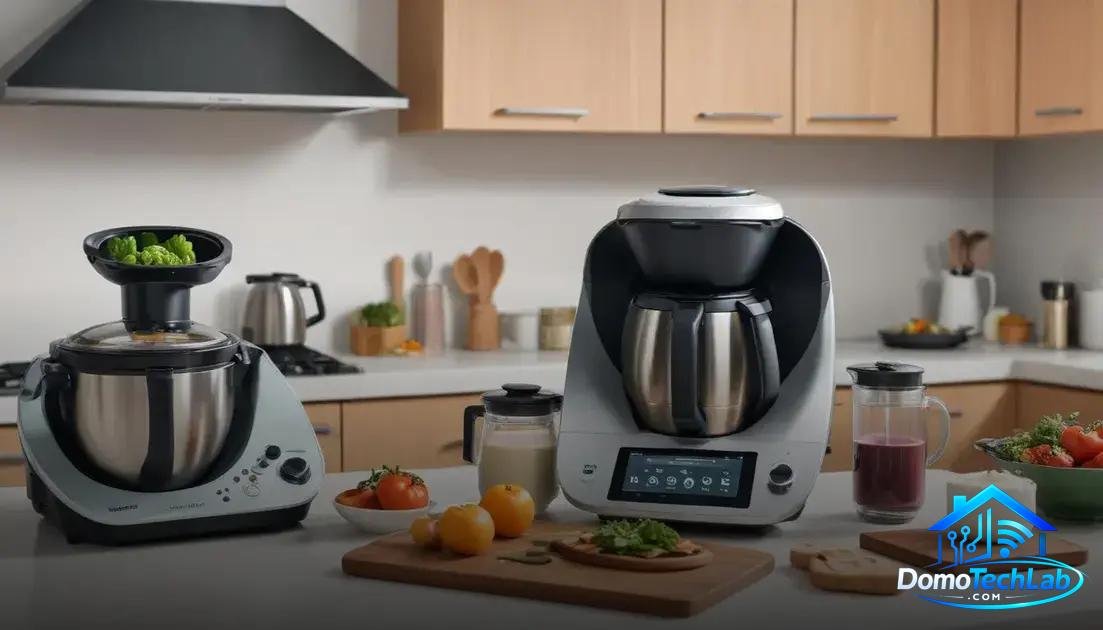
The ease of integration into smart kitchen systems is a key aspect to consider when choosing between a cooking robot and the Thermomix. These devices should not only perform well independently, but they are also expected to integrate seamlessly into an automated kitchen environment.
Connections and Compatibility
High-end cooking robots often feature Wi-Fi connectivity and can be controlled via mobile applications. This allows them to integrate with devices such as smart plugs and smart bulbs, making it easier to create recipes that execute at specific times.
Interaction with Other Devices
On the other hand, the Thermomix has a more closed ecosystem but offers a more cohesive experience. Its guided cooking system can interact with other compatible devices, allowing for effective integration when following complex recipes.
Performance and Efficiency in Daily Use
The performance and efficiency in daily use are fundamental aspects to evaluate when comparing cooking robots and the Thermomix. A device’s ability to perform tasks quickly and effectively significantly influences the user’s culinary experience.
Processing Speed
Cooking robots are known for their speed in tasks such as chopping or mixing ingredients. Many modern models feature powerful motors that reduce preparation time, resulting in greater efficiency in the kitchen.
Energy Consumption
In terms of energy consumption, both cooking robots and the Thermomix are designed to be efficient. However, it’s important to note that prolonged use of cooking functions can impact overall energy consumption. Evaluating consumption based on the types of recipes you prepare is essential for long-term savings.
Economic Aspects and Maintenance Costs
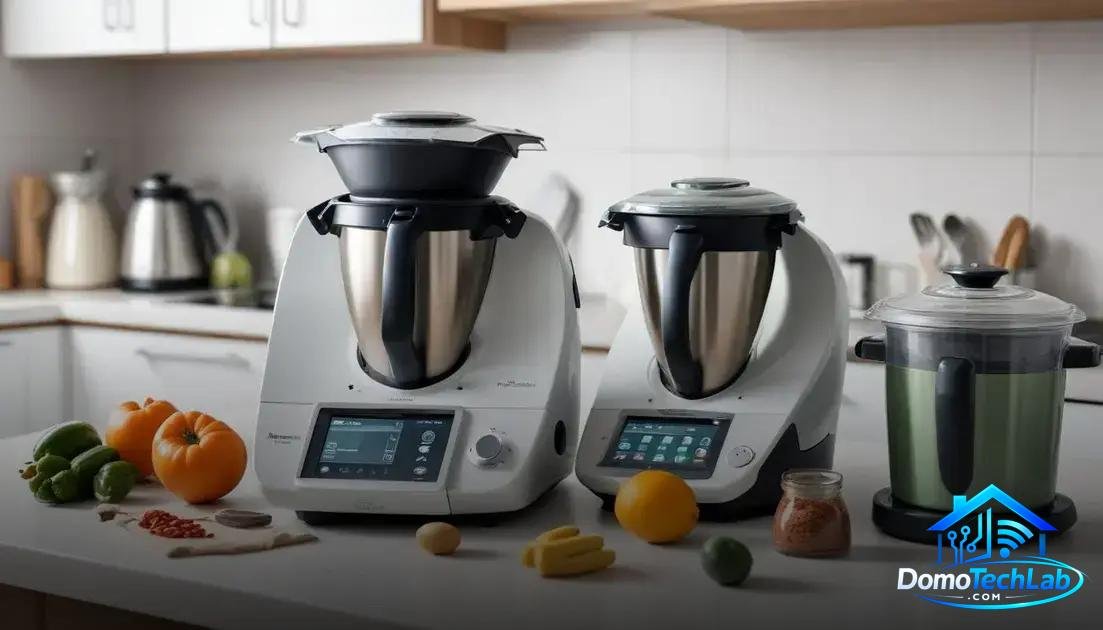
The economic aspects and maintenance costs are determining factors when deciding between a cooking robot and the Thermomix. Understanding the initial investment, as well as the ongoing expenses over time, is crucial for making an informed decision.
Initial Investment
The price of a cooking robot can vary significantly based on the functionalities it offers. Some models are accessible, while others, being more advanced, may exceed the price of a Thermomix. The latter is often presented as a long-term investment due to its versatility and durability.
Operational and Maintenance Costs
Maintenance costs should also be considered. For cooking robots, the need to replace accessories or purchase parts can increase expenses. In comparison, the Thermomix tends to have lower maintenance costs, as its components are durable and its customer service program is efficient.
Conclusion: Cooking Robots vs Thermomix, Choose Wisely for an Efficient Kitchen
Deciding between a cooking robot and a Thermomix involves considering multiple variables that impact your culinary experience and the automation of your kitchen. At DomoTechLab, we emphasize the importance of local automation to maximize efficiency, speed, and control in your home.
We encourage you to evaluate your needs and explore our guides to make well-informed decisions that enhance your kitchen, transforming the way you cook and enjoy gastronomy at home.
Frequently Asked Questions about Cooking Robots vs Thermomix
Are cooking robots compatible with home automation systems?
Many high-end cooking robots offer Wi-Fi connectivity and can integrate with home automation applications, making them easy to use in a smart kitchen environment.
Can the Thermomix be controlled through a voice assistant?
The Thermomix does not have direct integration with voice assistants. However, it can be used alongside devices with smart home integrations to manually schedule its functions.
What advantages do Zigbee-compatible devices have in a smart kitchen?
Devices using Zigbee allow for faster and more efficient communication within a mesh network, which can improve the stability and performance of your smart kitchen system.
Can I use the Thermomix and a cooking robot at the same time?
Yes, you can use both devices in parallel, as long as you have space and an electrical system capable of supporting their simultaneous energy consumption.
What are the main challenges of integrating devices in a smart kitchen?
The main challenges include compatibility between different protocols, ensuring that all devices communicate effectively, and the initial setup, which can be complex if proper guidelines are not followed.
What is the best advice for maintaining efficiency in an automated kitchen?
Make sure to regularly update your devices’ firmware and consider using a compatible hub or gateway that centralizes the management of all your smart devices.